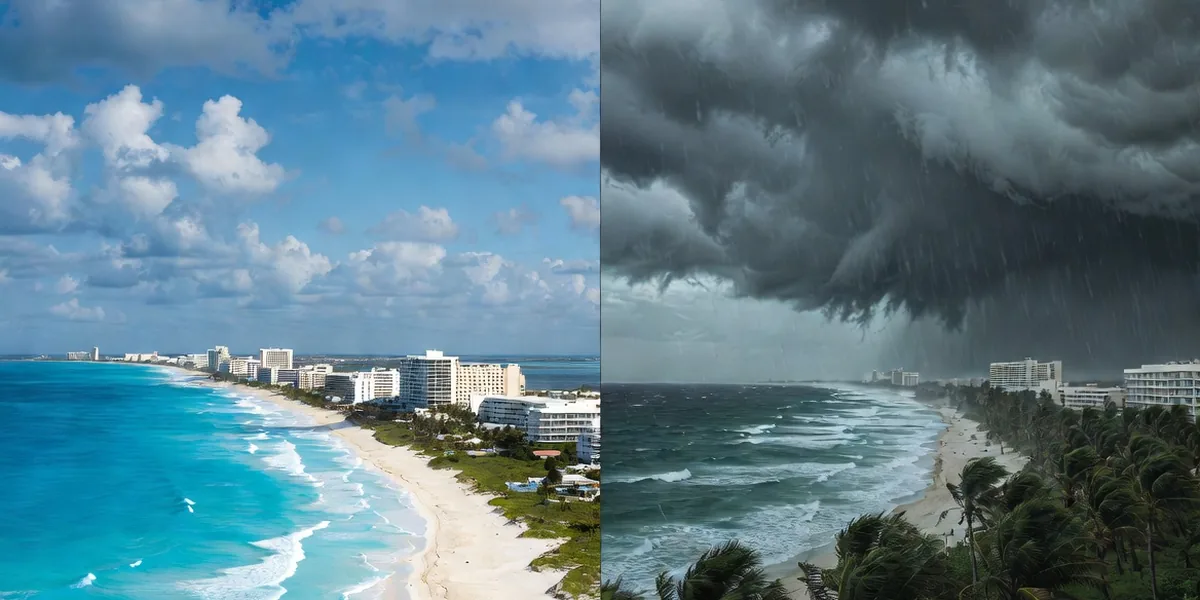
Cancún's weather is one of the most predictable in the Caribbean — but the differences between months matter enormously. The temperature swing isn't huge (80°F in January, 91°F in July), but sargassum, hurricane risk, rainfall, crowds, and hotel pricing vary dramatically. The wrong month can mean a beach overrun with brown seaweed, a hurricane evacuation, or paying 80% more than necessary. The right month is the difference between a dream trip and a disappointing one.
Below: the complete month-by-month breakdown, plus the answers to the three questions everyone actually has — when is the best month, when is the cheapest month, and when do I avoid sargassum.
The Short Answer
- Best month overall: November
- Best for budget: Late September – early October (with hurricane risk accepted)
- Best for whale sharks: July
- Best for diving visibility: February
- Best for families: Mid-March to mid-April (Easter), or July (whale sharks)
- Avoid if sargassum sensitive: May, June, July, August
- Avoid for hurricane risk: September, October
Month-by-Month Weather Table
| Month | High °F | Low °F | Water °F | Rain Days | Humidity % | Sargassum | Hurricane |
|---|---|---|---|---|---|---|---|
| January | 80° | 70° | 78° | 6 | 70% | None | None |
| February | 81° | 70° | 78° | 4 | 68% | None | None |
| March | 84° | 73° | 79° | 3 | 67% | Trace | None |
| April | 86° | 75° | 80° | 3 | 68% | Light to moderate | None |
| May | 88° | 77° | 82° | 5 | 71% | Moderate to heavy | Very low |
| June | 89° | 78° | 83° | 8 | 75% | Heavy | Low |
| July | 91° | 79° | 84° | 8 | 76% | Heavy to peak | Moderate |
| August | 91° | 78° | 84° | 9 | 76% | Heavy | Moderate-high |
| September | 89° | 77° | 84° | 12 | 78% | Moderate (declining) | Peak |
| October | 86° | 75° | 83° | 10 | 76% | Light to moderate | High |
| November | 83° | 73° | 80° | 6 | 73% | Trace to none | Very low |
| December | 81° | 71° | 79° | 5 | 71% | None | None |
Detailed Month-by-Month Breakdown
January
PEAK: Best weather, highest prices. Holiday week (Dec 27–Jan 5) is the busiest of the year. Book 4–6 months ahead.
February
PEAK: Spring break begins late month. Clearest waters. Excellent diving and snorkeling visibility. Same pricing as January.
March
PEAK + Spring Break: Sargassum may start arriving late month. Spring break crowds peak. Excellent weather. Book Isla Mujeres day trips ahead.
April
Late peak: Sargassum begins. Easter week is heavily booked. Otherwise an excellent month if you can dodge Easter.
May
Shoulder: Sargassum can be severe some weeks. Prices drop 20–30%. Hot but manageable. Light rain begins.
June
Shoulder + whale sharks begin: Hot, humid, sargassum peak. Whale shark season starts June 1. Worth coming for whale sharks if you can tolerate the heat.
Whale sharks: In season.
July
Peak whale shark: Best whale shark month. Hot, humid, brief afternoon thunderstorms. Family travel high season.
Whale sharks: In season.
August
Peak heat + whale sharks: Last month of whale sharks. Hot, humid, daily afternoon rain. Hurricane risk increases.
Whale sharks: In season.
September
PEAK hurricane: Lowest prices of year. Real hurricane risk. Most rain. Whale sharks end mid-month.
Whale sharks: In season.
October
Hurricane risk + transition: Cheap. Hurricane risk persists through Oct 31. Sargassum clearing. Worth the risk for the prices.
November
SWEET SPOT: Best value-for-weather month. Hurricane over, sargassum gone, holiday pricing not yet. Book it.
December
Peak begins: Dec 1–18 is excellent value. Dec 19–Jan 5 is the busiest weeks of the year with peak pricing. Book months ahead.
The Sargassum Question (The Biggest Variable)
Sargassum is the brown floating seaweed that has affected the Caribbean coast of Mexico since 2011 — driven by warming ocean temperatures and nutrient runoff from the Amazon River. It washes ashore in mats, decomposes on the beach with a sulfur smell, and turns the iconic turquoise water brown when concentrations are heavy.
The pattern: sargassum is minimal November through April (winter months). It begins arriving in April, peaks May through July (some years extending to August), and clears by mid-September. The 2024 and 2025 seasons were heavy; 2026 forecasts suggest similar or slightly heavier conditions.
What resorts do: Hotel Zone resorts run beach-cleaning crews with tractors and rakes during peak season. On manageable days the beaches stay usable. On bad days the seaweed accumulates faster than crews can clear it.
If sargassum is a dealbreaker: book November through March in Cancún, or consider Pacific destinations like Puerto Vallarta or Cabo San Lucas which have zero sargassum. See Puerto Vallarta vs Cancún for the full comparison.
Hurricane Season — What to Actually Worry About
Atlantic hurricane season runs June 1 through November 30, but Cancún's direct hurricane risk peaks late August through mid-October. The historical pattern: roughly one direct hit every 4–7 years, with several near-misses per decade.
Notable recent hurricanes: Wilma (October 2005), Delta (October 2020), Beryl (July 2024). Each caused significant damage and resort closures for 2–8 weeks. Resort hurricane protocols are strong — guests are typically evacuated 24–48 hours before landfall.
If you book during hurricane season: (a) buy travel insurance with hurricane/weather coverage, (b) verify your hotel's hurricane policy (most reputable resorts offer rebooking flexibility), (c) book direct flights (canceled flights are easier to rebook), (d) monitor NOAA forecasts in the 7-day window before departure.
Best Months by Trip Type
Family with kids in school: Spring break weeks (March–April) or last week of June. December holiday week (Dec 27–Jan 5) is excellent weather but the most expensive and crowded week of the year.
Couples / honeymoon: November or late January–February. Both deliver peak weather; November is the better value.
Budget travelers: September or early October. Accept hurricane risk and rain for 40–55% lower hotel rates. Buy travel insurance.
Whale shark seekers: July specifically. Sightings are essentially guaranteed and the water visibility for snorkeling is at its best.
Sargassum-sensitive travelers: November–March only. Or pivot to Puerto Vallarta or Cabo where sargassum isn't an issue.
Divers seeking visibility: February–April. Coldest water (still 78°F+) means clearest visibility. Best months for the deeper sections of MUSA and the reef.
What the Forecast Doesn't Tell You
Morning weather is always better than afternoon. Even in rainy season, mornings in Cancún are reliably sunny. Schedule outdoor activities (cenotes, ruins, boat trips) for 7 AM–1 PM. Save afternoon for resort pool time or shopping. This single rule eliminates 80% of weather-related complaints.
Cancún's "rainy season" rain is brief. Outside of hurricane events, rainy-season rain in Cancún typically means a 60–90 minute heavy afternoon shower followed by clear skies. Not the all-day Pacific Northwest type. Plan around it, don't cancel.
Water temperature stays warm year-round. Even the "cold" months (January–February) have ocean temperatures around 78°F — warmer than a heated swimming pool in most US cities. Swimming is comfortable in every month.
Northers can blow through December–February. Cold fronts from the US push down occasionally, dropping temperatures to 70°F days and 65°F nights for 2–4 days at a time. Wind picks up. This affects beach swimming and snorkeling visibility temporarily. Three to five "norther" events typical per winter.
Frequently Asked Questions
November is the single best month. Hurricane season is essentially over, sargassum has cleared, the weather is reliably 80°F days with low humidity, holiday pricing hasn't kicked in yet, and crowds are light. December–April are also great but cost 30–50% more.
Rainy season runs from June through October, peaking September. 'Rainy' usually means a 60–90 minute afternoon thunderstorm followed by clear skies — not all-day rain. Mornings are reliably sunny year-round in Cancún. Hurricane risk is concentrated August–October.
Sargassum (the brown floating seaweed) peaks April through August in most years. May–July are typically the worst weeks. Resorts run beach-cleaning crews but on bad days the seaweed wins. November through March are typically clean. If sargassum is a dealbreaker, book November–March or consider Puerto Vallarta (sargassum-free) instead.
Year-round: highs 80–92°F, lows 70–78°F. January is the coolest month (80°F day / 70°F night). July–August are the hottest (92°F day / 78°F night). Humidity ranges 60–80%, peaking in summer. Water temperature stays 78–84°F year-round.
Generally yes — direct hurricane hits are statistically rare (Wilma 2005, Delta 2020, Beryl 2024 are recent examples). The resorts have hurricane protocols, and forecasts give 5–7 days notice. The risk is real but manageable. If a hurricane is named within 7 days of arrival, contact your hotel and airline about rebooking; most have built-in hurricane policies.
September and early October — the lowest hotel and flight prices of the year. The tradeoff is heat, rain, sargassum, and hurricane risk. Best value-for-weather window is late October to mid-November (post-hurricane, pre-Christmas pricing).
June through September, peaking in July. Whale sharks aggregate off Isla Mujeres and Holbox to feed on plankton blooms. Tours sell out 2–3 weeks ahead in peak season.
Light clothing (cotton or linen), sunscreen (reef-safe required at cenotes), sun hat, reusable water bottle, water shoes (cenotes are rocky), light rain jacket if traveling June–October, modest cover-up for Mayan ruins (no swimwear), and a Dramamine pack if you're prone to seasickness for whale shark or snorkel tours.
See the complete activities guide, where-to-stay breakdown, and the passport requirements for US and Canadian travelers. Cancún complete guide.