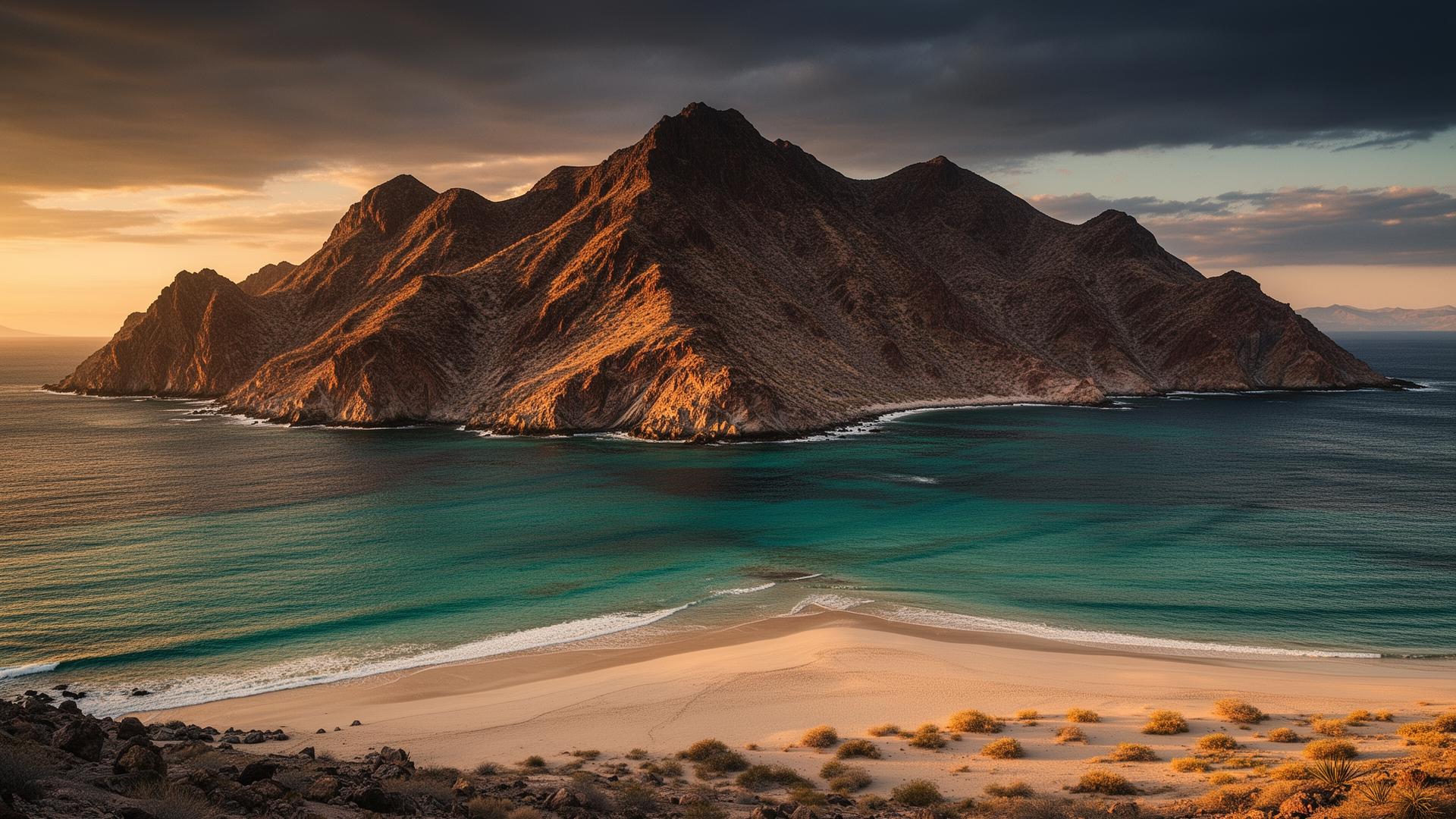
Isla Tiburón — Tahejöc in the Seri language — is Mexico's largest island at 1,200 square kilometers, sitting 20 minutes by panga from the Sonoran coast near Bahía de Kino. To visit you need a Seri-issued permit and a Seri guide. There is no other way in. That requirement, which sounds bureaucratic, is what makes the experience extraordinary: the island has been in the exclusive care of the Comcáac people for decades, which is why it is still in the ecological condition it is in.
Mule deer with no fear of humans. An endemic island fox found nowhere else on Earth. Beaches that look as if they were installed last week by someone who cared. Water clear enough to see the bottom at 30 feet. And a guide who can tell you 2,000 years of history about the place while walking you to the bighorn sheep ridge. This is the best day trip in all of Sonora.
Isla Tiburón is visited from Bahía de Kino. Read our complete Bahía de Kino guide.
Isla del Tiburón is not a tourist attraction. It is Seri/Comcáac territory — Mexico's largest island, almost entirely uninhabited, and one of the most ecologically important places on the Sea of Cortez. Getting a permit requires coordination with the community and CONANP. It is not hard, but it is not a day trip you book on Viator either. If you make the effort, what you see is unlike anything else on this coast — desert bighorn sheep, pristine beaches with nobody on them, and a silence you do not find anywhere in resort Mexico.
How to Get the Isla Tiburón Permit
Drive to Punta Chueca, 25 km north of Kino Nuevo. The road is mostly paved with a dirt section at the end — manageable in a standard car in dry conditions. Punta Chueca is a Seri community of approximately 300 people. The permit office is in the community center; anyone in the community will point you there.
Bring your passport or official photo ID. The permit fee as of 2026 is approximately $15–25 USD per person, paid in cash. The process takes 30–45 minutes — the community assigns a guide at the same time, and you negotiate the guide and panga fees separately. Arrive by 7:30–8 AM to maximize time on the island. Everything is cash only.
Isla Tiburón Visit Costs in 2026
Permit: $15–25 USD per person. Guide: $50–100 USD for the group for a full day. Panga crossing: $30–50 USD per person round trip. Budget $100–175 USD per person total for a full-day excursion, less in a larger group. Costs go directly to the Seri community with no middlemen.
What to Do on the Island
Wildlife Hiking
The mule deer on Tiburón are the first thing most visitors notice — close, curious, and completely unbothered by humans. Bighorn sheep require more effort and the guide's knowledge of which ridge and what time of day. The Tiburón island fox is shy and elusive but is found nowhere else on the planet.
Beaches
The beaches on the island's western side face the canal and have calm, clear water. No facilities — bring everything. No vendors, no development, no footprints. These are among the most pristine beaches accessible by day trip in all of northwest Mexico.
Snorkeling
The Canal del Infiernillo has exceptional visibility during dry season — 15 to 20 meters on a good day. Bring your own snorkel gear if you have it. Ask the guide whether equipment is available if you don't.
Seri Cultural History
The guide can show you historic Seri encampment sites, rock art, and explain the history of a people who resisted forced relocation for centuries. The Comcáac crossed the canal in reed boats. They hunted on the island and stored food in cave systems the guide knows. This context transforms the visit from a nature excursion into something significantly more.
Full Day Logistics
Aim to reach Punta Chueca by 7:30–8 AM. Permit process, panga loading, and the 20-minute crossing put you on the island by 9:30–10 AM. A full day — which is the right amount — means returning by 4–5 PM. Morning is the best time for wildlife; afternoon heat in summer is serious.
When a Hermosillo local asked for Isla Tiburón tour recommendations, the answer that came back was Ecoturismo del Noroeste — the bus departs from Hermosillo and makes a pickup stop in Kino, and the reviewer summed up the trip as a good experience overall.
Worth knowing from the same exchange: the standard tour is about the island itself — getting there, seeing it, and enjoying the day with Comcáac involvement. It is a nature trip, not a retreat; anything beyond that was arranged privately and was never part of the itinerary.
Mr. Playas' take: if arranging your own permit and panga at Punta Chueca sounds like too many moving parts, an operator with a Hermosillo departure and Kino pickup is the low-friction way onto the island.
From a discussion on r/hermosillo.
What to Bring
Before You Leave Punta Chueca
Buy ironwood carvings directly from Seri artisans at Punta Chueca before or after the island crossing. These are carved by hand from wood so dense it sinks in water — the tradition is unique in the world and the pieces available directly from artisans are significantly better than anything sold through resellers in Hermosillo or San Carlos. Bring cash.
Frequently Asked Questions
Drive to Punta Chueca (25 km north of Kino Nuevo on a mostly paved road). Go to the Seri community office and request a permit — bring your passport or official ID. The fee is approximately $15–25 USD per person. A Seri guide is mandatory and can be arranged at the same office.
Yes — mandatory. You cannot visit without a Seri (Comcáac) guide. The guide requirement exists to protect the island's ecosystem and to ensure the community controls access to their ancestral territory. The guide also dramatically improves the experience — they know where the wildlife is.
Permit: $15–25 USD per person. Guide: $50–100 USD for the group (full day). Panga round trip: $30–50 USD per person. Total budget: $100–175 USD per person for a full day, depending on group size. Costs go directly to the Seri community.
Mule deer that are approachable and curious. Desert bighorn sheep on the volcanic ridges (guide-dependent). The Tiburón island fox — an endemic subspecies found nowhere else on Earth. In the water: rays, sea turtles, and some of the clearest water and richest reef fish in the Sea of Cortez.
No. The Seri community controls all access and requires a permit plus a local guide. There is no workaround. This is their legal right and reflects their sovereignty over the island — it is also the reason the island remains in ecological health.
At the Seri community office in Punta Chueca, 25 km north of Kino Nuevo. The process takes 30–45 minutes. Arrive before 8 AM to maximize your time on the island. Bring cash — the community office does not accept cards.
15–25 minutes from Punta Chueca depending on weather and sea conditions. The Canal del Infiernillo between the coast and the island is generally calm, especially in the morning.
October through May: mild temperatures, calm seas, best wildlife visibility. November through March also offers whale watching in the Canal del Infiernillo. Avoid July and August — extreme heat on the island (105°F+) makes the full-day excursion genuinely difficult.