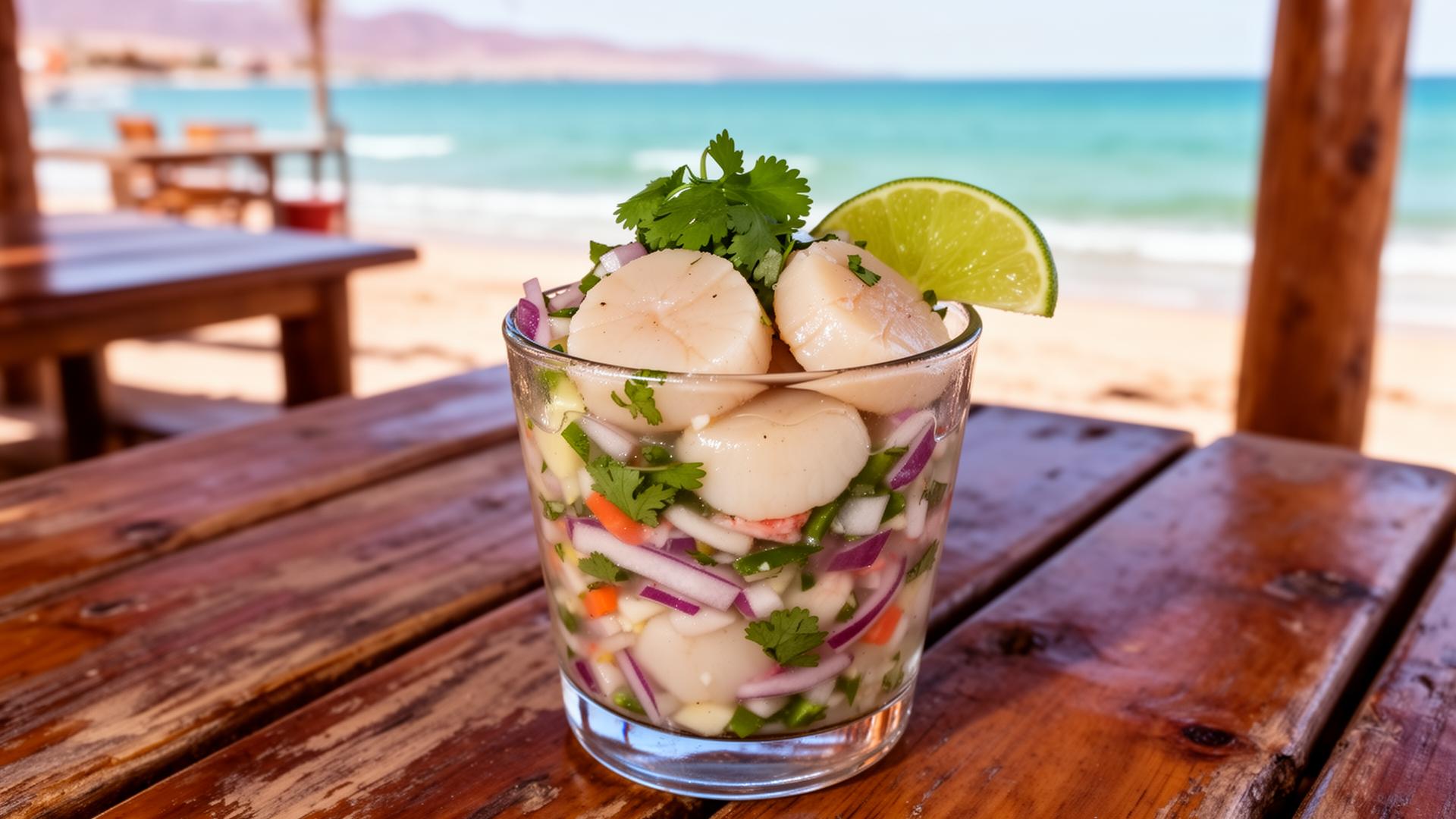
There is a shellfish that grows in the Sea of Cortez and almost nowhere else, harvested by the fishermen of Kino Viejo from the same waters their families have worked for generations, and it is one of the great ingredients of Mexican cuisine that almost no one outside Sonora has heard of. The callo de hacha — pen shell scallop — is not a scallop in the American sense. It is something better.
The edible part is the large adductor muscle of the Atrina maura, a pen-shaped bivalve that can reach 50 centimeters. The muscle is firm, slightly sweet, and has a clean ocean flavor that needs almost nothing done to it to be extraordinary. Eaten raw with lime and a pinch of sea salt. Grilled over mesquite. Prepared ceviche-style with cucumber and serrano. The ingredient carries whatever you put it in.
What Is Callo de Hacha?
Atrina maura is endemic to the shallow warm waters of the Sea of Cortez and the Pacific coast of Baja California. It grows to 40–50 cm in length, partially buried in sandy sea beds. The commercial harvest in Kino Bay is managed by cooperatives of local fishermen who have worked this fishery for decades. The season runs October through March with a summer veda (closure) to protect breeding populations.
The muscle that is eaten — the callo — is the central adductor that holds the two shell halves closed. In a large specimen it can be 4–5 cm across and 2–3 cm thick. The texture is firmer than a bay scallop, less rubbery than squid, and the flavor is subtler and cleaner than most shellfish.
How to Eat It in Kino
Where to Buy and Eat in Kino Viejo
The pangas that harvest callo de hacha dock at Kino Viejo in the late morning. You can buy directly from the fishermen for approximately $7–10 USD per kilo for fresh, cleaned muscle — bring a cooler. At restaurants: El Pulpo Loco and La Palapa de Chucho both serve callo de hacha when the morning harvest was good. Ask when you arrive — the answer changes daily. Prepared plates: $8–18 USD depending on quantity and preparation.
What to Know Before You Order
Always ask if the callo is fresh. The correct answer involves the word "today" or "this morning." Frozen callo de hacha exists and is dramatically inferior — the texture collapses and the clean flavor muddies. In Kino Viejo during season, fresh is the standard. Out of season or in Kino Nuevo restaurants, ask.
Season: October through March is prime. April through September is the veda period — you may find callo de hacha on menus but be skeptical of its provenance.
Full Kino Viejo restaurant guide with current prices and what to order: Bahía de Kino restaurants.
Frequently Asked Questions
A large bivalve shellfish (Atrina maura) endemic to the Sea of Cortez. The edible part is the firm adductor muscle — larger, firmer, and more subtle in flavor than a standard scallop. One of the most prized seafood ingredients in Sonoran cuisine.
Purchased fresh from fishermen in Kino Viejo: approximately $7–10 USD per kilo. At restaurants, a prepared plate runs $8–18 USD depending on portion and preparation.
October through March is the main harvest season and best quality. A summer closure (veda) protects breeding populations from April through September. Always ask if fresh.
Yes — with a cooler and enough ice. Fresh callo from Kino consumed within 24 hours is one of the best food souvenirs in all of Sonora. Buy it at the dock in the morning.