Diving & Snorkeling in Cozumel
By Mr. Playas · Updated 2026
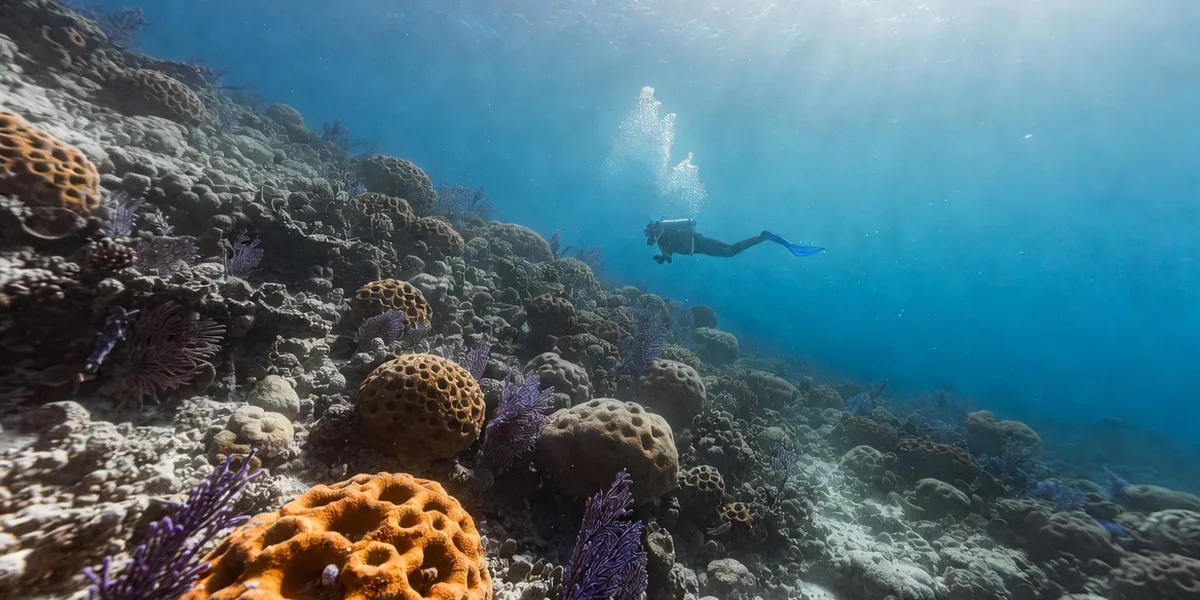
Cozumel sits on the Mesoamerican Reef — the second-largest coral reef system in the world — and the section that runs along its southwestern coast is among the healthiest and most biodiverse stretches of that reef anywhere. The visibility on a typical day runs 25–35 meters. On exceptional days it exceeds 40. The current that flows through the Cozumel Channel creates the drift diving that the island is famous for: you enter the water, neutralize your buoyancy, and the ocean moves you along the wall at a walking pace while you watch. No kicking required. The experience is unlike anything available on a still-water reef.
The Main Dive Sites
Palancar Reef
The signature dive of Cozumel and one of the most recognized reef systems in the world. Palancar is not one dive site but a series of connected sections — Palancar Gardens (shallow, 10–15 meters, excellent for beginners and snorkelers), Palancar Horseshoe (a coral formation with swim-throughs and dramatic overhangs at 15–25 meters), and Palancar Deep (wall diving to 30+ meters, for advanced divers). The coral health here is exceptional — massive brain corals, elk horn formations, and sponge colonies that have grown for decades without significant bleaching damage. The fish life includes eagle rays, green moray eels, hawksbill sea turtles, nurse sharks, and dense schools of reef fish.
Santa Rosa Wall
The classic Cozumel drift dive. Santa Rosa is a vertical wall that drops from 5 meters to below 30 meters with a consistent northward current that pulls divers along its face. The experience is meditative — you hover at the wall, fin gently to maintain depth, and the reef scrolls past. The wall is covered in black coral, large barrel sponges, and wire coral formations. Eagle rays are common. Large groupers park themselves in the overhangs. Santa Rosa is the dive site that converts people into divers — the conditions make it accessible, and the marine life makes it extraordinary.
Columbia Reef
The deepest and most advanced of Cozumel's major sites — the shallow section starts at 15 meters and the wall drops to 35+ meters. Columbia is divided into Columbia Shallows (15–25 meters, appropriate for intermediate divers) and Columbia Deep (for advanced divers comfortable at depth in current). The coral formations here are among the largest on the reef — pillars and towers of brain coral and star coral that have taken centuries to build. The current at Columbia can be stronger than at other sites; dive shop guides will make the call on conditions before the dive.
Punta Sur (Devil's Throat)
The advanced site. A cavern system at the southern tip of the island that drops from 25 meters at the entrance to over 40 meters at the exit — a swim-through that takes about three minutes and requires advanced certification, comfort with overhead environments, and a strong briefing from your guide. The cavern walls are covered in black coral and the formation is genuinely spectacular. Not the first dive in Cozumel. The second or third, after you know how the current behaves.
Chankanaab Reef — Beginner Site
The shallowest and most current-free site near the Chankanaab park. Depths of 5–15 meters with minimal drift. Good sea turtle encounters, good fish life, appropriate for first-time divers on certification courses or travelers doing discover scuba dives. Not as dramatic as Palancar or Santa Rosa but accessible and reliable.
The first drift dive at Santa Rosa is the dive most Cozumel divers remember longest. The sensation of hovering weightless while the reef moves past you — without any physical effort — is unlike anything in still-water diving. Tell your guide it is your first drift dive. They will manage the current entry and monitor your buoyancy. Cozumel complete guide.
Book a Cozumel Dive or Snorkel Tour
Two-tank dive packages, discover scuba for beginners, reef snorkeling tours, and night dives — browse verified Cozumel operators with small group sizes.
Snorkeling — For Non-Divers
Cozumel's reputation as a diver's destination undersells the snorkeling. The Palancar Gardens section of the reef starts at 3–5 meters — close enough to the surface that a snorkeler with a mask can see the same coral formations and fish that divers see on shallow passes. The water clarity means visibility from the surface into 10 meters of water is normal. Guided snorkel tours from the San Miguel pier cover Palancar, Colombia Shallows, and in some cases Chankanaab — all in a single half-day.
Cost: $35–55 USD per person for a half-day snorkel tour with equipment and guide. Tours depart daily from the main pier and from beach clubs on the south hotel strip. Sea turtles are a near-certain encounter at Palancar Gardens — resident hawksbills feed on the reef year-round and are comfortable with snorkelers.
Picking a Dive Shop
San Miguel has dozens of dive operations ranging from excellent to careless. The quality markers to look for: PADI or SSI certification, small group sizes (6 divers or fewer per guide is the standard on quality boats), dive masters who brief specifically rather than generically, and equipment that is well-maintained and correctly sized. Ask about their group sizes before booking.
The shops clustered on the pier area tend toward larger groups catering to cruise ship passengers. The shops one or two blocks off the main drag in San Miguel tend to be smaller operations with more experienced staff and better equipment. Two-tank morning dives (the standard format) run $70–100 USD per person including equipment. Equipment rental is typically $10–20 USD extra if you do not bring your own.
Night Diving
Cozumel at night is a different reef. The coral polyps extend fully and feed. Octopus, lobster, and crab emerge from crevices. Spotted eagle rays hunt in the dark water. The bioluminescent plankton activated by your movement creates a faint blue-green glow around every fin kick. Night dives depart from the pier around 7–8 PM, last about an hour underwater, and run $40–60 USD per person for certified divers. Not as dramatic as a day drift dive but worth doing once.
Ready to Book Your Cozumel Dives?
Viator lists Cozumel dive operators with verified reviews, current pricing, and free cancellation. Filter by certification level, group size, and site.
Frequently Asked Questions
No. Open Water certification covers the main sites — Palancar Gardens, Palancar Horseshoe, Santa Rosa Wall, and Colombia Shallows are all accessible to Open Water divers. Advanced certification opens Punta Sur and the deeper sections of Columbia. If you are not certified, several shops offer discover scuba courses (pool briefing + guided shallow dive, no certification required) that allow you to dive Chankanaab reef.
Yes — one of the best snorkeling environments for children in the Caribbean. The Palancar Gardens section has clear, shallow water, calm conditions (the current is minimal at these depths), and reliable sea turtle and reef fish encounters. Children comfortable in the water and with a snorkel mask will have an extraordinary time.
The standard format is a two-tank morning dive: two different sites back-to-back, with a surface interval between. Most divers complete both by noon. Afternoon single-tank or night dives are available as add-ons. Three dives per day is common; four is the practical maximum with safe surface intervals.
On a typical two-tank morning dive: hawksbill sea turtles (near-certain at most sites), green moray eels, spotted eagle rays, nurse sharks, large groupers, barracuda, parrotfish, angelfish, and dense schools of reef fish. Whale sharks pass through in season (June–September) but are not a regular dive site encounter — whale shark tours are run as separate excursions.
If you dive regularly, yes — the fit and familiarity of your own mask and fins is worth the luggage weight. Regulators and BCDs are available from every shop and are generally well-maintained. Wetsuits: the water is 26–28°C year-round, so a 3mm shorty is sufficient for most people. Bring reef-safe sunscreen — chemical sunscreen is prohibited in Mexican marine parks.
More on Cozumel: