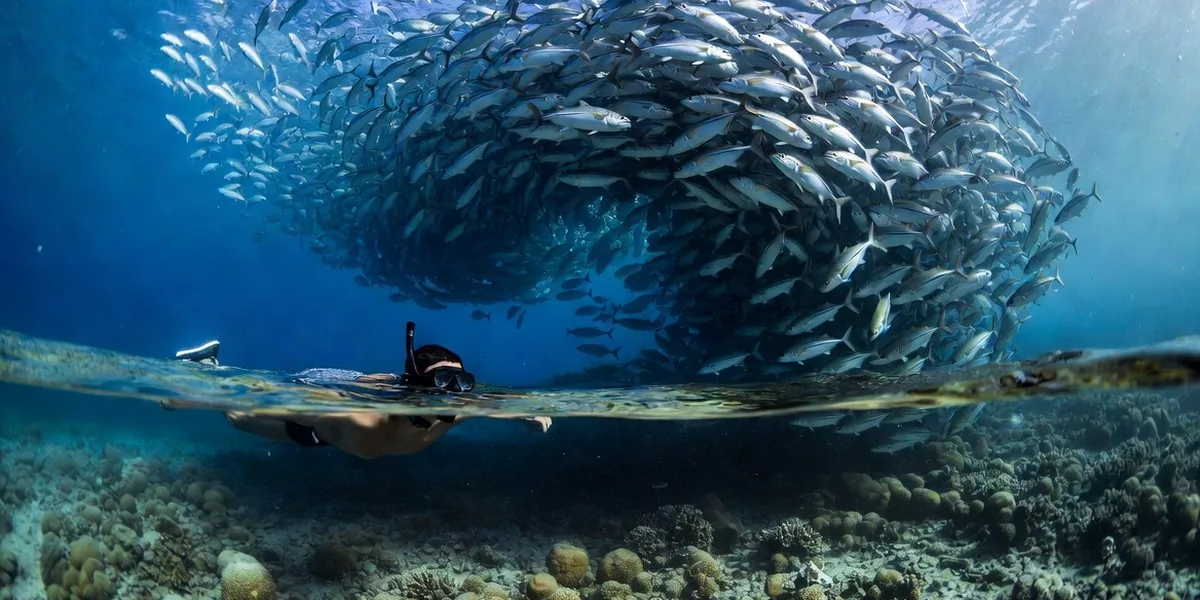
Cabo Pulmo is the best reef in the Sea of Cortez and one of the most successful marine conservation stories in Mexico. In the 1990s it was dead — overfished, bleached, functionally gone. The local fishing community voluntarily stopped fishing and lobbied for national park status. By 2006 the fish biomass had increased by 460%. Today it is a UNESCO World Heritage site with one of the most diverse marine ecosystems in the eastern Pacific. You can snorkel or dive in water so full of life it is occasionally overwhelming.
It is also 80 km from Cabo San Lucas on roads that make the distance feel longer. That is why most tourists skip it. That is also why it is worth your day.
Starting your Los Cabos planning? See the complete Los Cabos guide.
What Is Cabo Pulmo?
Cabo Pulmo National Marine Park covers about 71 square kilometers of the Sea of Cortez on the East Cape. The park protects the only living coral reef on the western coast of North America — a hard coral reef roughly 25,000 years old, home to more than 230 species of fish, 11 species of ray, five species of sea turtle, dolphins, whale sharks (seasonal), and bull sharks (year-round in deeper water).
The village of Cabo Pulmo has fewer than 100 permanent residents, no traffic lights, no chain hotels, no ATMs, and intermittent mobile signal. The dive operators and a handful of small guesthouses are the entire tourism infrastructure. This is intentional and protected by the park's management plan.
Snorkeling vs Diving at Cabo Pulmo
Both are worth doing; they show you different things.
Snorkeling gives you access to the shallower reef sections where fish density is extraordinary — schools of hundreds of jacks, parrotfish, angelfish, and sea turtles surfacing to breathe within arm's reach. Water clarity on a good day approaches 30 meters. You do not need to be a strong swimmer — most snorkel sites are calm with low current. Best snorkel sites: Las Navajas (the pinnacles), Los Arbolitos (named for the coral formations), and the shallow reef directly off the main beach.
Diving gets you to the larger animals. The famous dive is El Vencedor — a school of several hundred bull sharks that aggregates at depth from November through March. This is a controlled dive with experienced local guides who know the behavior patterns. The sharks are not a threat if you follow the guide's instructions. Beyond the sharks: whale sharks, manta rays, schools of jacks large enough to block the sun, and the deepest sections of the coral reef system. If you are a certified diver, Cabo Pulmo is worth a dedicated dive trip.
Best Cabo Pulmo Tours from Cabo San Lucas
By car: 80 km on Federal Highway 1 to the East Cape turnoff, then 18 km on an unpaved road to the village. The paved section takes about 1 hour 15 minutes; the dirt road adds 20–30 minutes. A standard rental car handles the road in dry season (October–May). In summer, the road washes out after heavy rain — check conditions. 4x4 is not required in dry season but makes the dirt section more comfortable.
Day tours from Cabo: Several operators run full-day Cabo Pulmo tours with transport. Expect $80–130 USD per person for transport, snorkeling or diving, gear, and lunch. The advantage: no navigation, no rental car upgrade, and local guides who know the best sites for the day's conditions. Book at least 3 days ahead in high season.
Dive-only from Cabo San Lucas: If you are specifically a diver, several Cabo dive shops run dedicated Cabo Pulmo dive days with tanks, weights, and instructor included. These typically cost $130–180 USD for a two-tank dive. Cabo Pulmo Divers (based in the park itself) and Manta Scuba have the deepest local knowledge.
What to See: The Short List by Season
November – March: Bull shark aggregation (diving), humpback whales offshore, excellent visibility, mild temperatures. Best overall season.
April – June: Whale shark season in the bay — snorkel with whale sharks in calm conditions. Fewer crowds than winter. Water warming up.
July – October: Hottest and some hurricane risk in September, but marine life is at peak diversity. Manta ray sightings common. Most budget-conscious time to visit.
Where to Stay at Cabo Pulmo
If you want to do multiple dives or want to be on the water at first light, staying in the village makes sense. Options are limited and deliberately so — the park prohibits new construction. Cabo Pulmo Beach Resort is the most established accommodation — casitas with solar power, no air conditioning, no pool. Rates run $80–150 USD per night. Camping is permitted in designated areas within the park; bring everything including water.
For most travelers doing a day trip, staying in Cabo San Lucas or San José del Cabo and driving or taking a tour makes more sense than staying in the village — unless Cabo Pulmo is the primary reason for the trip.
Is Cabo Pulmo Worth the Drive?
Yes, assuming you are making the trip specifically to be in the water. If you are going as a sightseeing drive to look at a fishing village, the distance does not justify itself. If you are snorkeling or diving, Cabo Pulmo is the best site in Baja California Sur — probably in all of Mexico's Pacific coast. The fish density and variety are not matched by anything closer to Cabo San Lucas. Go once, go in the water, and you will understand why the local community fought to protect it.
Cabo Pulmo vs Chileno Bay vs Santa María
If you are weighing snorkel and dive options from Cabo San Lucas: Chileno Bay and Santa María (both on the corridor, 15–20 minutes from Cabo) are excellent for families and easy access — calm, clear, decent coral, lots of fish. Cabo Pulmo is in a different category — more remote, more diverse, more fish, and the only site where you will encounter the full apex predator ecosystem. It requires more effort. The effort is proportional to the payoff.
See how Chileno Bay and Santa María compare in our Los Cabos snorkeling and diving guide.