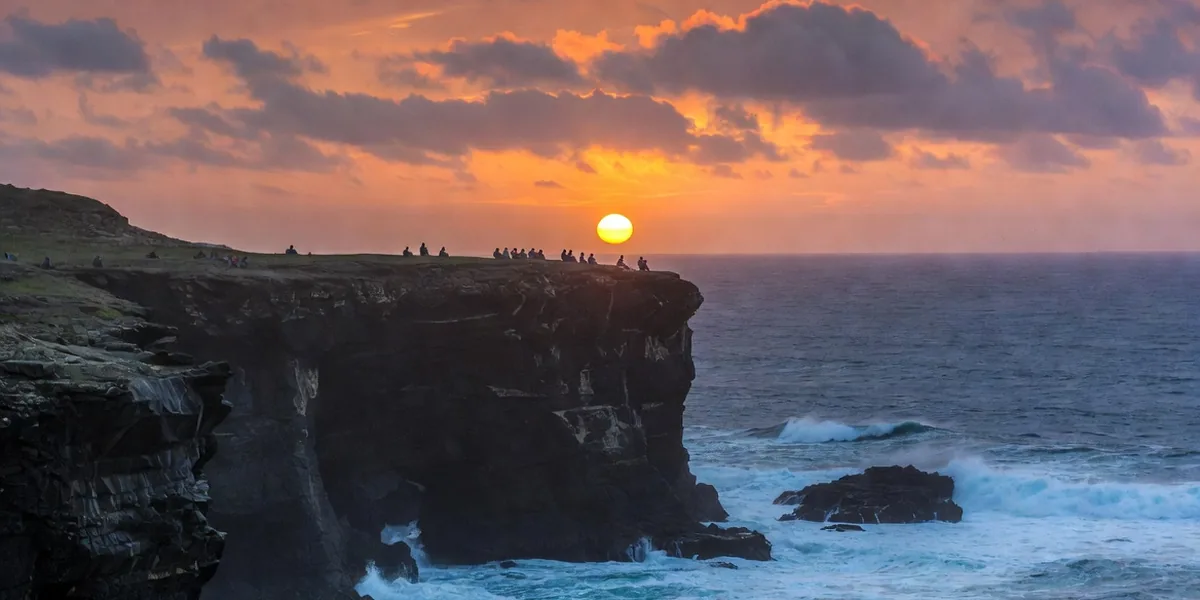
Punta Cometa is the southernmost point of the state of Oaxaca, a rocky cape that extends into the Pacific about 2 km west of Mazunte. At sunset it produces the kind of view that makes people stop talking mid-sentence. The Pacific is below on three sides. The sun descends directly into the ocean on the horizon. On clear evenings in dry season, the conditions occasionally produce the green flash — the atmospheric optical phenomenon that occurs in the final seconds before the sun drops below the horizon. The point is the destination. The 20-minute hike is the price of admission and it is entirely worth paying.
Punta Cometa is 2 km from Mazunte. Full guide to the village and what else to do while you are there: Mazunte guide.
The Hike
The trailhead starts at the western edge of Mazunte, where a dirt path climbs through coastal scrub forest toward the cape. The terrain is rocky — proper sandals or shoes are necessary, not flip-flops. The hike takes 20–30 minutes at a moderate pace and gains about 60 meters of elevation before descending to the point. The path is well-worn but has no official signage. Ask any local in Mazunte to point you toward the "sendero a Punta Cometa" and follow the most-traveled track.
At the point: a broad flat shelf of volcanic rock extending into the Pacific. To the east, the coastline curves back toward Mazunte and San Agustinillo. To the west, open ocean to the horizon. The rock has natural ledges and a few shallow depressions. Bring water and something to sit on — the rock surface is hot in the afternoon.
When to Go
Sunset (Primary)
Arrive 30–40 minutes before sunset for position on the rocks. The point gets crowded by Punta Cometa standards in high season — a dozen to twenty people is a packed evening here, which gives a sense of the scale. The light changes from gold to orange to deep red as the sun descends. The afterglow lasts 15–20 minutes after the sun drops. Stay for it.
Night
On clear new moon nights, Punta Cometa is one of the darkest sky locations accessible on foot from any significant Pacific beach town. The Milky Way is visible. The sound of the Pacific below in complete darkness makes for one of the more memorable night experiences on this coast. Go with someone you trust and bring a headlamp for the return.
Sunrise
The sun rises behind the hills — Punta Cometa faces west. Sunrise at the point is not the canonical experience. A morning hike in cool coastal air with the Pacific below in early light is pleasant, but the sunset is the reason to go.
The Green Flash
Approximately 1 in 20 sunsets at Punta Cometa, in optimal atmospheric conditions, produces the green flash. The conditions required: a sharp unobstructed horizon (Punta Cometa has this), low atmospheric humidity (more common November–April), and clear air without dust or particulates.
What it looks like: in the final second before the top of the sun disappears below the horizon, the remaining sliver of the disc turns from yellow-orange to a brief, vivid green. It lasts one to two seconds. Most people who see it for the first time report being unsure whether they actually saw it. The science involves differential atmospheric refraction of different light wavelengths — but the experience is simply: green, unmistakably.
What to Bring
- Water — the hike is short but the exposed point is hot in the afternoon
- A thin mat or towel to sit on — the volcanic rock is rough and hard
- Insect repellent — the scrub forest on the trail has mosquitoes in the evening
- A headlamp for the return after dark — the path is not lit
- Something to drink for the wait — this is a good sunset beer or mezcal situation
San Agustinillo is 10 minutes east and makes a better base than Mazunte for this area of the coast: San Agustinillo guide.
Frequently Asked Questions
The southernmost point of the state of Oaxaca, a rocky cape extending into the Pacific about 2 km west of Mazunte. Known primarily for its sunset viewpoint, which is considered one of the best on the Mexican Pacific coast.
The trailhead is at the western edge of Mazunte village. The hike takes 20–30 minutes on a rocky path through coastal scrub. Ask locals to point you toward the sendero a Punta Cometa. No official signage but the path is well-worn.
Sunset, arriving 30–40 minutes early for position. The dry season (November–April) gives the clearest conditions and the best chance of the green flash. Rainy season sunsets (June–September) can be dramatic with cloud formations but less reliably clear.
Yes. An atmospheric optical phenomenon occurring in the final seconds before the sun drops below a clear ocean horizon. Not every sunset produces it — conditions require low humidity and a sharp unobstructed horizon. Punta Cometa has the geometry for it. Best chances in dry season.
No. 20–30 minutes, modest elevation, rocky terrain. Appropriate sandals or shoes required. Not appropriate for flip-flops or anyone with serious mobility limitations. Most visitors of average fitness complete it without difficulty.