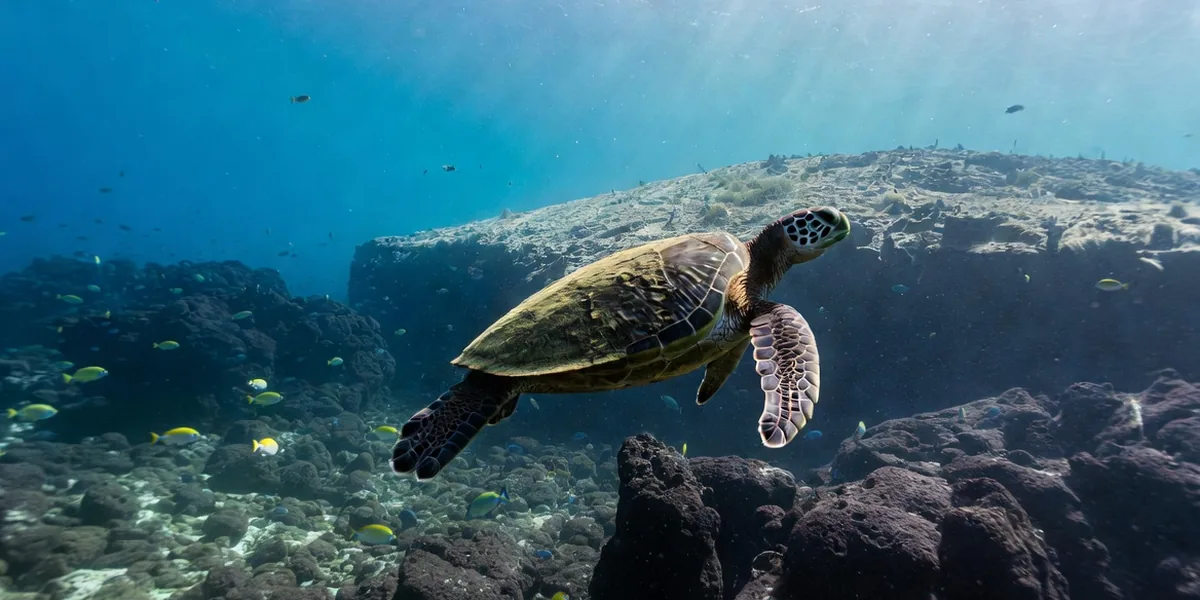
The Sea of Cortez hosts five of the world's seven sea turtle species. That concentration — in a body of water that covers less than 0.3% of the world's ocean surface — reflects the extraordinary richness of this marine ecosystem. For visitors to the Sonoran coast, sea turtles are not a rare sighting. They are part of the fabric of these waters.
Species in the Sea of Cortez
Loggerhead (Caretta caretta)
The most common species. Named for their large, powerful heads used to crush hard-shelled prey. Adults weigh 200–400 lbs. Frequently spotted during dive tours near San Carlos. Nesting occurs June through October.
Olive Ridley (Lepidochelys olivacea)
The most abundant sea turtle in the world. Smaller (80–110 lbs), known for mass nesting events called 'arribadas.' Key nesting beaches are actively protected.
Leatherback (Dermochelys coriacea)
The largest reptile on Earth — up to 7 feet and 1,500 lbs — and the deepest diving reptile. Feeds primarily on jellyfish. Transits through the Sea of Cortez during migrations. Critically endangered.
Hawksbill (Eretmochelys imbricata)
Named for the narrow beak. Feeds on sea sponges and is important to coral reef health. Present in the Sea of Cortez, critically endangered globally.
Green (Chelonia mydas)
Primarily herbivorous, feeding on sea grass. The most likely species encountered during shallow-water snorkeling.
Where to See Sea Turtles on the Sonoran Coast
Bahía de Kino — Conservation Programs
The Seri community and conservation organizations run turtle protection programs. From August through November, hatchling releases are sometimes open to visitors. The release of hatchlings at dusk is one of the most moving wildlife experiences available in Sonora.
San Carlos — Diving and Snorkeling
Sea turtles are regularly encountered during dive tours at Isla San Pedro Nolasco and snorkel trips at Piedras Pintas and El Soldado. Loggerheads are most common.
Isla Tiburón — Protected Waters
The waters surrounding Isla Tiburón have some of the highest sea turtle densities in the region. Seri-guided tours frequently include encounters.
Conservation Status
All species are protected under Mexican law. It is illegal to disturb nesting turtles, collect eggs, harm turtles in the water, or buy turtle products. The responsible encounter: observe from distance, do not touch, maintain neutral buoyancy when diving, follow guide instructions at nesting beaches.
If you are in Kino Bay between August and November and a conservation program is releasing hatchlings at sunset, go. It takes 10 minutes and produces a kind of quiet feeling that is difficult to describe. A hundred animals the size of your palm navigating by instinct toward a sea they have never seen. It is worth the scheduling effort. Bahía de Kino things to do.
Frequently Asked Questions
Five: loggerhead, olive ridley, leatherback, hawksbill, and green. The Sea of Cortez hosts five of the seven species found globally.
Bahía de Kino has conservation programs with hatchling releases Aug–Nov. San Carlos dive and snorkel tours encounter loggerheads regularly. Isla Tiburón waters have high turtle density.
Nesting season runs June through November. Hatching and hatchling releases occur primarily August through November.
Yes — conservation programs organize hatchling releases from August through November. Contact local tour operators for scheduled events.
No. All species are fully protected under Mexican law. Touching, harassing, disturbing nests, or purchasing turtle products is illegal with significant penalties.