Best Beaches in Cancún (2026)
By Mr. Playas · Updated 2026
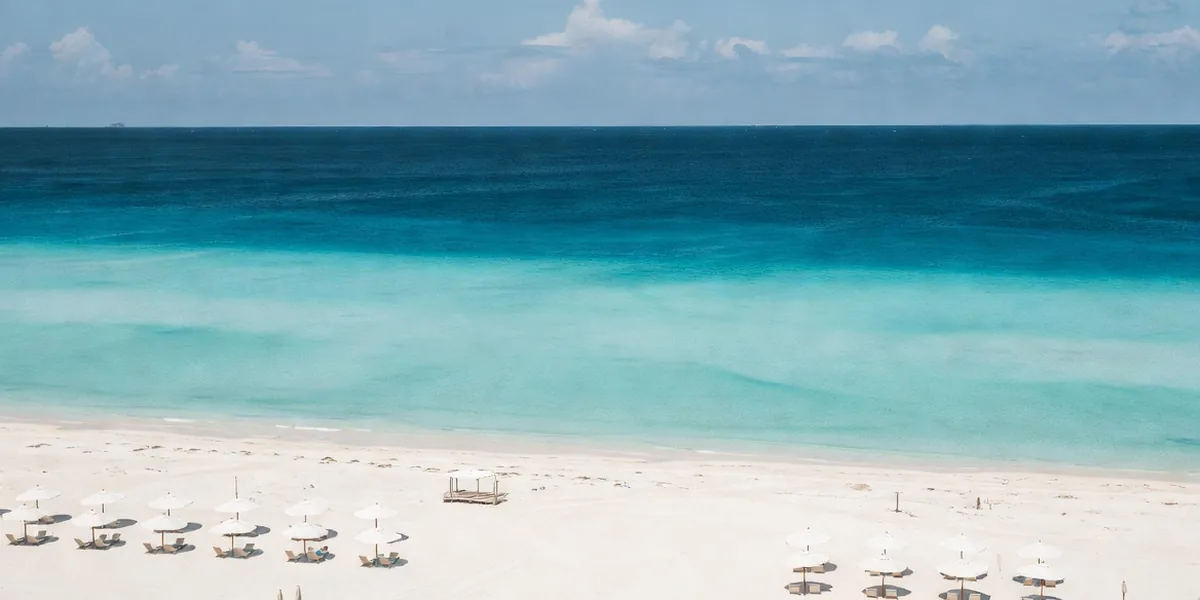
Cancún's Hotel Zone is a 22-kilometer sand bar shaped like the number 7. Caribbean Sea on one side, Nichupté Lagoon on the other. Every beach along it is public — Mexican federal law guarantees that — but the experience at each one varies dramatically depending on where you are on the strip, what time of year you visit, and whether you are willing to pay for a lounge chair.
This guide covers every public beach worth your time, explains the Hotel Zone geography so you can pick the right section, gives you the honest sargassum situation, and makes the case for the one beach nearby that is better than all of them.
How the Hotel Zone Works — The Shape of the 7
The Hotel Zone runs along Boulevard Kukulcán, marked by kilometer posts (KM 1 through KM 25). Understanding the shape of the 7 tells you everything about which beaches are calm and which ones have waves.
The top of the 7 (KM 1–9) runs east to west along the north shore. This section faces the protected Bay of Mujeres. Water is calmer here — less wave energy, less sargassum exposure, better for families with small kids. Playa Las Perlas, Playa Langosta, Playa Tortugas, and Playa Caracol are on this stretch.
The bend (KM 9–12) is where the strip turns south. This is the commercial center of the Hotel Zone — Forum by the Sea, Coco Bongo, shopping plazas. Playa Chac Mool sits here. Beaches are decent but secondary to the nightlife and restaurants.
The long stroke of the 7 (KM 12–25) faces the open Caribbean to the east. Bigger waves, stronger current, and the most dramatic water color in the entire Hotel Zone. This is where Playa Delfines and Playa Marlín sit. It is also the stretch most exposed to sargassum during peak season. The tradeoff is real: the most photogenic water comes with the most seaweed risk.
The R-1 and R-2 public buses run the full length of Boulevard Kukulcán for about 12 pesos (~$0.70 USD). They run constantly. You do not need a rental car or taxis to beach-hop along the Hotel Zone.
Playa Delfines — The Best Free Beach in Cancún
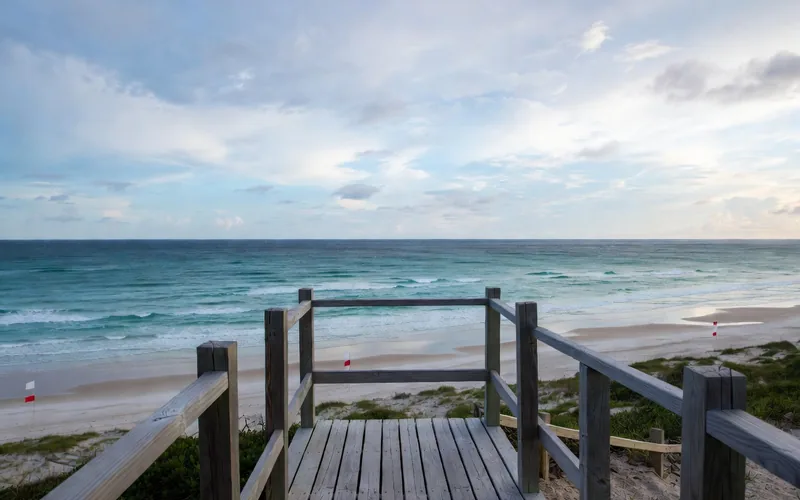
KM 18. The most photographed beach in the city and the one I recommend first to everyone who asks. Wide sand, no resorts crowding the shoreline, and the Caribbean at its most ridiculous — a turquoise that looks manipulated in photos but is somehow accurate in person. The iconic "CANCÚN" sign letters are here. Free parking lot, lifeguard on duty, public restrooms.
The reality check: Delfines faces directly east into the open Caribbean. The waves are stronger than the northern beaches — fun for adults who like a bit of surf, not great for toddlers. This east-facing orientation also means Delfines catches incoming sargassum first during peak season (May through August). The resorts a few kilometers north have cleaning crews on their sand at sunrise; Delfines relies on city crews who work mornings but cannot match that pace during heavy bloom days.
Best time to go: Before 9 AM for the sign photos without 40 people in frame. Weekday mornings are noticeably emptier than weekends. November through March for consistently clean water.
Who should skip it: Families with children under 5 who want calm, shallow, wade-in water. The waves are not dangerous but they are persistent, and small kids will get knocked around.
Best for: Budget travelers, solo visitors, couples who want the real beach without paying resort prices. The best free beach in Cancún.
Delfines is where I send every friend who visits Cancún. Free parking, no minimum spend, no bracelet, and the water is the same impossible turquoise as the $400/night resorts down the road. Get there before 9 AM for photos without the crowd. But if the beach is the main event of your trip — not a side attraction — take the 20-minute ferry to Isla Mujeres. Playa Norte is a better beach than anything in the Hotel Zone, full stop.
Playa Langosta — The Calm Water Pick for Families
KM 5. On the north shore of the 7, facing the protected Bay of Mujeres. A rocky breakwater on one side creates a sheltered swimming area where the wave action is close to zero by Cancún standards. If you have kids under 6 and want them in the water without holding their hand every second, this is the beach.
The beach itself is not as wide or photogenic as Delfines — the sand strip is narrower, and the water color is a shade less intense because of the calmer conditions. What you trade in spectacle you gain in convenience: Mercado 28 is close for cheap souvenirs and lunch, and the Forum shopping center is walking distance. No timeshare salespeople working this end of the strip.
Good to know: Palapa shade structures are available for rent — bring pesos, not dollars. Small food stalls nearby. Restrooms available.
Best for: Families with small children, anyone who prioritizes calm water over dramatic color, travelers who want beach plus shopping in the same morning.
Playa Tortugas — Central, Practical, Everything in One Spot
KM 6.5. The most well-equipped public beach in the Hotel Zone. Calmer water than Delfines, more facilities than Langosta. Tortugas has a little bit of everything — parasailing vendors, water sports rentals, beach volleyball courts, a bungee jump platform, and it is the departure point for some boat tours to Isla Mujeres.
The vibe is more commercial than Delfines (which is purely beach) and more lively than Langosta (which is purely calm). If you want one beach where you can swim, try a water activity, eat something, and catch a boat all in the same spot — Tortugas is the practical choice.
What most people get wrong: Booking Isla Mujeres ferry "tours" from vendors on the beach at resort-markup prices. The public Ultramar ferry departs from Puerto Juárez — a short, cheap taxi ride from the Hotel Zone — and costs about $8 USD round trip. The catamaran packages sold at Tortugas charge 5-10x that for the same destination plus an open bar you did not ask for.
Best for: Travelers who want activities with their beach time, first-timers who want the full Hotel Zone experience in one stop.
Playa Caracol — The Convenience Beach
KM 9. Where the top of the 7 starts bending south. Adjacent to the main shopping and restaurant cluster of the Hotel Zone. Not the most spectacular beach on this list — the sand is narrower, the setting more urban — but extremely convenient if you are already shopping on the strip or killing time between activities.
Caracol is also near the departure points for Xcaret and Xel-Há park ferry services. If you are doing a park day and want a quick swim before or after, this is the logical stop.
Best for: A quick swim between Hotel Zone activities. Functional, not spectacular.
Playa Chac Mool — Where the Calm Ends
KM 10. Right at the bend where the Hotel Zone transitions from the protected north shore to the exposed east-facing coast. The water here has noticeably more energy than Langosta or Tortugas — you are now facing the open Caribbean.
Chac Mool is a wide stretch of white sand with a good mix of space and accessibility. The beach has public access and is close to several mid-range resorts. It is popular with locals on weekends, which tells you something about the vibe — less touristy, more relaxed, decent food vendors.
The catch: Red flag days are more common here than on the north shore. Check the flag before you get in. If it is red, wade only — the undertow at Chac Mool can surprise you.
Best for: Travelers who want more wave energy without going all the way south to Delfines. Popular with locals.
Playa Marlín — The Underrated Alternative to Delfines
KM 13. Similar east-facing orientation to Delfines but closer to the mid-Hotel Zone area. The water color is nearly as good, the sand is wide, and there are significantly fewer people than at Delfines because it does not have the famous sign.
Marlín has lifeguards, public restrooms, and a small parking area. The waves are strong — same open Caribbean exposure as Delfines — so the same caveats apply for small children. What you get that Delfines does not: more space, fewer selfie sticks, and proximity to mid-strip restaurants for lunch afterward.
Insider note: If you visit Delfines and it is packed (which happens by 11 AM in high season), drive or bus 5 minutes north to Marlín. Same water, a fraction of the crowd.
Best for: Anyone who wants the Delfines experience without the Delfines crowd.
Playa Las Perlas — The Quiet Local Beach
KM 2.5. The first beach on the Hotel Zone strip, closest to downtown Cancún. This is where locals go. The water is calm (north shore, Bay of Mujeres), the beach has a small playground, and the atmosphere is laid-back in a way that the mid-strip beaches are not.
Las Perlas is not going to win any photography awards — the sand is narrower and the setting is simpler than the resort-adjacent beaches further down the strip. But if you want to swim in calm water without commercial noise, this works.
Best for: Locals, travelers staying downtown who want the closest calm beach, families who want a playground.
Resort Beach Day Passes — When They Are Worth It
Most large Hotel Zone resorts sell day passes for non-guests. Typical cost: $50–150 USD minimum spend, which gets you a lounge chair, umbrella, pool access, and food and drink credit. The water is the same Caribbean as the free beaches. What you are paying for is infrastructure — shade, service, and daily sargassum cleaning.
When it is worth it: During peak sargassum months (June through August). Resort crews clear their sand before sunrise every day. They also have pools as backup. On a bad seaweed day, the difference between a resort beach and Playa Delfines is night and day.
When it is not worth it: November through March, when the water is consistently clean across the entire Hotel Zone. You would be paying $100 for a chair when Delfines is free and the water looks exactly the same.
What most people get wrong: Buying a day pass on day one of a week-long trip. Try the free beaches first. If the water is clean and you are comfortable without a lounge chair, save the money. If the seaweed is rough, then the day pass earns its price.
Mr. Playas rule: Same Caribbean water with a $50-150 entry fee for a chair and a drink. Worth it during sargassum season. Diminishing returns every other month.
The Sargassum Situation — What You Actually Need to Know
Sargassum is floating seaweed that has arrived on Caribbean coastlines in seasonal waves since around 2011. It is not a Cancún-specific problem — it affects the entire Yucatán coast, parts of Tulum, Playa del Carmen, and the islands. But the Hotel Zone's east-facing beaches (KM 10–25) are especially exposed because they face the open ocean where the seaweed originates.
Peak season: May through August, with some seaweed possible from April through October. The amount varies dramatically year to year and even week to week — there is no way to predict months in advance whether your specific trip dates will be affected.
Where it hits hardest: The southeast-facing beaches from KM 10 to KM 25. Playa Delfines, Playa Marlín, and Playa Chac Mool get it worst. The north shore beaches (KM 1–9) — Langosta, Tortugas, Las Perlas — face the Bay of Mujeres and receive significantly less.
What resorts do about it: Every major resort has cleaning crews that rake their sand before guests wake up. The municipal beaches (Delfines, Tortugas) have city crews, but they cannot match the resort pace. This is the main practical argument for resort day passes during sargassum months.
Your best moves if sargassum is bad: Head to the north shore beaches. Take the ferry to Isla Mujeres — Playa Norte faces north and is less affected most years. Drive 30 minutes south to Puerto Morelos, which sits behind a reef that blocks a significant amount of seaweed. Or pivot to cenotes — underground freshwater, zero sargassum, and honestly a better experience than most beaches anyway.
If the Hotel Zone beaches are rough during your visit: Isla Mujeres (20 min ferry), Puerto Morelos (30 min south, reef-protected), or cenotes (1-2 hours, underground, zero seaweed). Do not let sargassum ruin your trip — just change the plan. Cenotes near Cancún.
Playa Norte, Isla Mujeres — The Best Beach Near Cancún
I will say this as directly as I can: Playa Norte on Isla Mujeres is a better beach than anything in the Hotel Zone. Shallow, warm, protected from swell, turquoise in a way that looks digitally enhanced. It consistently ranks among the best beaches in the entire Caribbean, and it is a 20-minute ferry ride from Cancún.
How to get there: Ultramar ferry from Puerto Juárez (north end of Cancún, not in the Hotel Zone). About $8 USD round trip. Ferries run every 30 minutes. The whole trip door-to-door from a mid-Hotel Zone hotel is about 45 minutes including the taxi to the port. Skip the overpriced catamaran "tours" sold in the Hotel Zone — the public ferry gets you to the same island.
Day trip vs overnight: A day trip works. An overnight is better. The island empties out around 5 PM when the day-trippers leave, and the sunset from Playa Norte with a fraction of the crowd is worth the hotel night. Budget guesthouses on the island run $40–80 USD.
The catch: Playa Norte fills up by midday in high season. Arrive before 10 AM for a good spot. Beach chairs are rented from the beachside restaurants — minimum consumption applies, usually a couple of drinks.
Best for: Everyone. Honestly, everyone. If the beach is the priority of your Cancún trip, Isla Mujeres should be on the itinerary.
20-minute ferry from Puerto Juárez. $8 USD round trip. Shallow, calm, warm, and the color of a swimming pool at its best. Day trip minimum. Overnight ideally. Full Isla Mujeres guide.
Quick Picks — Which Cancún Beach Is Right for You
| If you want… | Go to | Why |
|---|---|---|
| Best free beach | Playa Delfines | Best water color, no fees, iconic sign |
| Calm water for kids | Playa Langosta | Protected breakwater, near-zero waves |
| Activities + beach | Playa Tortugas | Water sports, food, boat tours in one spot |
| Delfines without crowds | Playa Marlín | Same water, fraction of the people |
| Local vibe | Playa Las Perlas | Where Cancún locals actually go |
| Best beach, period | Playa Norte (Isla Mujeres) | 20 min ferry, different league |
| Sargassum backup | North shore or Isla Mujeres | Protected from open-ocean seaweed |
Logistics — Getting Around, Costs, Timing
Public buses (R-1 and R-2): Run the full length of Boulevard Kukulcán, about 12 pesos (~$0.70 USD). They run constantly from early morning to late evening. This is how locals get around the Hotel Zone and it works perfectly for beach-hopping. Flag one down from any bus stop along the boulevard.
Taxis: Hotel Zone taxis do not use meters. Negotiate before you get in. A typical ride within the Hotel Zone runs $5–10 USD. From the Hotel Zone to Puerto Juárez (for the Isla Mujeres ferry) is about $8–12 USD.
What to bring: Sunscreen (reef-safe if you plan on snorkeling or visiting cenotes), cash in pesos for palapa rentals and food stalls, water, and a towel. The public beaches do not provide chairs or shade — that is the resort tradeoff.
Best time of year: November through March for the cleanest water, lowest sargassum risk, and the most pleasant temperatures. April is a transition month. May through August is when sargassum becomes a factor on the east-facing beaches.
Best time of day: Before 9 AM at Delfines for photos. Before 10 AM at Playa Norte on Isla Mujeres for a good spot. Midday is fine at the north-shore beaches (Langosta, Tortugas) since they never get as packed. Sunset is best watched from the lagoon side, not the beach — the Hotel Zone faces east.
Mistakes to Avoid
Never buying a day pass in sargassum season. If you visit in June through August and the seaweed is heavy, a resort day pass with pool backup is worth every dollar. Trying to tough it out at a free beach covered in seaweed is not a badge of honor — it is a waste of a vacation day.
Booking the catamaran tour to Isla Mujeres from the Hotel Zone. These cost $80–120 USD per person and include an open bar you probably do not need at 10 AM. The public Ultramar ferry is $8 round trip and gets you to the same island. Spend the savings on lunch at Playa Norte.
Only visiting Delfines. It is the most famous beach in Cancún, but it is one of seven public options and not necessarily the best for your situation. If you have kids, Langosta is better. If you hate crowds, Marlín is better. If you want the best beach experience available from Cancún, the ferry to Isla Mujeres is better.
Skipping the north-shore beaches entirely. Most guides focus on Delfines and the resort section. The north shore (KM 1–9) has calmer water, less sargassum, and a more relaxed atmosphere. It does not photograph as dramatically but it is where you will actually enjoy swimming.
Assuming "public beach" means you can walk through a resort. All beaches are public by law, but some resorts make the walk-through to reach the sand intentionally confusing. Use the marked public access points (Delfines, Tortugas, Langosta, Caracol, Chac Mool, Las Perlas) instead of trying to cut through a resort lobby.
Cancún has good beaches. Not great beaches — good beaches. The Hotel Zone delivers reliable Caribbean water, easy access, and enough variety to keep a week interesting. Delfines is the star of the free beaches. Langosta is the family pick. Tortugas is the all-in-one.
But if the beach is the main event of your trip — the thing you flew 2,000 miles for — take the ferry to Isla Mujeres. Playa Norte is the best beach accessible from Cancún by a significant margin. Twenty minutes and eight dollars. That is the honest answer.
And if sargassum hits during your trip, do not panic. Head to the north shore, ferry to Isla Mujeres, drive to Puerto Morelos, or spend the day at cenotes. The Yucatán has options. The worst thing you can do is sit at a seaweed-covered beach and complain about it.
Day Trips and Water Activities from Cancún
Isla Mujeres ferry tours, catamaran trips, snorkeling, and cenote day trips — bookable with free cancellation.
More Cancún Guides
Frequently Asked Questions
Playa Delfines (KM 18) for the water color and the iconic sign. Playa Langosta (KM 5) for calm water and families. But if you can take a 20-minute ferry: Playa Norte on Isla Mujeres is in a different category entirely.
Yes. Mexican federal law guarantees public access to every beach in the country. The Hotel Zone has six marked public access points: Delfines, Tortugas, Langosta, Caracol, Chac Mool, and Las Perlas. Resorts cannot legally block access to the sand.
Yes, though conditions vary. North-shore beaches (Langosta, Tortugas, Las Perlas) have calm, protected water. East-facing beaches (Delfines, Marlín, Chac Mool) have more wave action. Always check the flag system — red means wade only.
Peak sargassum is May through August. November through March is the cleanest period. The east-facing beaches (KM 10-25) are most affected. North-shore beaches (KM 1-9), Isla Mujeres, and Puerto Morelos are less exposed alternatives.
During sargassum months (June-August): yes — resorts clean their sand daily and have pools as backup. During clean-water months (November-March): no — Playa Delfines is free and the water is identical. Day passes run $50-150 USD minimum spend.
Playa Langosta (KM 5) for the calmest water thanks to a protective breakwater. Playa Las Perlas (KM 2.5) has a playground. Both are on the protected north shore. Avoid Delfines and Marlín with small children — the waves are persistent.
Ultramar ferry from Puerto Juárez, about $8 USD round trip, ferries every 30 minutes. The ride is 20 minutes. Skip the expensive catamaran tours sold in the Hotel Zone — the public ferry gets you to the same island for a fraction of the cost.