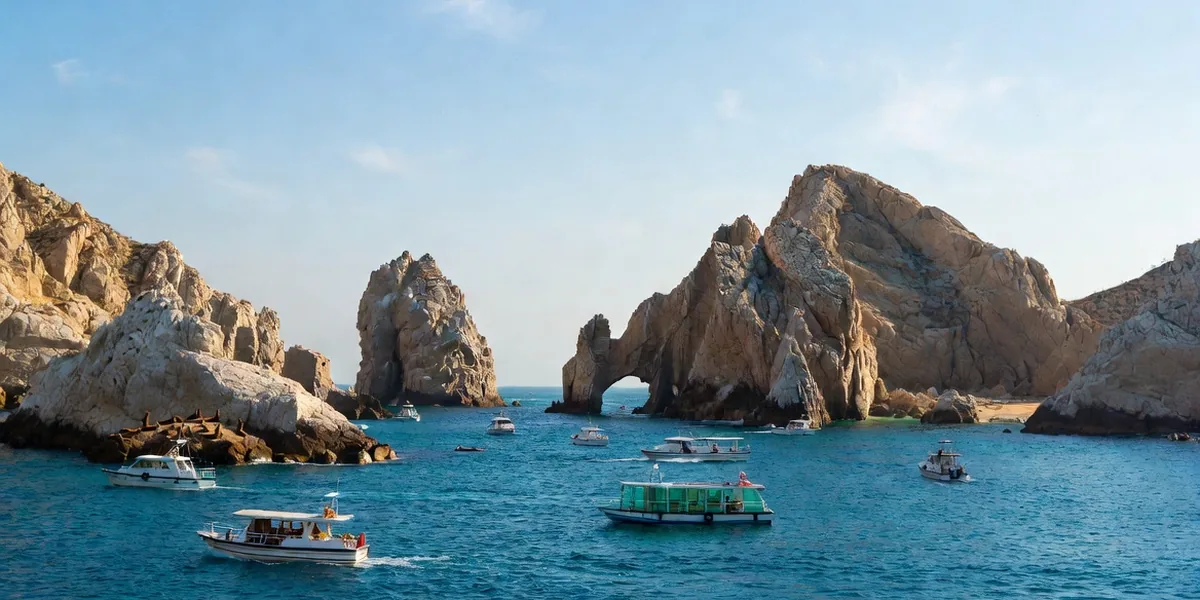
This is the complete list of things to do in Los Cabos in 2026 — every worthwhile activity, ranked in order, by someone who has done them all. Los Cabos works perfectly as a do-nothing resort trip: beach, pool, cold drink, repeat. The infrastructure exists specifically for that. But Los Cabos also has genuinely world-class activities that most resort guests never touch. The Arch is one of the most dramatic natural landmarks in the Americas. Cabo Pulmo has one of the most important coral reef systems in the Pacific. The whale watching from December through March is among the most reliable on the continent. And the desert-meets-ocean landscape creates a setting the Caribbean side of Mexico cannot match.
Below: the 15 highest-impact activities ranked, plus 10 honorable mentions, what to do by season, and the mistakes that cost first-timers the best of Cabo. With current 2026 costs and the honest take on what to skip.
Quick Picks: Top Things to Do in Los Cabos
- See El Arco — boat tour or kayak from the marina ($15–20)
- Whale watching — December through March, 2-3 hour tour ($60–90)
- Cabo Pulmo day trip — best snorkeling reef in the Pacific ($80–120)
- Sport fishing — marlin, dorado, tuna ($90–130 per person shared)
- Snorkel Santa María & Chileno Bay — free, beach access
- San José gallery night — Thursdays Nov-Jun, free
- Todos Santos day trip — Pueblo Mágico, 1 hour drive
- Sunset sail from the marina — $60–90, open bar included
- Desert ATV tour — $70–120 half day
- San José Estuary bird walk — free, 350+ species
First time in Los Cabos? Start with our complete Los Cabos guide.
1. El Arco de Cabo San Lucas — The First Stop for Everyone
The natural stone arch at Land's End, where the Pacific Ocean and the Sea of Cortez literally meet. On one side the water is rough and gray (Pacific). On the other, calm and turquoise (Cortez). The divide is visible from the water. Nearby: Playa del Amor (Lover's Beach), the sea lion colony on the surrounding rocks, and Pelican Rock for snorkeling.
Glass-bottom boat tour: $15-20 USD round trip from the marina. Takes 45 minutes to an hour with stops at the Arch, Lover's Beach, and the sea lion rocks. This is the standard tourist option — fine for photos, overcrowded in high season.
The better option: Rent a kayak or paddleboard and go yourself. The paddle from the marina takes about 30 minutes. Getting to the Arch under your own power, on your own schedule, without a boatload of tourists — that is a meaningfully different experience. Go in the morning when conditions are calm and the light is best on the rocks.
Do not swim at Divorce Beach (the Pacific-facing side near the Arch). Spectacular to look at, lethal rip currents. People drown here regularly. Lover's Beach (Cortez side) is safer but still has current — wade, do not swim far out.
2. Whale Watching — The Best Winter Activity in Mexico
From December through April, humpback whales use the warm waters around Los Cabos as a breeding and calving ground. Grey whales transit through the Sea of Cortez on their way to Baja's Pacific lagoons. The concentration of large whales in this area during winter is extraordinary.
This is not a "maybe you'll see a distant spout" experience. In peak season (January through March), multiple whale sightings per tour are near-certain. Most operators offer a free second trip if you do not see whales — they rarely have to honor it. Humpbacks breach, slap fins, and lob tails. You will be close enough to see barnacles. Grey whales are calmer but impressively large (up to 14 meters). Dolphins escort boats frequently.
Cost: $60-90 USD for a 2-3 hour tour. Book a naturalist-guided tour if available — understanding what you are watching makes the experience significantly better. Morning departures typically have calmer water.
Peak months: January and February for humpbacks. March for grey whale calves with mothers. December and April are bookends — sightings happen but are less reliable.
If whale watching is the reason for your trip: Come in late January or February. That is the sweet spot for whale density and activity.
3. Cabo Pulmo — The Best Day Trip in Baja California Sur
Forty-five miles northeast of San José del Cabo, Cabo Pulmo National Marine Park contains one of only three living coral reefs in the Gulf of California and the northernmost coral reef in the eastern Pacific. In the 1990s the local community voluntarily stopped fishing the reef. The recovery since then has been one of the great conservation successes in Mexican history — marine biomass increased by over 460% in less than two decades.
The result: extraordinary marine life density. Bull sharks, manta rays, sea turtles, massive schools of bigeye jacks, hundreds of tropical fish species, and occasional whale sharks. The water clarity is excellent. The snorkeling alone is world-class; the diving is even better.
Cost: Day tours from Los Cabos with snorkeling, diving, and lunch run $80-120 USD. The drive is about 2 hours each way on a partially unpaved road (rental car or tour van).
Who should go: Anyone who cares about the ocean. If you have one day-trip budget in Los Cabos, spend it here. The reef is not the colorful Caribbean variety — it is a Pacific reef with different species and formations — but the density of life is staggering.
Most people who visit Los Cabos never make it to Cabo Pulmo. That is mostly a function of distance. It is also the best single thing you can do in the region if you care about the ocean. Cabo Pulmo complete guide.
4. Sport Fishing — The Marlin Capital of the World
Cabo San Lucas earned its reputation through decades of extraordinary catches and international tournaments dating back to the 1950s. The currents that meet at Land's End concentrate baitfish and attract blue marlin, striped marlin, sailfish, dorado (mahi-mahi), yellowfin tuna, wahoo, and roosterfish.
Shared charter (4-6 people): $90-130 USD per person for a half day (5-6 hours). You share the boat with other anglers. Good introduction if you have never sport fished.
Private charter: Full day runs $800-1,500 USD depending on boat size and season. Worth it for serious anglers or groups of 4+ who can split the cost.
Best season: October and November for the most marlin. Dorado is excellent May through October. Yellowfin tuna runs year-round with peaks in summer. Striped marlin: December through March (overlaps with whale season — do both in one trip).
Charter boats leave at 6 AM from the marina. Book through the marina pangero cooperatives for fair pricing, or through Viator for guaranteed operators with reviews.
5. Snorkeling at Santa María Bay and Chileno Bay
The two best snorkeling spots in the Tourist Corridor, both accessible by car (no boat needed) and both free to enter.
Santa María Bay (KM 12, Highway 1): A protected cove cradled by golden cliffs with calm, clear water. Tropical fish, rays, and occasional sea turtles. The beach is gorgeous. Arrive before 10 AM — by midday the boats arrive and the cove gets crowded. Bring your own snorkel gear; there are no reliable rental shops at the beach.
Chileno Bay (KM 14, Highway 1): Slightly calmer water than Santa María, with reef formations close to shore. Lifeguards on duty, restrooms, and a protected swimming area. The coral is accessible from the beach. Better facilities than Santa María; slightly less dramatic scenery.
The play: Hit Santa María first thing in the morning (best light, empty), then drive 5 minutes to Chileno Bay for the second snorkel session. Two completely different underwater environments in one morning.
6. San José del Cabo — Gallery Night and the Art District
Every Thursday evening from November through June, the galleries in San José del Cabo's art district open their doors for a gallery walk. Local Baja California artists, live music on the streets, free wine in some spots, and a colonial downtown around the church square that is genuinely beautiful. This is the Los Cabos that most Cabo San Lucas resort guests never see.
The difference between the two towns: Cabo San Lucas is the party town — marina, nightclubs, spring break energy. San José del Cabo is the quiet, historic, cultural town with galleries, boutique restaurants, and a main square that feels like interior Mexico. If you only leave the resort once, make it San José on a Thursday.
Also worth your time in San José: The estuary (Estero de San José) is a protected wetland area with 350+ bird species, accessible by kayak or on foot. Completely free, completely overlooked. One of the best bird-watching spots in Baja.
7. Todos Santos Day Trip — The Pueblo Mágico
One hour north of Cabo San Lucas on Highway 19. A designated Pueblo Mágico with a surf break, an art community, the famously-misidentified Hotel California (not the Eagles song, but everyone leans into it anyway), and a handful of restaurants that consistently make national best-of lists.
Todos Santos has a completely different energy from Los Cabos — slower, more bohemian, artistically serious. The galleries here are not resort gift shops; they are working studios. The surf at Los Cerritos beach (20 minutes further south) is the best beginner surf in Baja. Full Todos Santos guide.
Worth a day trip or overnight. Drive yourself for maximum flexibility. The road from Cabo is good two-lane highway. Combine with a sunset at Los Cerritos beach.
8. Sunset Sail from the Marina
Catamaran and sailing cruises depart from Cabo San Lucas marina in the late afternoon for a 2-3 hour sunset sail. Open bar, appetizers, music, and a front-row seat to the sun dropping behind the Pacific horizon at Land's End. The water color at golden hour between the Pacific and Cortez sides is extraordinary.
Cost: $60-90 USD per person including open bar and snacks. Book through Viator for operators with real reviews. The party boats (loud music, drinking games) and the chill sailing boats (ambient music, couples) are different products — check what you are booking.
This is one of the few "tourist trap" activities in Cabo that actually delivers on the promise. The sunset from water level is better than from any rooftop bar.
9. Desert ATV and Off-Road Tours
The Sonoran desert backdrop of Los Cabos is accessible by ATV, dirt bike, and dune buggy. Half-day tours head into the desert landscape behind Cabo San Lucas — arroyos, cactus forests, Pacific overlooks, and enough sand to make it interesting. Some tours include a stop at a beach, a tequila tasting, or a ranch lunch.
Cost: $70-120 USD for a half-day. Multi-activity tours (ATV + zip line + camel ride) run $120-180 USD.
Honest take: Fun if you enjoy driving fast on dirt. Not a must-do unless off-road is your thing. The desert scenery is genuinely impressive — the contrast between cactus-covered hills and the Pacific below is unique to Baja — but the driving itself is the standard tour operator experience.
10. Camel Riding on the Beach
Yes, there are camels in Cabo. A small operation runs camel rides on the Pacific beach near the Old Lighthouse, typically combined with a tequila tasting. It is not a natural Baja experience — the camels are imported — but it is surprisingly fun and photogenic, especially at sunset.
Cost: $80-110 USD including the ride, tequila tasting, and transfer. About 2 hours total.
Honest take: Gimmicky? Yes. Will you remember it and have good photos? Also yes. Better than expected for what it is.
11. Scuba Diving
Los Cabos has several dive sites accessible from the marina: Pelican Rock (near El Arco, good for beginners), the Sand Falls (an underwater sand cascade — unique to Cabo), and the Sea of Cortez wall dives. For serious diving, Cabo Pulmo (day trip) is in a different league.
Cost: Two-tank marina dives: $90-130 USD. Cabo Pulmo day trip with diving: $150-200 USD. The Sand Falls dive is the most unique option — an underwater waterfall of sand cascading over a rock ledge into a canyon. Nowhere else in the world has this.
12. Cooking Classes and Tequila Tastings
Several operators in San José del Cabo run half-day cooking classes that include a market tour, hands-on cooking, and a meal. Good rainy-day option or for travelers who want to learn Mexican technique beyond resort buffet cuisine. Tequila and mezcal tastings are available at Flora Farms, several San José bars, and as standalone tour experiences.
Cost: Cooking classes: $80-130 USD. Tequila tastings: $30-60 USD. Flora Farms offers a combined farm tour + cooking class that is the best version of this experience in Los Cabos.
13. Medano Beach — The Social Beach
The main swimming beach in Cabo San Lucas. Medano is the only safe swimming beach in downtown Cabo — the rest of the town-adjacent coastline has dangerous currents. The beach is wide, the water is calm, and the sand is lined with beach clubs, vendors, bars, and water sports rentals (jet skis, parasailing, banana boats).
Free access: Walk down from the marina. The public section has no entry fee. Food and drinks from beach vendors run $3-8 USD.
Beach club option: Mango Deck, Billygan's Island, and others charge a $30-60 USD minimum spend for chairs and umbrellas, credited toward food and drinks. Worth it for a full day; skip if you are only there for an hour.
Vibe: Lively, social, commercial. This is the party beach. If you want quiet, go to Chileno Bay or Santa María.
14. Sierra de la Laguna Hiking
The mountain range behind Los Cabos is a UNESCO Biosphere Reserve with oak and pine forests, hidden waterfalls, thermal pools, and rare bird species. Multi-day treks cross the range from the Gulf to the Pacific side. Day hikes from the foothills are accessible from San José del Cabo.
Best for: Experienced hikers who want to see the other side of Baja — the side that is not beaches and resorts. A guided day hike runs $60-100 USD. Multi-day treks with camping require a local guide.
Honest take: Underrated. The contrast between the desert coast and the pine-forested mountains 45 minutes inland is startling. Not for everyone, but hikers who make the effort are rewarded with something completely unexpected.
15. San José del Cabo Estuary — The Free Hidden Gem
A protected wetland at the southern end of San José del Cabo's hotel zone. Over 350 bird species have been recorded here — herons, egrets, ospreys, pelicans, and migratory species depending on season. Accessible by foot (a path runs the perimeter) or by kayak. Completely free. Completely ignored by 95% of Los Cabos visitors.
Best time: Early morning for birding. Sunset for the light on the water. Combine with a walk through San José's main square.
10 More Things to Do in Los Cabos
Beyond the main 15, these are worth your time depending on interests and time of year:
- 16. Flora Farms dinner — Farm-to-table dining outside San José. Reservations required, often weeks ahead.
- 17. Stand-up paddleboarding at Santa María — Calm cove, gentle conditions, board rentals at the beach.
- 18. La Lobera viewpoint — Pacific cliff overlook with sea lion colony, 30 minutes from Cabo San Lucas.
- 19. Sea kayaking the Cortez coast — Multi-hour guided paddles along the Corridor coastline.
- 20. Surfing at Los Cerritos — Best beginner surf in Baja, near Todos Santos.
- 21. East Cape day trip (La Ribera) — Untouched beaches and small fishing village, 90 minutes northeast.
- 22. Helicopter tour of El Arco — Expensive ($300+), but the aerial view of the Arch and Land's End is unmatched.
- 23. Mezcal tour in San José — Multiple bars in the art district offer flights and tastings.
- 24. Whale shark tour from La Paz — Day trip from La Paz (3 hours north), seasonal Oct-April.
- 25. Glass-bottom kayak tour — See the reef and El Arco from a transparent kayak ($60–80).
Book Tours and Activities in Los Cabos
Whale watching, Cabo Pulmo snorkeling, sailing cruises, ATV desert tours, and fishing charters — browse verified operators with free cancellation.
What to Do in Los Cabos by Season
December through March: Whale watching (peak Jan-Feb), gallery night in San José, best weather (75-80°F, dry). Peak tourist season — book ahead.
April through June: Warming up, crowds thinning. Marlin season begins. Whale watching ends April. Good shoulder-season value.
July through September: Hot (90°F+), cheapest prices, occasional hurricanes. Dorado and tuna fishing is excellent. Water is warmest for snorkeling. Resort deals are significant.
October through November: The marlin peak. Water is still warm. Crowds are low. Some consider this the best time to visit for the combination of fishing, weather, and pricing.
Mistakes to Avoid
Never leaving the resort. The resort pool is the same temperature as the Sea of Cortez. The whale watching, Cabo Pulmo, and San José gallery night are not. Los Cabos has legitimate world-class activities that require getting off the property.
Swimming at Divorce Beach or Playa Solmar. Both are Pacific-facing with lethal rip currents. People drown at both every year. Medano Beach is the safe swimming option in downtown Cabo. In the Corridor: Santa María and Chileno Bay.
Booking everything through the resort concierge. Resort-arranged tours and activities run 30-50% more than booking the same thing directly through the operator or Viator. The concierge is selling you a markup, not a better experience.
Skipping San José del Cabo. Most first-timers stay in Cabo San Lucas and never cross to San José. The art district, the colonial downtown, the estuary, and the better restaurants are all in San José. It is a 30-minute drive or $25 taxi from Cabo San Lucas.
Relying on taxis for the Corridor. Taxis between Cabo San Lucas and San José del Cabo are expensive ($25-40 one way) and there is no practical public transit on the Corridor. If you plan to visit beaches, restaurants, or activities between the two towns, a rental car pays for itself in two days.
Rent a Car in Los Cabos
The Corridor has no practical public transit. A rental car unlocks Cabo Pulmo, Todos Santos, the Corridor beaches, and San José del Cabo.
Compare rental cars in Los CabosFrequently Asked Questions
The top 5 in order: whale watching (Dec-Mar), Cabo Pulmo snorkeling, El Arco by boat or kayak, sport fishing, and Santa María/Chileno Bay snorkeling. These five cover Cabo's signature experiences. Add San José gallery night on Thursdays if your trip overlaps.
El Arco, whale watching, Cabo Pulmo, sport fishing, Todos Santos, San José gallery night, ATV desert tours, camel riding, scuba diving (including the unique Sand Falls), cooking classes, Sierra de la Laguna hiking, and the San José estuary. Los Cabos has more non-beach activities than most Mexican beach destinations.
Medano Beach access, Santa María and Chileno Bay snorkeling (bring your own gear), San José Estuary bird walk, San José gallery night (Thursday evenings Nov-Jun), Pelican Rock hike, and the public sections of every Corridor beach. Many of the best Cabo experiences cost nothing.
If fishing is your thing, Cabo is one of the best places in the world to do it. If you have never fished and are curious, a shared half-day charter ($90-130 per person) is an easy introduction. The early morning on the water is the experience regardless of the catch.
Yes. It is a genuinely different experience from Cabo San Lucas — an art community in a Pueblo Mágico with serious restaurants and a nearby surf break. One hour each way. Drive yourself for flexibility.
January-February for whale watching and the best weather. October-November for marlin fishing and fewer crowds. June-September is cheapest but hot with occasional hurricanes.
For the resort experience: no. For Cabo Pulmo, Todos Santos, Corridor beaches, and San José del Cabo: yes. Taxis between the two towns run $25-40 each way. A rental car ($25-35/day) pays for itself quickly.