Bacalar — The Complete Guide
The most extraordinary body of water in the Mexican Caribbean that is not the ocean. Seven distinct shades of blue and green in a 42-km lake, bioluminescent plankton at night, and a pace that makes Tulum feel rushed.
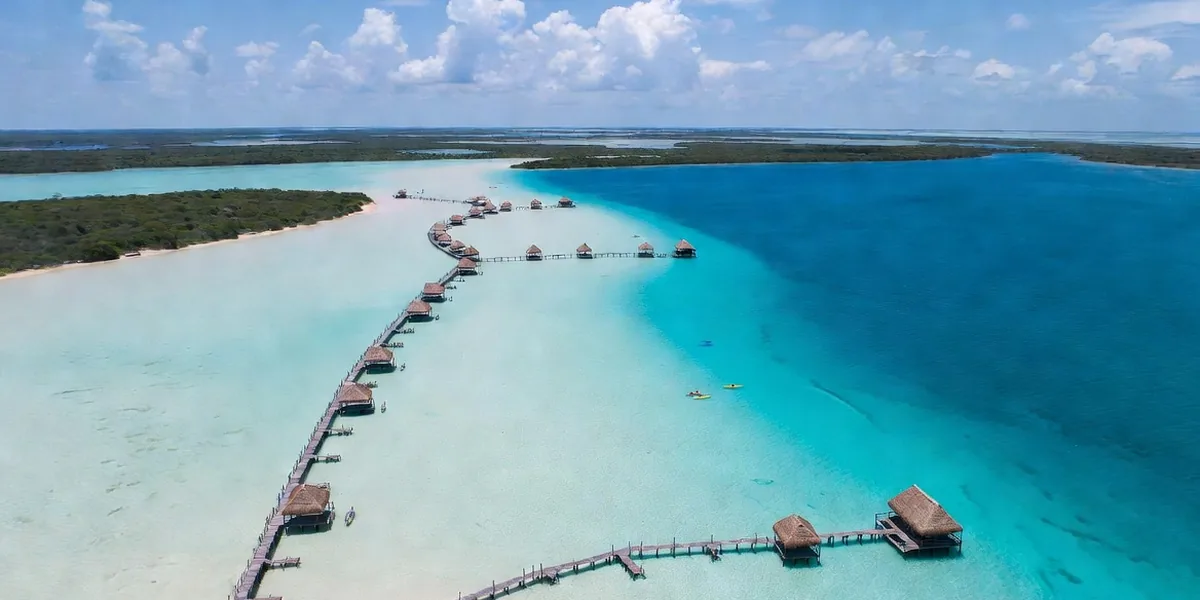
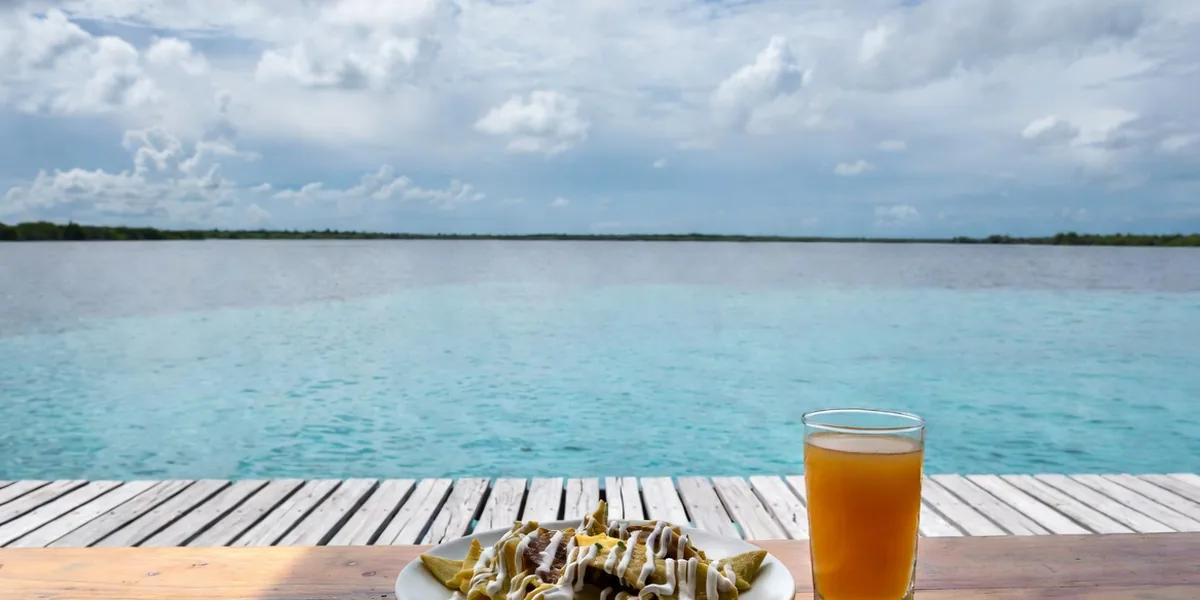
Bacalar Lagoon is 42 kilometers long, 2 kilometers wide, and fed by underground rivers that create seven distinct water colors — from deep navy in the channels to pale turquoise in the shallows. The colors are real. The photographs are not enhanced.
The town sits on the western shore, 45 km north of the Belize border and 3 hours south of Playa del Carmen. It is small — a few main streets, a Spanish colonial fort, a pedestrian malecón, and waterfront palapa restaurants. The pace is slow in a way that is not performative. It just actually is.
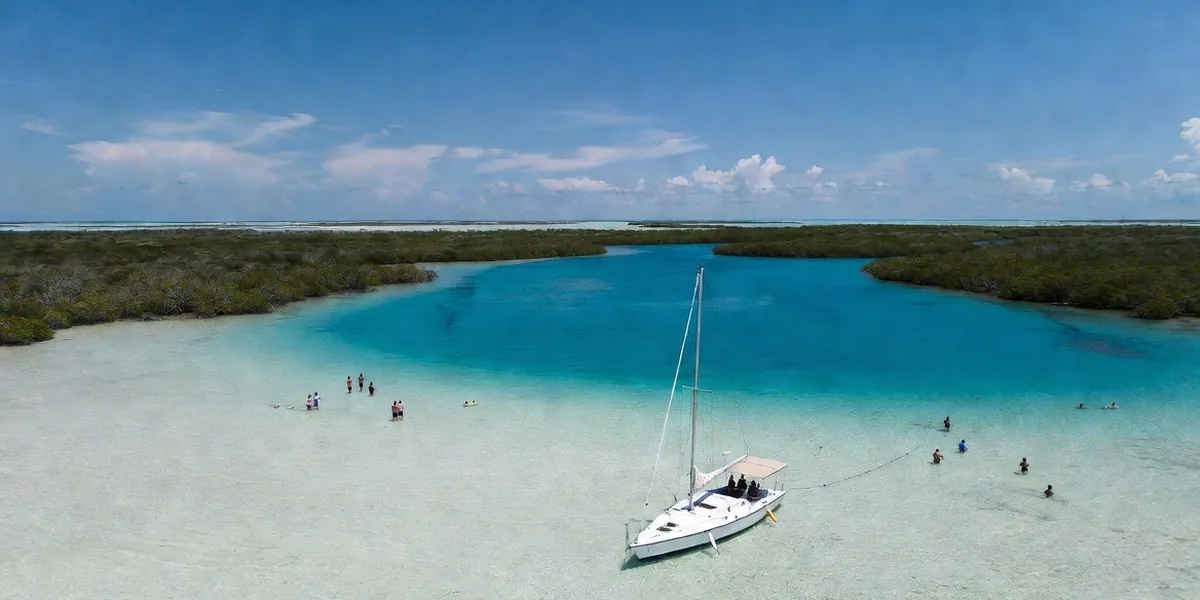
The seven colors of Bacalar Lagoon are produced by the varying depth — shallow sections show the white sandy bottom through transparent water (pale turquoise), deeper channels absorb more light (navy blue). Seen from a boat on a clear afternoon, the transitions are abrupt and genuinely astonishing. Bacalar boat tours guide.
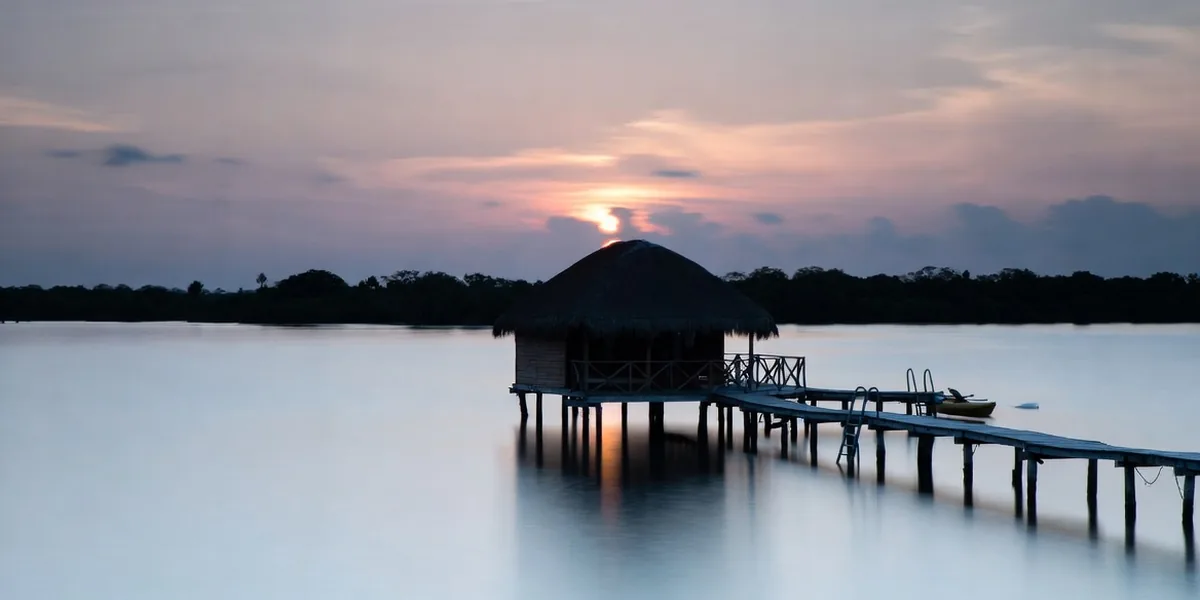
Bacalar is the antidote to the Riviera Maya. No sargassum, no DJs, no $18 smoothie bowls. Just a 42-kilometer lagoon that changes color depending on the depth and the light, a town small enough to walk in fifteen minutes, and waterfront restaurants where a full meal with drinks costs what a single cocktail runs in Tulum. Come for two nights minimum — one is not enough to decompress. Take a boat to the cenote in the middle of the lagoon. Stay for the sunset from your dock. This is the Mexico that the resort corridor used to be.
Explore Bacalar
3 guides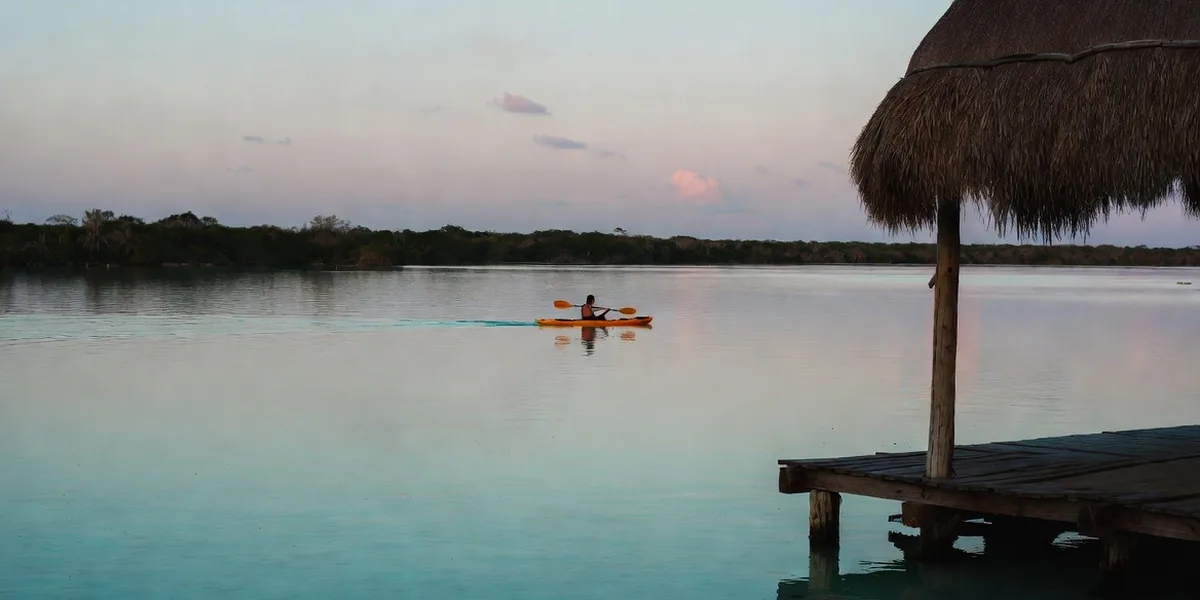
Plan the trip: boat tours, and the cruise-day version from Costa Maya.
Tours and Boat Trips in Bacalar
Lagoon boat tours, SUP rentals, and bioluminescence kayaking. Book on Viator.
Getting There
Frequently Asked Questions
Yes — unambiguously. The lake colors are as extraordinary as advertised. The pace is genuinely slow. The bioluminescence (May–Nov) is one of the most remarkable natural experiences in the Mexican Caribbean. Allow minimum 2 nights.
Lake — fed by underground rivers and cenotes, not connected to the ocean. The water is fresh and exceptionally clear. The colors come from varying depths and different vegetation visible through the transparent water.
Bacalar is quieter, cheaper, and centered on the lake rather than the ocean. No ruins, no hotel zone. What it has: 42 km of extraordinary freshwater, bioluminescence, and sailing tours through seven distinct colors.
Yes. A small, quiet town in southern Quintana Roo. Normal travel precautions apply.