Tulum — The Complete Guide
One of the most beautiful places in Mexico. Also one of the most overhyped. Fortunately, Mr. Playas has spent enough time here to separate the genuine magic from the overpriced cacao ceremony. Here is the honest guide.
Plan the trip: Tulum airport transfers, Sian Ka’an tours, private catamarans, beach clubs, and nightlife.
Tulum doesn't need a pitch. The Instagram version — ruins on a cliff above turquoise Caribbean water, cenotes that look computer-generated, a beach strip of eco-hotels and outdoor restaurants — is real. It actually looks like that. The photographs are not lying.
What the photographs don't show: the traffic on the main highway, the prices in the hotel zone that have tripled in five years, and the gap between the $40 smoothie bowl on the beach and the $2 taco in the pueblo two kilometers away. Tulum contains multitudes. The trick is knowing which version you're paying for.
What to skip: the sound healing ceremonies, the $180/night eco-huts with no AC in July, the wellness retreats promising transformation in 48 hours, and any restaurant that lists its prices in USD without explanation. Spend those savings on an extra cenote day.
Discover the best beaches of the region, from Akumal to Puerto Morelos in our Riviera Maya beaches guide.
What is Tulum known for?
Three things above all else. First: the Tulum Archaeological Site — Mayan ruins perched on a cliff directly above the Caribbean Sea, the only coastal ruins in Mexico and one of the most photographed views in the country. Second: freshwater cenotes within 20–30 minutes of the hotel zone — Gran Cenote, Dos Ojos, Cenote Calavera — that look computer-generated and are better in person. Third: a restaurant scene anchored by Hartwood and Arca that has made Tulum one of Mexico's genuinely discussed food destinations, alongside taco stands in the pueblo that outperform the hotel zone at a fraction of the price.
Beyond those three: a bohemian beach hotel zone unlike anything else in the Riviera Maya, the Sian Ka'an biosphere reserve — UNESCO World Heritage, 1.3 million acres of untouched coast — starting 10 km to the south, and a growing community of long-term visitors who come for a week and stay for a month.
Planning a day trip to Sian Ka'an? Read our complete Sian Ka'an guide.
What to See & Do
6 highlightsTulum Archaeological Site
The only Mayan ruins with a direct Caribbean Sea view — a cliff-top walled city occupied from the 13th to 15th centuries. Get there at 8 AM when it opens: you'll have 45 minutes before tour buses arrive. Descend the stairs to Playa Paraíso below the ruins for the iconic photo.
Cenotes
Gran Cenote: the most famous, with stalactites and crystal-clear water — go at 8:30 AM before it crowds. Cenote Calavera: jump from 3 or 6 meters into a circular opening. Dos Ojos: snorkel through an underwater cave system. Casa Cenote: open-air, connected to the ocean, with mangroves.
The Food Scene
Tulum has become a genuine food destination. Hartwood (wood-fire cooking, no electricity, book weeks ahead), Arca (tasting menu in an open jungle kitchen), Kitchen Table (handmade pasta, tiny room, essential reservation). And the taco stands in the pueblo serving cochinita pibil for $1.50 that outperform most of the hotel zone.
Wellness Worth Having
Tulum's wellness culture gets mocked, often fairly. But a legitimate temazcal (Mayan sweat lodge ceremony) is an extraordinary cultural experience when done with a real practitioner. Yoga at sunrise on a rooftop with a Caribbean view is exactly as good as it sounds. Skip the $300 retreat packages marketed on Instagram.
Sian Ka'an Biosphere Reserve
A UNESCO World Heritage site 15 minutes south of Tulum — 1.3 million acres of jungle, lagoon, reef, and mangrove. Dolphins, manatees, hundreds of bird species, and the kind of silence you came to Mexico for. Half-day tours: $110–160 USD. Worth every dollar if you care about nature.
Explore by Bike
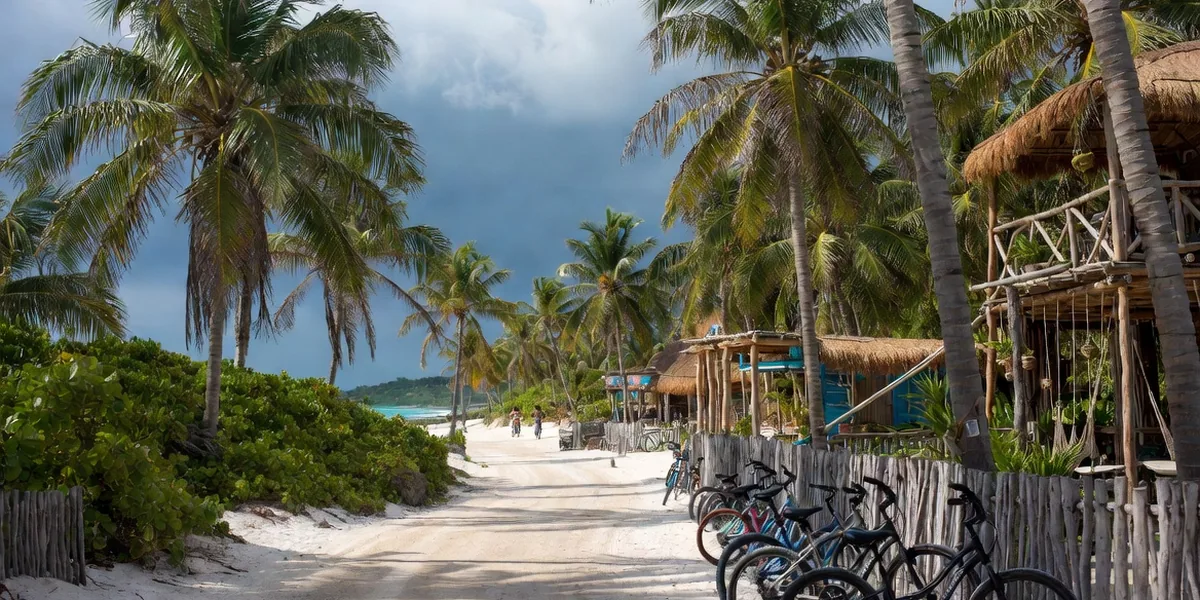
The most authentic way to experience Tulum: rent a bike ($8–12 USD/day) and ride the hotel zone road. Stop at beach clubs, cenotes, vintage shops, and restaurants without worrying about parking or taxi prices. The road is flat and mostly shaded. One caveat: after dark there are no streetlights — be back before sunset.
Where to Stay
3 zonesTulum Pueblo
$The town where people actually live. Taquerías, supermarkets, hostels, and the ADO bus station. Everything 30–50% cheaper than the hotel zone. 10 minutes by bike to the beach.
Hotel Zone
$$$The beach strip: eco-hotels, fine dining restaurants, beach clubs, yoga decks. No cars in theory (in practice: plenty). Walkable and bikeable. Book months ahead in high season.
Aldea Zamá
$$A newer development between the pueblo and the hotel zone. Good Airbnb options, international restaurants, quieter than both extremes. The middle-ground option.
Cochinita pibil, Caribbean ceviche and restaurants that are genuinely world-class — our Riviera Maya restaurants guide.
Sayulita in Nayarit has the vibe Tulum had 10 years ago, but with waves. Read the complete Sayulita guide.
Frequently Asked Questions
FAQHow many days do I need in Tulum?+
Is sargassum a problem in Tulum?+
Is Tulum safe?+
Do I need a car in Tulum?+
Which beach clubs are worth it in Tulum?+
What is Tulum known for?+
Ready for Tulum?
Explore more beaches, restaurants, and activities across the Riviera Maya.
Riviera Maya Guide