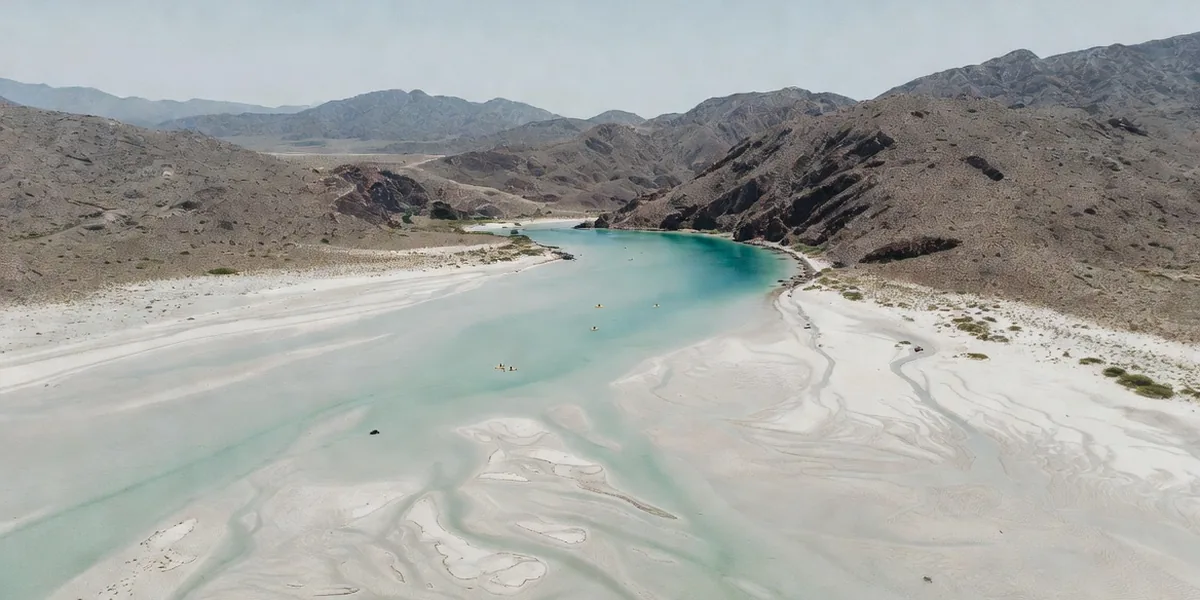
Most travelers fly into Los Cabos, spend their time between Cabo San Lucas and San José del Cabo, and leave without going to La Paz. This is an error. La Paz is 2 hours north on Highway 1 and it is where the Sea of Cortez shows what it actually looks like before the resort economy arrived. The water in the bay is calmer, clearer, and more consistently swimmable than anything in the Cabo corridor. Playa Balandra — 25 km north of the city — is the best beach in Baja and among the best in Mexico by any objective assessment. And the city itself has a malecon, a functioning downtown, and a restaurant scene that operates independently of tourism in a way that Cabo San Lucas has not managed in twenty years.
Jacques Cousteau called the Sea of Cortez the "aquarium of the world." He was based in La Paz when he said it. The whale sharks that aggregate in the bay from October through April, the sea lion colonies on the offshore islands, and the marine diversity of the Espíritu Santo Biosphere Reserve are all accessible from the La Paz malecon.
Playa Balandra
The beach is in a protected bay 25 km north of La Paz, inside the Área de Protección de Flora y Fauna Balandra. The entry is controlled — a daily visitor limit is enforced, the reserve is managed by CONANP, and no commercial development exists within the bay. What you get: a shallow crescent of water so calm and clear that the bottom is visible at 4 meters depth, a color that shifts from pale turquoise at the shoreline to deep blue at the mouth of the bay, and the iconic mushroom-shaped rock (El Hongo) that has become the visual shorthand for the entire destination.
The water at Balandra is a protected inlet of the Sea of Cortez — no swell, no significant current, shallow far from shore. Children can wade out 40 meters. Snorkeling around the rocky points at the bay's edges has sea turtles, rays, and reef fish. The sand is white and fine. The setting is ringed by desert hills with no buildings visible from the water.
Entry is free. The parking lot fills early in peak season (November–April) and on weekends year-round. Arrive before 9 AM or come on a weekday. No food or beverages for sale inside the reserve — bring everything you need.
La Paz — The City
La Paz is the capital of Baja California Sur — a real city of 250,000 people, not a resort enclave. The historic malecon runs along the bay waterfront for 5 km, lined with restaurants, cafes, and the kind of evening promenade culture that Mexican cities do better than anywhere. The downtown has a cathedral, a central market, independent shops, and the kind of street life that Cabo San Lucas traded away decades ago.
The Malecon
The La Paz malecon is the best waterfront promenade in Baja. The bay faces west and the sunsets are consistently excellent. Restaurants along the malecon range from open-air seafood spots serving raw oysters and ceviche at local prices to established dinner restaurants with the bay as backdrop. Walk the full length at sunset, eat at whatever looks right, and understand that this is what Cabo San Lucas looked like before the cruise ships arrived.
Whale Shark Tours
From October through April, whale sharks feed in the nutrient-rich waters of the Bahía de La Paz. Tour boats depart from the malecon pier and typically find sharks within 20–40 minutes. The format is snorkeling alongside them in open water with a licensed guide and strict regulations. The La Paz operation is consistently regarded as one of the better-managed whale shark experiences in Mexico: smaller boats, lower participant limits, and guides with genuine knowledge of the animals. Cost: $80–120 USD per person including equipment, guide, and transport.
Espíritu Santo Biosphere Reserve
The island group 30 km offshore from La Paz is a UNESCO World Heritage site and one of the most biodiverse marine environments in the Pacific. The sea lion colony at Los Islotes is one of the most accessible in Mexico — snorkelers can enter the water with the colony under guide supervision, and the young sea lions are genuinely curious about people. Full-day tours from the La Paz malecon visit the sea lion colony plus two or three snorkel sites and run $80–110 USD per person.
Whale shark tours, Espíritu Santo day trips, and current operator listings: La Paz hub.
Getting to La Paz
La Paz has its own international airport (LAP) with direct flights from Los Angeles (Alaska Airlines), Phoenix (American), and connections through Mexico City. Flying directly into La Paz rather than Los Cabos is worth checking if your US gateway is served.
From Los Cabos: Highway 1 north from Cabo San Lucas — 2 hours in normal traffic. The road is paved, well-maintained, and the drive through Baja desert landscape is genuinely scenic. Shuttle services also run between the Cabo corridor and La Paz for $25–40 USD per person.
Where to Stay
The best accommodation in La Paz is clustered along and near the malecon. Boutique hotels in the $80–160 USD/night range offer the most character — converted colonial properties, rooftop terraces, walking distance to the best restaurants. For budget travelers, guesthouses in the historic centro run $30–60 USD/night and are walkable to everything worth doing.
Frequently Asked Questions
Yes — it is consistently ranked among the best beaches in Mexico for a reason. The shallow, turquoise water, the iconic mushroom rock, and the near-complete absence of commercial development make it unlike anything on the Baja peninsula. The visit requires effort: you need a car or a tour, and entry is controlled. It is worth all of it.
By car: 25 km north of La Paz on the road to Pichilingue, approximately 25–30 minutes. The turnoff is signed. Parking is in a lot at the reserve entrance. No private vehicles enter the beach itself. By tour: multiple operators in La Paz run half-day and full-day Balandra tours — book through your hotel or at the malecon.
Different, not better or worse. La Paz is a real Mexican city with a functioning downtown, calmer and more authentic than the Cabo resort corridor. The water in La Paz bay is calmer and clearer for swimming and kayaking. Los Cabos has the resort infrastructure, the nightlife, and the Pacific drama. Travelers who want genuine city life and Sea of Cortez access choose La Paz. Travelers who want resort amenities choose Cabo.
October through April, with November through March being the most reliable period. The whale sharks feed in the plankton-rich waters of the Bahía de La Paz. Tours depart from the La Paz malecon daily in season. The La Paz whale shark experience is generally considered more intimate and better-regulated than the Holbox or Isla Mujeres operations.
Yes. La Paz is consistently one of the safest cities in Baja California Sur. The state capital has a stable local government, a large year-round expat community, and a tourism infrastructure that has developed without the boom-and-bust instability of some resort destinations. Standard urban Mexico precautions apply.
Yes — it is about 2 hours north of Cabo San Lucas on Highway 1. A day trip covers the malecon, Balandra, and lunch. But La Paz rewards an overnight: the malecon at sunset and dinner in the city center show a side of Baja that the day-trip version misses entirely.