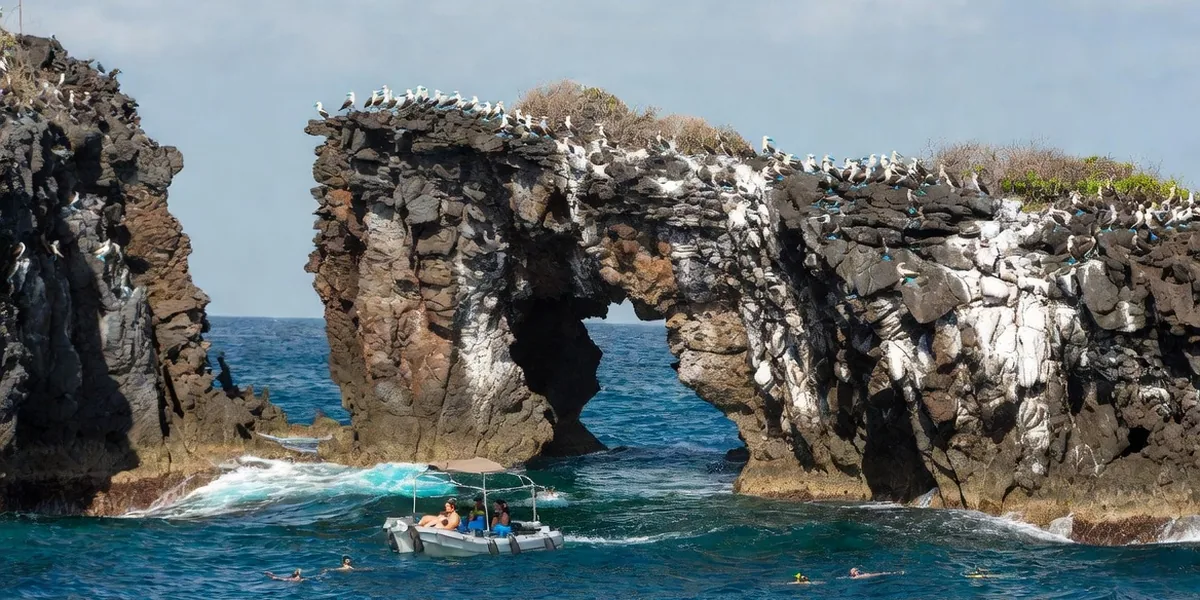
The Marietas Islands are a UNESCO Biosphere Reserve about 30 km off the coast of Puerto Vallarta — a cluster of small uninhabited volcanic islands made internationally famous by the Hidden Beach (Playa del Amor) Instagram photo around 2015. The day tour to the Marietas is one of the most-booked excursions in Puerto Vallarta. It's also one of the most variable in quality, with cheap mass-market operators delivering a very different experience than the small-group eco-tours.
Below: the honest guide to what the Marietas tour actually is in 2026 — permit rules, operator comparison, the Hidden Beach access reality, whale-watching season, and how to choose between Puerto Vallarta and Punta de Mita departure points. Real prices and the operator notes that the Malecón booth vendors won't share.
Quick Facts
- Location: 30 km offshore from Punta de Mita, ~45 km from PV Marina
- Boat ride: 25–35 min from Punta de Mita / 75–90 min from PV
- Daily visitor cap: 125 people across all operators (Hidden Beach)
- Park closed: Mondays + Tuesdays (Dec–April closure schedule varies)
- Standard tour cost: $60–95 USD per person from PV
- Best time: Dec–Mar (whales) or Apr–May (calm seas + low crowds)
- UNESCO status: Biosphere Reserve since 2008
What the Marietas Islands Actually Are
The Marietas Islands are two main uninhabited islands (Isla Larga and Isla Redonda) plus several smaller rocks and outcroppings about 30 kilometers offshore from Punta de Mita, at the entrance to Banderas Bay. Volcanic origin, designated a National Park in 2005, and a UNESCO Biosphere Reserve in 2008. The islands host significant seabird colonies (blue-footed boobies, brown boobies, frigates, pelicans), seasonal humpback whale congregations (December–March), year-round dolphin pods, and reef snorkeling that's some of the best on the Pacific side of Mexico.
The famous Hidden Beach (Playa del Amor) sits inside the partially collapsed crater of one of the islands. Local oral tradition says the cavity formed from Mexican naval target practice during the 1900s — the islands were used as a bombing range until conservation status protected them. Whether that's accurate or popular myth, the result is a beach hidden under a dome-shaped rock cavity, accessible only by swimming through a 25-meter rock tunnel.
The Permit Reality (Why This Trip Is Different in 2026)
Before 2016, the Marietas were essentially unrestricted — hundreds of visitors daily, snorkelers stepping on coral, the Hidden Beach overcrowded. Mexican environmental authorities closed the islands temporarily in 2016, then reopened with strict permit limits:
- Daily cap: 125 visitors total to Playa del Amor across ALL operators combined
- Closed days: Mondays and Tuesdays (year-round); additional Wednesday closures sometimes in low season
- Access window: 30 minutes maximum per visitor group at the Hidden Beach
- Operator licensing: Only certified operators can sell permits; uncertified boats can approach the islands but not land at Hidden Beach
- Conservation tax: 80 pesos park fee per visitor (separate from tour cost)
What this means for booking: the cheapest mass-market tours often do NOT include Hidden Beach access — they show the islands from the boat, do a snorkel stop nearby, but skip the permit-restricted landing. The Hidden Beach add-on (when available) typically costs an additional $15–30 USD. Booking 1–2 weeks ahead in high season (December–April) is essential if Hidden Beach access matters to you.
Tour Operator Comparison
Tour quality varies enormously. The price range from $60 to $200+ USD per person reflects real differences in boat size, group capacity, guide expertise, and on-board service. Below: the tiers.
Tier 1: Eco-Tour and Small-Group Operators ($85–140 USD)
Best for: Nature-focused travelers, photographers, whale watchers, anyone who cares about guide quality.
Operators to consider: Explore Vallarta (marine biologists Jorge and Fabiola — 5.0 rating, 50 reviews, focused on whale-watching tours December–March), Vallarta Adventures (larger but professional, reliable logistics), Punta Mita Expeditions (departs Punta de Mita, smaller groups).
What you get: Boats limited to 8–20 passengers, guide trained in marine biology, hydrophone for listening to whales underwater (some operators), unrushed snorkel time, breakfast onboard, individual attention.
What you don't get: The party-boat music, the open-bar margaritas, the lower price.
Tier 2: Mass-Market Boat Tours ($60–95 USD)
Best for: First-time visitors on a budget, travelers who want the broader Banderas Bay loop, anyone who enjoys group party-boat energy.
Operators: Bahía Alegre (mixed reviews — 4.0 rating from 185 reviews), Lobo del Mar, the various Marina-departure operators advertised at the Malecón.
What you get: 40–80 passenger boats, basic snorkel gear, breakfast and lunch included, DJ music, open bar (typical tequila/beer/sodas after a certain hour), multiple beach stops, parasailing add-ons available.
What you should know: Hidden Beach access often NOT included (verify before booking). Rushed timing at each stop. Aggressive upselling on the boat (photo packages, ATVs at Yelapa, parasailing). The snorkel stops are typically 30 minutes in restricted small areas — not the in-depth marine experience some marketing implies.
Tier 3: Private Charters ($400–800 USD per boat, 4–8 people)
Best for: Couples on milestone trips, families of 6+, photographers needing flexibility.
How to book: Direct via small boat captains at Marina Vallarta or Punta de Mita. Tours Marietas (Puerto Vallarta-based, 4.8 rating) is a recommended booking agency. Charter includes captain, fuel, often snorkel gear, lunch optional.
The math: A 6-person private charter at $500 USD = $83/person — competitive with mass-market tour pricing, but with vastly more control over timing, stops, and pace.
Puerto Vallarta vs Punta de Mita Departure
The single biggest practical choice for a Marietas tour: where you depart from. Both options have tradeoffs.
From Puerto Vallarta (Marina or Malecón)
- Convenience: If you're staying in PV proper, no transfer required
- Boat ride: 75–90 minutes each way (longer = more boat fatigue, less island time)
- Tour length: Typically 8 AM – 4 PM (8 hours)
- Cost: $60–95 USD standard group; $80–140 eco-tour
- Best when: Staying in PV and not wanting an early ground transfer
From Punta de Mita / La Cruz de Huanacaxtle
- Boat ride: 25–35 minutes each way (saves a full hour each leg = 2 hours more island time)
- Transfer: 40–60 minutes from PV to Punta de Mita by taxi ($30–50 USD round trip) or 25 min from Bucerías by taxi ($10–15)
- Tour length: Typically 9 AM – 3 PM (6 hours) — shorter but more efficient
- Cost: $55–85 USD standard; $75–120 eco-tour (often cheaper than PV departures)
- Best when: Staying in Bucerías, Nayarit, or anywhere in the Riviera Nayarit; or any traveler willing to do the transfer
The verdict: Punta de Mita departure is better for most travelers. The shorter boat ride means less seasickness, less sun exposure, more time at the islands. The cost difference (when you include taxi transfer) is roughly equivalent. The exception: PV-staying travelers without rental cars or for whom the early-morning transfer adds stress.
The Best Time to Go
December – March (Whale Season)
The peak window. Humpback whales migrate to Banderas Bay to calve, with 600–800 humpbacks present at any time during peak January–February. Marietas tours during this window almost always include whale sightings on the boat ride. Hidden Beach permits hardest to secure — book 2–3 weeks ahead. Prices 20–30% higher than off-season. Weather: 80–85°F days, calm seas.
April – May (Sweet Spot)
Late spring offers excellent water visibility (50–80 feet), calm seas, fewer crowds, and prices dropping back to baseline. No whales but year-round dolphin pods, sea turtles, and ray sightings. Hidden Beach permits easier to secure. Probably the best month for first-timers.
June – October (Off-Season)
Rainy season. Afternoon thunderstorms (manageable; trips usually finish before they hit). Lower prices ($50–75 USD standard tours). Rougher seas later in the day. Marlin and sailfish fishing peak. Pregnant women, mobility-limited travelers, and weak swimmers should reconsider — the chop adds stress to the snorkel and Hidden Beach swim.
November (Transitional)
Hurricane season ending, prices climbing back. Excellent weather window, light crowds, no whales yet but the first humpback sightings start late November in good years.
The Hidden Beach Swim — What to Actually Expect
The swim into Playa del Amor is the centerpiece of many Marietas tours. Reality:
- Required: Life jacket (provided), often a helmet (varies by operator), basic swimming ability (you swim 30 meters into the cavity)
- The tunnel: 25 meters long, partly submerged depending on tide. You hold your breath for short stretches when tide is high; you stand or wade when tide is low
- Inside the cavity: A small dome-roofed beach, 30 by 50 feet of sand, the rock cavity opens to the sky above. About 30 minutes maximum visit per group
- Photo reality: Wide-angle phone lens captures the dome and opening; the "round-from-above" composition requires drones (banned). Manage expectations
- Currents: Strong on some days. Operators monitor; trips are canceled if tide is unsafe
- Skipped if: Pregnant women, anyone with mobility limitations, weak swimmers, anyone who feels unwell during the boat ride
The Hidden Beach is not a relaxing 30-minute swim. It's a brisk, organized activity with permit timers. The boat departs, the group swims in together, photos are taken, the group swims out. Many travelers find the snorkel stops elsewhere (La Nopalera Beach, the reef sections) more enjoyable than the Hidden Beach itself.
What Else You Do on a Marietas Tour
A full-day tour typically includes 3–5 stops beyond Hidden Beach:
- Marietas reef snorkel — 30–45 min in the protected reef section near La Nopalera. The richest underwater life of the trip; this is the highlight for many guests
- Whale watching (Dec–Mar) — boat slows for sightings; tours respect the 100-meter approach rule
- Dolphin pod stops — year-round, frequent
- Beach stop at Yelapa or Las Ánimas (some tours combine) — 1–2 hours on a mainland beach with lunch
- Banderas Bay loop — scenic boat tour past Mismaloya, Boca de Tomatlán, Los Arcos rocks
Some tours combine Marietas with Las Ánimas or Yelapa beach as a single full-day trip. The advantage: more variety. The disadvantage: less time at each stop. Pure-Marietas tours typically have better island time. See the Yelapa day trip guide for the alternative.
Book Marietas Islands Tours from Puerto Vallarta
Compare licensed operators with verified permit access. Eco-tours, mass-market, and private charters all listed with current 2026 pricing.
What to Bring
Mandatory
- Reef-safe sunscreen (oxybenzone-free) — required at the park
- Swimsuit (already on under clothes saves changing time)
- Towel
- Hat with chinstrap (wind on boats removes regular hats)
- Sunglasses with retainer strap
- Cash in pesos for tips, photos, upsells
- Passport copy (Mexican law requires; some operators check)
Recommended
- UV-rated rash guard or swim shirt
- Waterproof phone case or GoPro
- Motion sickness medication (taken 30 min before departure if susceptible)
- Refillable water bottle
- Snorkel gear (rentals provided but personal fits better)
- Light windbreaker for boat ride
- Cash for the on-board photo package if interested ($20–60 USD)
Skip
- Cotton clothes (slow to dry in salt air)
- Cameras you can't get wet
- Drones (banned)
- Glass containers (banned)
- Single-use plastic bottles (restricted)
The Optimal Marietas Day
- 6:45 AM: Wake, light breakfast, sunscreen application
- 7:30 AM: Pickup or taxi to Marina (PV) or Punta de Mita
- 8:00–8:30 AM: Check-in, boat boarding, life jacket fitting
- 9:00 AM: Departure
- 9:30–10:30 AM: Boat ride (Punta de Mita) or 90 min (PV). Whale spotting if season
- 10:30–11:30 AM: First snorkel stop at the Marietas reef
- 11:30 AM–12:00 PM: Hidden Beach swim (if permit-included)
- 12:00–1:30 PM: Lunch at a mainland beach (Las Ánimas, Yelapa) or aboard
- 1:30–2:30 PM: Additional snorkel or beach time
- 2:30–4:00 PM: Return boat ride
- 4:00 PM: Back at dock, transfer to hotel
Total: 8–9 hours from leaving hotel to returning. Plan for a relaxed evening — sunburn and boat fatigue are real after a Marietas day.
What to Watch Out For
Aggressive upsells on the boat
Most mass-market operators push photo packages ($40–80 USD), parasailing ($60–90 USD), additional excursions, and timeshare presentations on the boat. Decline politely; the upsells are how many operators recover discounted ticket prices. The boat photographers also restrict your own photography during their work — frustrating for travelers wanting their own shots.
The "free seat" scam
Some operators advertise discounted or free tours in exchange for attending a timeshare presentation. The presentation runs 4–6 hours, the tour is the lowest-quality available, the time cost massively exceeds any savings. Skip.
The "Hidden Beach included" ambiguity
Many tours advertise "Marietas Islands tour with Hidden Beach" when in fact they only show the islands from the boat, with no Hidden Beach landing. Verify in writing before booking. The phrase to look for: "Playa del Amor access included" or "permit included."
Seasickness underestimation
The boat ride to Marietas crosses open Banderas Bay water. Seas are typically calm but can pick up. If you're prone to motion sickness, take Dramamine 30 minutes before departure (not after — once nausea starts, medication is less effective). Operators sometimes have ginger candy and patches but stock isn't guaranteed.
Combining Marietas with the Rest of the Trip
A Marietas day is exhausting — boat fatigue, sun exposure, and salt air all add up. Plan the rest of your trip around it:
- Day before: Easy day. Beach pool, walking, sunset on the Malecón. Sleep well.
- Day after: Easy day. Spa, light activities, no other day trips. Recover.
- Don't pair with: A Sayulita day trip the day after, or a Yelapa day trip back-to-back. The two-boat-ride exhaustion sets in fast.
Marietas is one of several great PV day trips. The Malecón, Yelapa, the southern beaches, and Sayulita all offer different versions of the bay experience. See the Puerto Vallarta guide.
Frequently Asked Questions
Playa del Amor (Hidden Beach) is a small beach inside the partially collapsed crater of one of the Marietas Islands, accessible only by swimming through a 25-meter rock tunnel at low-to-mid tide. The dome-shaped rock cavity gave the beach its 'donut' Instagram fame around 2015. As of 2026, access is permit-restricted (only 125 visitors per day on the island, closed Mondays and Tuesdays), and reaching the beach requires moderate swimming skill plus tide-dependent access.
Yes, conditions permitting. Park permits limit daily visitors to 125 total across all approved operators. The swim through the rock tunnel requires a life jacket, a snorkeling helmet (sometimes provided), and a 30-meter swim against currents that can be strong. Pregnant women, weak swimmers, and people with mobility limitations should consider the boat-loop tour instead, which sees the islands without the swim.
Standard group boat tours from Puerto Vallarta or Punta Mita: $60–95 USD per person. Eco-tour operators (smaller boats, certified naturalists): $80–140 USD. Private boat charters: $400–800 USD for a half-day. Hidden Beach access adds $15–30 USD to most tours when permits are available. The Marietas park entrance fee (~80 pesos) is sometimes separate.
Explore Vallarta (5.0 rating, marine biologist guides — best for whale season Dec–Mar) and Vallarta Adventures (large operator, reliable logistics) are the most-recommended. Avoid the cheapest group-boat operators on the Malecón — they overcrowd boats, rush stops, and upsell aggressively. Rivera Mita Tours and the small operators departing from Punta de Mita are closer to the islands (30-min boat vs 90-min from PV).
December through March for whale watching (humpbacks calve in the bay). November–April for the best weather and water visibility. May–November has rougher seas, more rain risk, but lighter crowds and lower prices. Mondays and Tuesdays the island is closed; book Wednesday–Sunday only.
From Puerto Vallarta Marina or downtown: 75–90 minutes each way. From Punta de Mita / La Cruz de Huanacaxtle: 25–35 minutes. The Punta de Mita departure cuts a full hour off each leg, leaving more island time. The boat ride itself crosses Banderas Bay — manageable seas typically but waves pick up after 11 AM.
Yes if you understand what you're booking. The islands themselves — volcanic formations, snorkeling at La Nopalera beach, dolphins and whales in season — are genuinely spectacular. The Hidden Beach is photogenic but heavily crowded with permit-restricted access; for the photo alone, expectations sometimes exceed reality. Best for nature-focused travelers and whale-watchers Dec–Mar.
Reef-safe sunscreen (required), swimsuit, towel, rash guard or UV shirt, hat with strap (windy on boats), waterproof phone case, motion sickness medication if susceptible, cash for tips and any upsells, refillable water bottle. Snorkel gear typically provided but bringing your own ensures fit. Skip cotton clothes (slow to dry); favor quick-dry.