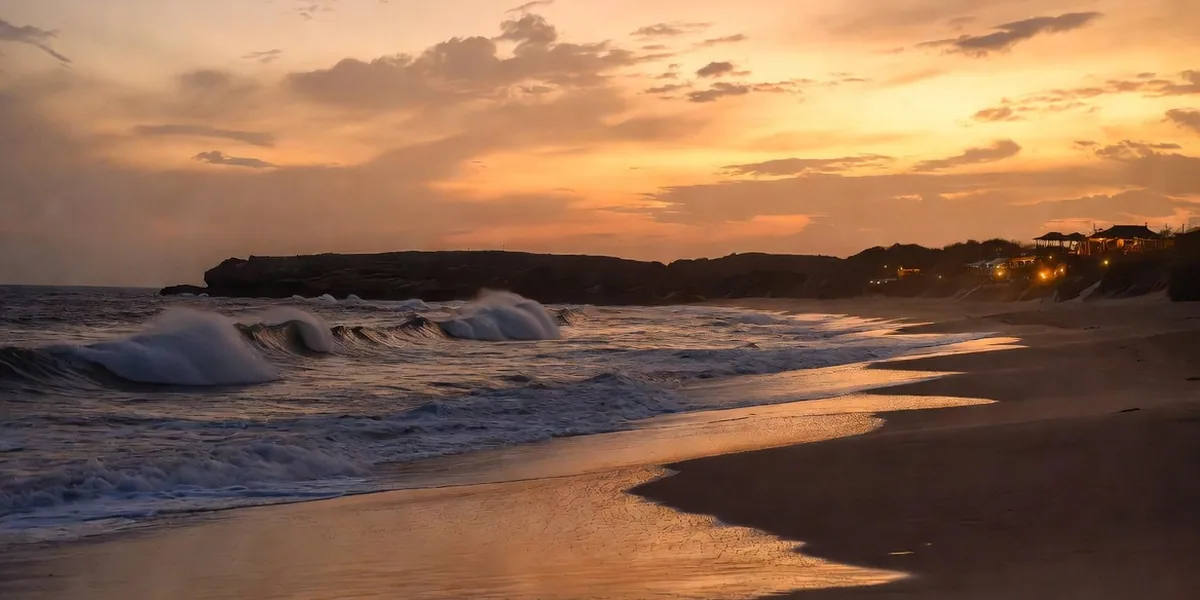
Zipolite is a small beach town on Oaxaca's Pacific coast with one famous distinction and one serious warning. The distinction: it is Mexico's only legally recognized clothing-optional beach, official since 2016 after operating that way unofficially for decades. The warning: the water here is genuinely dangerous, and people drown in it. Get both of those straight before you book anything.
The thing nobody tells you is that "things to do in Zipolite" is a short list on purpose. This is not a place you attack with an itinerary. It is a place you go to do very little, slowly, for longer than you planned. Below is the honest version of what is worth your time, what to skip, and how to use Zipolite as a base for the better beaches and lagoons around it.
The Zipolite essentials
The quick read, before the detail:
- Vibe: Counter-cultural, low-pretension, LGBTQ-friendly, internationally mixed. Backpackers and Mexican travelers who already know it.
- The beach: About 1.5 km of sand, clothing-optional, framed by rocks at the western end.
- Swimming: Treat it as dangerous by default. Ask a lifeguard before you go in.
- Best for: Slow travelers, surfers, sunset people, anyone wanting an alternative to resort Mexico.
- Skip it if: You are traveling with young kids, you need reliable infrastructure and service, or open nudity will ruin your week.
- Stay: Budget-led. Hostels and bungalows at $15–40 USD, a few hillside rooms at $50–80.
- Getting there: Huatulco or Puerto Escondido airport, then Pochutla, then a colectivo down to the coast.
1. The beach, and the clothing-optional question
The beach is the whole reason Zipolite exists, so start here. It runs roughly 1.5 km between rocky headlands, and the character changes as you walk it. The western end, near the rocks, is the most consistently nude and the most laid-back. The central stretch is the most developed, with the beach bars, parasols, and the bulk of the lodging behind it. Tucked over the rocks at the far end is the small cove of Playa del Amor, reached by a short scramble, which is the most popular spot with gay travelers and the quietest place to spend a slow afternoon.
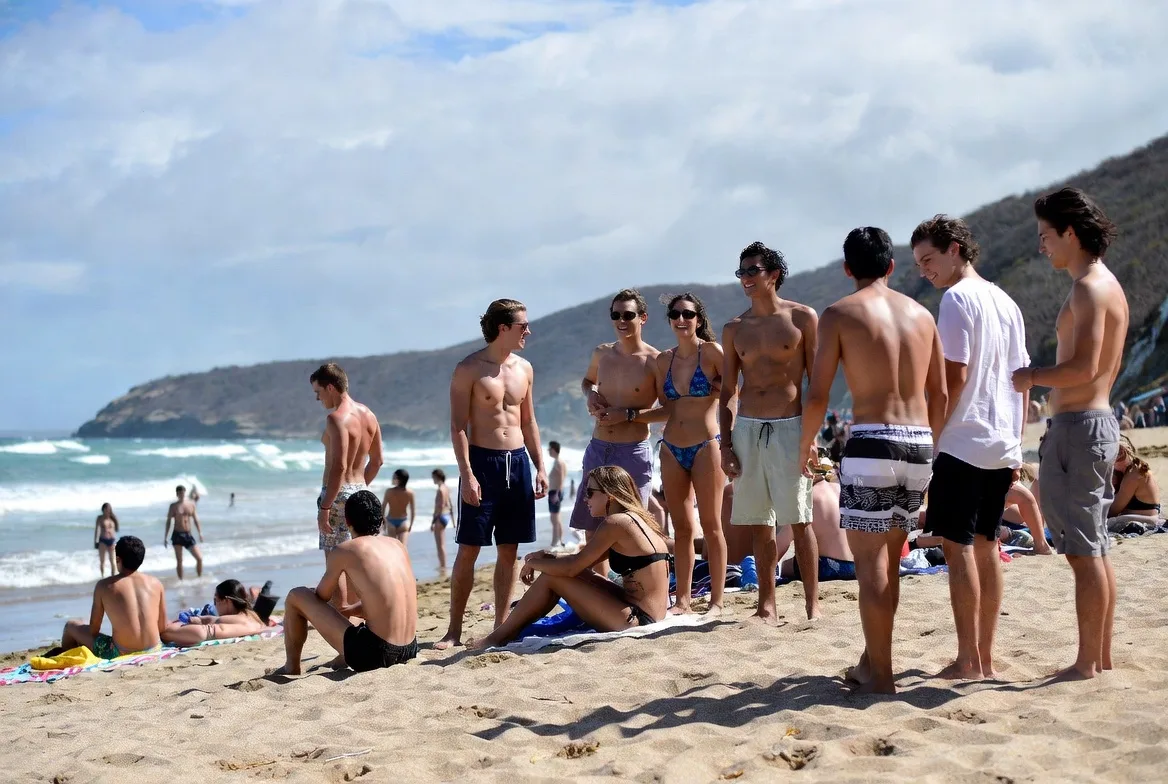
On the nudity: you do not have to participate. A large share of people on the sand stay clothed and nobody remarks on it either way. What you do need is to be comfortable being surrounded by it, because at Zipolite it is everywhere and constant, not confined to one roped-off section. If that is a dealbreaker, this is not your beach, and that is fine.
For more on how Zipolite fits into the wider picture of clothing-optional travel in the country, see our guide to nude beaches in Mexico.
A couple planning a post-Día-de-Muertos beach stop asked whether Zipolite gets too wild at night. The replies were nearly unanimous: it is tiny and mellow, a couple of beach bars play music, and most of the town is asleep by midnight.
A visitor who had just returned described a long, mostly empty beach where the little palapa restaurants set out loungers and the staff come to you — about as far from a resort-strip trip as Mexico gets.
A longtime returnee pointed newcomers to the far west end, where Shambhala and El Cosmico still carry the beach's original laid-back soul — and the lookout above Shambhala frames the entire bay, the photo everyone goes home with. The one piece of advice repeated in almost every comment: come with an open mind.
Mr. Playas' read: whatever version of 'crazy' you are imagining, Zipolite is the opposite — and more than one commenter said to get here before it changes.
From a discussion on r/Oaxaca.
2. Respect the water (this is the one that matters)
Zipolite is known locally by a darker nickname tied to its drownings, and it earns it. The surf is powerful, the undertow is strong, and the rip currents shift without warning. Volunteer lifeguards from the Sociedad de Salvavidas patrol the busier sections, and they have pulled out swimmers who any reasonable person would have judged strong enough to handle themselves.
The rule is simple. Before you enter the water, find a lifeguard and ask directly whether it is safe today and where. If there is any hesitation, stay on the sand. Watch the flags. If you get whistled in, come in. Do not swim alone, do not swim at night, and do not swim after drinking. If you want water you can actually relax in, day-trip to the calmer coves nearby instead.
3. Catch the sunset
The sun drops behind the rocks at the western end of the beach, lighting up the spray off the waves, and it is the single best free thing to do in town. You will want to see it more than once. Most of the beachfront bars run a happy hour around golden hour, so grab a drink and a stretch of sand and watch it land. A couple of cold beers from a corner tienda and a towel does the same job for a fraction of the price.
4. Surf or boogie-board (and where beginners should really go)
Despite the current, Zipolite is a working surf beach, and you will find board rentals and lessons along the sand. Boards and boogie boards rent by the hour, and lessons usually run an hour and a half with a wetsuit included. Negotiate, and confirm the price before you start.
Here is the honest advice the rental guys will not give you: if you are a true beginner, and especially if you are not a strong swimmer, Zipolite is the wrong place to learn. The same current that makes the waves fun makes a learning mistake serious. Take your first lessons at the mellower breaks at nearby San Agustinillo or at Carrizalillo over in Puerto Escondido, and come back to Zipolite once you can handle yourself in the water.
5. Walk El Adoquin and the evening market
The town's main pedestrian strip, Avenida Roca Blanca, known to everyone as El Adoquin, runs just behind the beach. It is where most of the eating, drinking, and people-watching happens once the sun goes down. An artisan and hippie market sets up most evenings, heavy on handmade jewelry and clothing, and there is large-scale street art worth slowing down for. Midweek the strip is quiet; weekends it fills with Mexican and North American visitors and the volume goes up.
6. Take a yoga, temazcal, or wellness class
The wellness crowd mostly bases itself in Mazunte down the coast, but Zipolite is not short on it either. Several spots run daily morning yoga, and you will see hand-painted signs for classes, sound baths, breathwork, and temazcal sweat-lodge sessions up and down the beach. Prices are low and most classes are drop-in. If a spiritual-retreat atmosphere is the reason you are coming, you will find more of it in Mazunte than in Zipolite proper.
7. Find the nightlife
Zipolite's nights have grown louder and later over the years. Expect beach bars with good cocktails, drag shows several nights a week, and parties that run into the small hours, especially on weekends. The scene is openly LGBTQ-friendly and that is a core part of the town's identity, not an afterthought. It is hit and miss which place is good on any given night, so the move is to walk the sand and follow the music. One genuine warning: a few beach clubs are known to water down drinks and pad the tab, so watch your pours and your bill.
8. Day trips and bookable tours
This is where Zipolite gets its range. The town sits in the middle of a string of beaches and lagoons, all a cheap colectivo or mototaxi ride apart, and the surrounding coast is where the actual bookable tours live. If you only spend your days on Zipolite's sand, you are missing the best of the area. The standouts:
- Mazunte and Punta Cometa: The next town over. Home to the national turtle center and the Punta Cometa headland, the best sunset hike on this coast.
- San Agustinillo: A small bay between the two with calmer, more swimmable water. The relief valve when Zipolite's surf is too much.
- Ventanilla lagoon: A community-run mangrove boat trip with crocodiles, herons, and birdlife. One of the best-value half-days on the coast.
- Playa Estacahuite and Puerto Angel: Sheltered coves near Pochutla, the place to go when you want to actually float.
- Bioluminescence and turtle releases: Seasonal night trips, mostly run out of the lagoons toward Puerto Escondido. When they are on, they are worth the late night.
Tours on this part of the coast are best booked as part of the wider Oaxaca-coast offering rather than searching "Zipolite" alone, which turns up almost nothing. Here are the operator-run trips covering the lagoons, turtle, surf, and bioluminescence around Zipolite and Puerto Escondido:
Planning the wider trip? Compare the two main bases on this coast in our Puerto Escondido vs Mazunte guide, and see the full rundown of things to do in Puerto Escondido.
Where to stay in Zipolite
Zipolite is budget-led and makes no pretense otherwise. The bulk of accommodation is hostels, simple guesthouses, and palapa-roofed bungalows, typically $15–40 USD a night. A handful of more design-minded places on the hillside run $50–80 with better views and a quieter night's sleep. There are a couple of clothing-optional and fully nudist hotels for those who want it, and a strong selection of LGBTQ-friendly stays.
Two practical notes. Many of the most rustic places are not on any booking site, so if you are on a tight budget, book your first night online and then walk around to find something cheaper once you have your bearings. And check recent reviews for noise, because the beach bars run late and a great room next to a sound system is not a great room.
Where to eat
For a small town, Zipolite eats well, and it is unusually good for vegetarians and vegans compared to most of beach Mexico. The cheap, reliable food is on and just behind El Adoquin: taquerias, fresh juice, and breakfast spots doing chilaquiles and eggs. The beachfront places lean toward seafood and longer, pricier sit-down meals, often with a free-sunbed-if-you-spend arrangement. There is a surprising number of Italian kitchens and a decent bakery scene. Coffee is the weak spot; Mazunte does it better.
Getting to Zipolite
The two arrival airports are Huatulco (HUX) to the east and Puerto Escondido (PXM) to the west, each roughly an hour out. From either, you route through the inland hub town of Pochutla, then take a shared colectivo pickup or a mototaxi the last stretch down to the coast for a dollar or two.
Coming overland from Oaxaca City, you now have two options. The old route is the winding minibus over the mountains via San Jose del Pacifico, around seven to eight hours and not fun if you get carsick. The better option since the new Oaxaca City–Puerto Escondido highway opened in 2025 is to go to Puerto Escondido first, around 3.5 hours, then hop the coastal colectivos east. Once you are on the coast, getting between Mazunte, San Agustinillo, Zipolite, and Puerto Angel is constant and cheap.
When to go
The dry season runs roughly November to April: reliable sun, busier beaches, higher prices, and the Zipolite Nudist Festival in late January or early February. The rainy season, May to October, is hotter and greener with afternoon storms, fewer crowds, and lower rates, and it overlaps with turtle nesting on this coast. There is no bad time so much as different trade-offs. If you want the festival, book well ahead; if you want Zipolite quiet, avoid that weekend.
Things to know before you go
- Bring cash. The town's ATM is unreliable and often empty, especially on weekends. Stock up in Pochutla or Puerto Angel. More places take cards now, but the small tiendas and family kitchens are cash only.
- Nudity etiquette is real. No photos of people without consent, full stop. If you see anyone being a creep, tell a lifeguard; they take it seriously and move fast.
- Turtles nest here. If you are lucky enough to see one come ashore, give her room, no flash, no lights, and warn others to do the same.
- Common sense at night. Zipolite feels safe, but it is a party town with drinking and drugs around. Do not walk the beach alone late, and the no-night-swimming rule is not optional.
So, is Zipolite worth it?
If you want a clean, easy, swimmable resort beach, no. Zipolite is rough around the edges, the water can kill you, and the nudity is not for everyone. But if you want a beach town with an actual identity, a slow pace, a welcoming and unpretentious crowd, and a coast full of better day trips a colectivo ride away, it is one of the most distinctive places on Mexico's Pacific. Come with realistic expectations and the right respect for the ocean, and it delivers.
Frequently asked questions
What is there to actually do in Zipolite?
Less than you think, and that is the point. The honest list: the beach, the sunset, a surf or boogie-board session, the evening walk along El Adoquin, a yoga or temazcal class, and day trips to the calmer beaches and lagoons nearby. Zipolite rewards people who slow down. If you need a packed itinerary, you will be bored by day two.
Do I have to be nude in Zipolite?
No. Zipolite is Mexico's only legally recognized clothing-optional beach, but plenty of people stay clothed the entire time. The nudity is most consistent at the far western end and on Playa del Amor; the central stretch is mixed. Nobody cares whether you join in. You do have to be comfortable being around it.
Is it safe to swim at Zipolite?
Not reliably. The surf is heavy, the rip currents are unpredictable, and the beach has a documented history of drownings. Before you go in, ask the Sociedad de Salvavidas lifeguards whether it is safe that day and where. If they hesitate, the answer is no. On calm days, the protected sections are swimmable. Never swim alone or after drinking.
When is the Zipolite Nudist Festival?
Late January to early February each year. It is the busiest weekend of the year, accommodation books out weeks ahead, and prices jump. Come for it on purpose or avoid it on purpose, but do not arrive that weekend by accident expecting a quiet beach.
How do I get to Zipolite?
Fly into Huatulco (HUX) or Puerto Escondido (PXM), then transfer to the inland hub town of Pochutla and take a colectivo or mototaxi the final stretch to the coast. From either airport it is roughly 1 to 1.5 hours. Coming from Oaxaca City, the new highway to Puerto Escondido (opened 2025) cut that drive to around 3.5 hours.
How many days do you need in Zipolite?
Two to three if you only want the beach. Four to six if you want to use it as a base for Mazunte, San Agustinillo, the Ventanilla lagoon, and a bioluminescence or turtle-release trip. People routinely plan three days and stay two weeks. Build in slack.