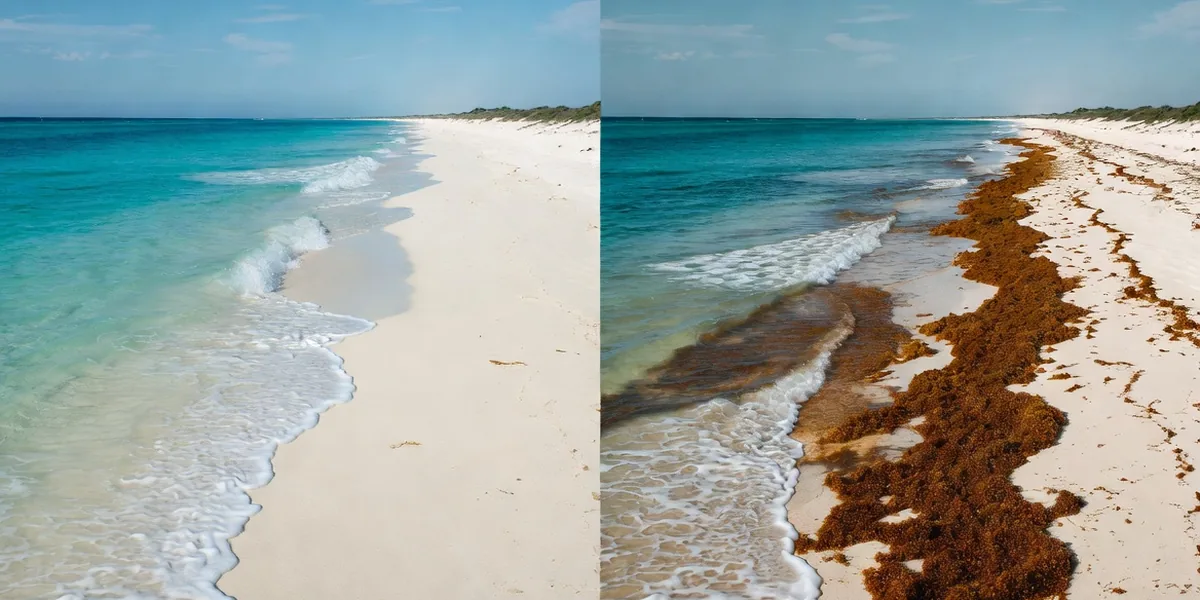
The honest answer: February through April is the best time to visit Tulum. Dry season weather, clear turquoise water, sargassum-free beaches, and prices that are noticeably lower than December and January without sacrificing any of the conditions. If you can only pick one window, pick March.
The longer answer involves trade-offs that actually matter — sargassum timing, hurricane risk, crowd levels, and the difference between peak-season Tulum and shoulder-season Tulum. This breakdown goes through every month so you can make the call based on what actually matters to your trip.
The Two Variables That Drive Everything
Sargassum seaweed. This is the most important factor for anyone coming for the beach. Brown seaweed has washed onto Tulum's shores every summer since around 2014–2015, sometimes covering the entire beach and making swimming unappealing. The cenotes are unaffected — they are freshwater and underground — but if a Caribbean beach is the primary reason you are going, sargassum risk should anchor your timing decision. November through May is when the water is reliably clear. June through October it can appear any week and the intensity varies year to year.
Hurricane season. June through November is Atlantic hurricane season, peaking September–October. Tulum has not taken a direct major hit frequently, but storm tracks shift and weather disruption — heavy rain, wind, beach closures — can happen. December through May the risk is essentially zero.
Search 'Tulum sargassum' on Google Images with a date filter for the current month to see what recent visitors are posting. The Sargassum Monitoring Network also publishes regional forecasts. Conditions can change week to week — the reports from 3 weeks before your trip are the most relevant. Tulum beaches guide.
Month-by-Month Breakdown
November
ExcellentDecember – January
Best weather, peak crowdsFebruary – April
Best overallMay – June
Good with caveatsJuly – August
ChallengingSeptember – October
Avoid unless budget-drivenSpecific Trips — What Window to Pick
First time in Tulum, want the full experience: February or March. Weather is perfect, water is clear, cenotes are at their most photogenic, and you can still get restaurant reservations with reasonable advance notice.
Budget-conscious: May or late October. May has solid weather and dropping prices before the rainy season arrives in force. Late October is gambling weather-wise but can pay off with low prices and often-clearing sargassum.
Cenotes only, beach secondary: Any month. Cenote water quality is consistent year-round regardless of sargassum. If Gran Cenote and Dos Ojos are your priorities, June through September becomes a viable and significantly cheaper option.
For the food scene specifically: November through April when Hartwood and the top restaurants are running full service. Some hotel zone restaurants reduce hours or close entirely September–October.
Avoiding crowds at any cost: September or October. The hotel zone is the emptiest it gets all year. The beaches may have sargassum and rain is possible, but the pueblo restaurants have tables and the ruins have no lines.
Tulum vs the Rest of the Riviera Maya — Does Timing Differ?
Largely the same seasonal patterns apply across the Riviera Maya. One important difference: Tulum's beach faces east and catches a different current than Cancún and Playa del Carmen, which sometimes means Tulum has sargassum when those beaches are clear. Check sargassum conditions specifically for Tulum rather than assuming the broader region is uniform.
Cenote timing is consistent across the region — all freshwater, all unaffected by seaweed or weather, all excellent from January through December.
February or March. Dry season weather at its best — 78–86°F, clear water, no sargassum, hurricane season over. Prices are noticeably lower than December and January. March specifically is the sweet spot before Easter crowds arrive.
For the cenotes: yes. For the beach: depends on the sargassum situation that year. Rain in Tulum's rainy season (June–October) tends to come in afternoon bursts rather than all-day downpours — mornings are usually fine. Prices drop significantly, which compensates for the beach uncertainty for some travelers.
December 20 through January 6 (Christmas–New Year), Semana Santa (Mexican Holy Week, late March or early April), and US spring break in March. The hotel zone road is noticeably congested during these periods. Book 2–3 months ahead if traveling at these times.
Yes — one of the best months. Dry season begins, water clears after the sargassum season, and prices are lower than December. Crowds are moderate and building. A strong month that is consistently underrated.
In a bad year (2018, 2022 were particularly heavy), the beach can be covered in brown seaweed with a strong sulfur smell. In a light year, you may see minimal seaweed even in July. The risk is real and worth checking before booking. November through April the beach is reliably clear.