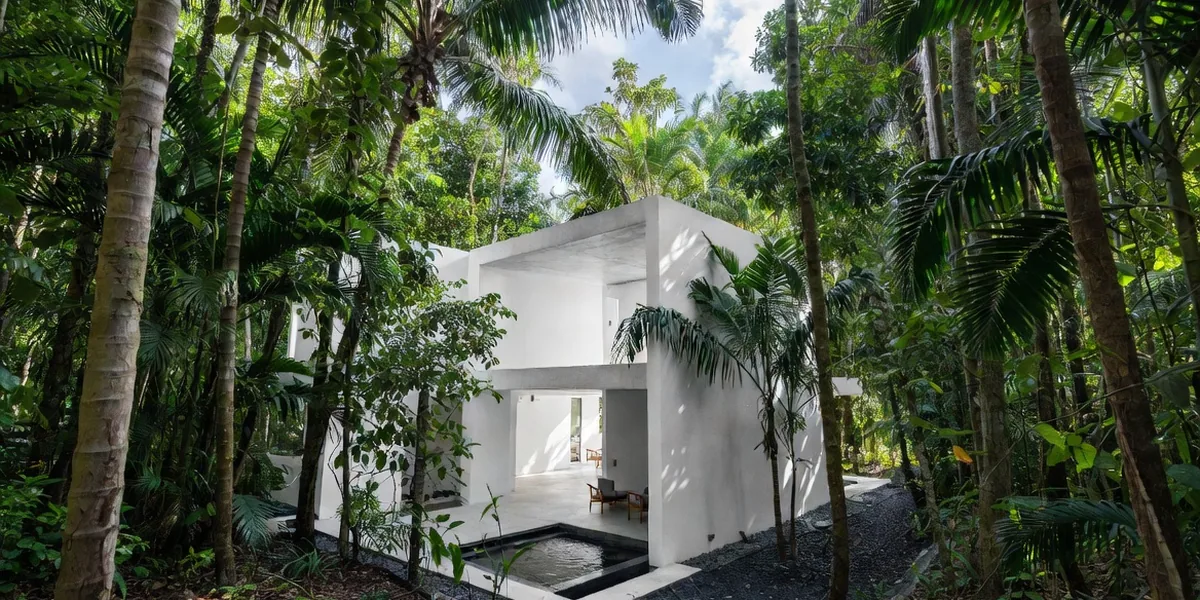
Tulum real estate is the most aggressively marketed property opportunity in Mexico, and it has been since around 2018. Every flight into Cancún has someone reading a Tulum pre-construction brochure. Every Instagram ad targeting US 35–55-year-olds with disposable income includes a Tulum condo at some point. The pitch is consistent: beachfront-adjacent, jungle, yoga, dollarized rental income, capital appreciation, the Riviera Maya investment story.
Most of the pitch was true between 2017 and 2022. A meaningful portion of it has stopped being true. Mr. Playas has watched the Tulum market closely for a decade, and the version that works in 2026 is much narrower than what the brochures still claim. This is the honest breakdown of what Tulum real estate actually looks like right now — what is worth buying, what is not, and what every US buyer should verify before signing anything.
The market in 2026 — a cooling that's already happened
From 2017 to 2023, Tulum prices roughly tripled in the most popular expat neighborhoods (Aldea Zama, La Veleta, Region 15). Pre-construction inventory exploded — at one point in 2022, there were over 200 active condo developments in various stages of construction. Average rental yields on the booming Airbnb market were 6–10% net.
The reversal started in late 2023 and accelerated through 2024–2025. Three things changed simultaneously:
Inventory caught up with demand. The pre-construction wave delivered thousands of units in 2023 and 2024. Many developers oversold the market. Resale supply ballooned. Days-on-market doubled.
Infrastructure stress hit hard. Tulum's water, power, and internet infrastructure was built for a town of 25,000 people. As of 2026 the population is approaching 70,000 and the tourist load multiplies that. Power outages in the high season are common. Water pressure is unreliable in some neighborhoods. Internet quality varies wildly. None of this was disclosed by developers selling units in 2020.
Traveler sentiment shifted. Sargassum seasons have been worse than they were a decade ago, the beach club scene has matured (and become saturated), and the "authentic Tulum" narrative that drew the original wave of buyers has been replaced by "expensive theme-park Tulum." Some of the original-wave Airbnb owners are selling.
The market is not crashing. It is normalizing, after a 5-year run of unsustainable appreciation. Pricing has flattened or declined modestly in most segments. The pre-construction premium that used to work — buy below market and resell at completion — has compressed significantly.
What things actually cost in 2026
Real prices in the most-traded neighborhoods, based on 2025–2026 transactions:
Aldea Zama, 1-bedroom condo, resale, mid-tier building: $200,000–270,000 USD. Same unit pre-construction (1–2 years from delivery): $160,000–220,000.
La Veleta, 1-bedroom condo, resale: $180,000–250,000.
Region 15 / Selva Zama, 1-bedroom resale: $150,000–220,000.
2-bedroom in Aldea Zama: $300,000–450,000 typical; high-end buildings push past $600,000.
Penthouse units, top buildings: $500,000–900,000.
The Hotel Zone (beachfront strip): $1.5M–6M+ for anything new. Almost no inventory under $1M.
Land, Tulum proper, residential lot: $80,000–180,000 for a 200–400 m² lot with municipal services. Development risk and permitting risk are non-trivial.
Closing costs and the fideicomiso
Tulum is in the constitutional restricted zone — within 50 km of the coast — so every foreign buyer must use a fideicomiso (a 50-year renewable bank trust). There is no exception, no workaround, no version of foreign-held direct title in Tulum.
All-in closing costs run roughly 6–8% of purchase price. On a $250,000 condo, that's $15,000–20,000. Breakdown:
• Federal property acquisition tax (ISAI): ~2% — $5,000.
• Notario fees: 1.5–2.5% — $3,750–6,250.
• Fideicomiso bank setup: $2,500–4,000 (one-time).
• Public registry fees: 0.2–0.5% — $500–1,250.
• Title insurance: $1,000–2,500 (optional but recommended for resale; many pre-construction contracts skip it — Mr. Playas recommends getting it anyway).
• Real estate attorney: $1,500–3,000 (recommended for any purchase over $200K).
The annual fideicomiso maintenance fee runs $500–800. Property tax (predial) on a $250,000 condo runs $200–500/year — a fraction of the equivalent US tax.
Pre-construction — what nobody tells you
The pre-construction sales pitch is consistent: pay 30% down, pay milestones during construction, hold the unit at delivery, profit from the price differential between pre-construction and finished-product market value. In 2018–2022, this worked reliably — finished-product prices were 25–40% above pre-construction prices on delivery.
That premium has compressed dramatically. In 2025–2026 transactions, finished-product prices were running 5–15% above pre-construction prices, and in some buildings the premium had gone negative — pre-construction buyers ended up underwater at delivery.
Worse: a meaningful number of Tulum pre-construction projects have stalled, been delayed by 1–3 years past the originally promised delivery date, or in a small number of cases, been outright canceled. Mexican law gives buyers limited recourse against a developer that goes bankrupt mid-project. Mr. Playas knows multiple buyers who lost 30–50% of their deposits in the 2024–2025 round of stalled developments.
If you're considering pre-construction, the questions to ask:
1. What is the developer's completion track record? Look at their previous 3–5 projects in Tulum or anywhere in Mexico. Did they deliver on time? Were buyers happy?
2. Has the developer obtained the full federal SEMARNAT environmental permit and the municipal construction permits? Walk away from any project still working through permitting.
3. Is your deposit held in escrow with a verified third party, or paid directly to the developer's operating account? The first is reasonable; the second is a red flag.
4. What is the contractual remedy if the project is delayed by more than 12 months? More than 24 months? The contract should specify these in writing.
5. Get the contract reviewed by a Mexican real estate attorney before signing. Not the developer's attorney — your own.
Neighborhoods worth buying in
Aldea Zama: The most established expat neighborhood in Tulum proper. Gated, walkable, multiple restaurants and small markets, the most consistent water and power. Highest prices in town outside the Hotel Zone. Most defensible resale.
La Veleta: Just west of Aldea Zama. More mixed — some excellent buildings, some thrown-up-fast 2018-era construction. Carefully select the building. Pricing is 10–25% below Aldea Zama for similar quality.
Region 15 / Selva Zama: The newer expansion area. Lower density, more nature, but further from town and weaker infrastructure. Prices are correspondingly lower. Best for buyers who want quiet and have the patience for a longer commute to restaurants and the beach.
The Hotel Zone (beachfront): Spectacular but constrained. Almost everything for sale is over $1M, properties are mostly older boutique hotels being sold whole, and the sargassum + beach erosion situation has gotten progressively worse. Buy here for personal use only — the rental yield math is unfavorable.
Avoid: Region 11, Region 16, and the developments at the very far edges of town that are pitched as the next Aldea Zama. The infrastructure isn't there. The buyer-pool isn't there. Resale is much harder.
Rental yield reality
The pitched 8–12% net rental yields that drove the 2018–2022 boom are gone. In 2026, realistic net yields after fees, taxes, management, and vacancy run 3–6% in well-located mid-tier units. Higher in the Hotel Zone (in absolute dollars, not percentage), lower in the marginal neighborhoods.
Airbnb regulation has tightened. Many condo HOAs in 2024–2025 voted to restrict short-term rentals to limit nuisance. Property management companies in Tulum take 25–35% of gross rental for full-service management. The peak-season pricing that produced the high yields has compressed as supply caught up.
None of this means Tulum doesn't work. It means the math has to be done honestly — with realistic occupancy, realistic management costs, realistic property taxes, and realistic capital appreciation assumptions (low single digits, not the 12–15%/year of the boom era).
The five things every buyer should do before signing
1. Visit Tulum in low season AND high season before buying. The traveler-sentiment difference is dramatic. The town in May feels different from the town in February.
2. Use your own notario and your own attorney. Not the seller's, not the agent's. Pay your own.
3. Pull the title chain from the public registry. Your notario or attorney does this. Verify the seller has clean title with no liens going back at least 10 years. Particularly verify the property is not ejido or partially-ejido land.
4. Visit the building outside scheduled showings. Show up unannounced on a Sunday. Talk to residents. Ask about water, power, internet, and HOA disputes.
5. Calculate carrying costs honestly. Mortgage (if any), HOA, property tax, fideicomiso annual fees, insurance, management fees if rented. Make sure the math works at realistic occupancy, not the optimistic broker projection.
Modestly. Average appreciation across Tulum's main neighborhoods in 2025 was 2–5% — well below US inflation, and well below the 15–25% annual gains of 2018–2022. The market is normalizing rather than declining, but the era of double-digit appreciation appears to be over for now. Buy for personal use and lifestyle, not as a leveraged appreciation bet.
May through August. Sellers are more flexible during the low season, inventory is on the market longer, and you're seeing the property under realistic non-peak-season conditions. Buying in January–March puts you in the worst negotiating position — peak demand, peak prices, and you're seeing the property at its best (which it won't always be).
Condo for first-time Mexican buyers. The HOA handles infrastructure problems (water, power, security, garbage, common areas) that you'd manage yourself in a standalone house. House makes sense at the higher end ($600K+) where you're getting genuine privacy and the condo HOA dynamics aren't worth the trade-off. Below that, the condo is the better lifestyle and the easier resale.
Different bets. Cancún is the most established city, has the best healthcare, has the best airport access, and has the most stable rental market — but is less interesting for personal use. Playa del Carmen is the middle ground: established expat infrastructure, walkable, decent rental market, prices similar to Tulum. Tulum is the most lifestyle-driven and the most volatile. For pure investment, Mr. Playas would pick Playa del Carmen first, Cancún second, Tulum third in the current cycle.
Yes — but verify two things first. (1) The condo HOA does not restrict short-term rentals (an increasing number do). (2) You register with the SAT (Mexican IRS), obtain an RFC tax ID, and pay Mexican income tax on rental income. The US-Mexico tax treaty prevents double taxation on the US side, but Mexican compliance is required. A Mexico-experienced US tax preparer is essential.