Sian Ka'an Biosphere: How It Actually Works
By Mr. Playas · Updated July 2026
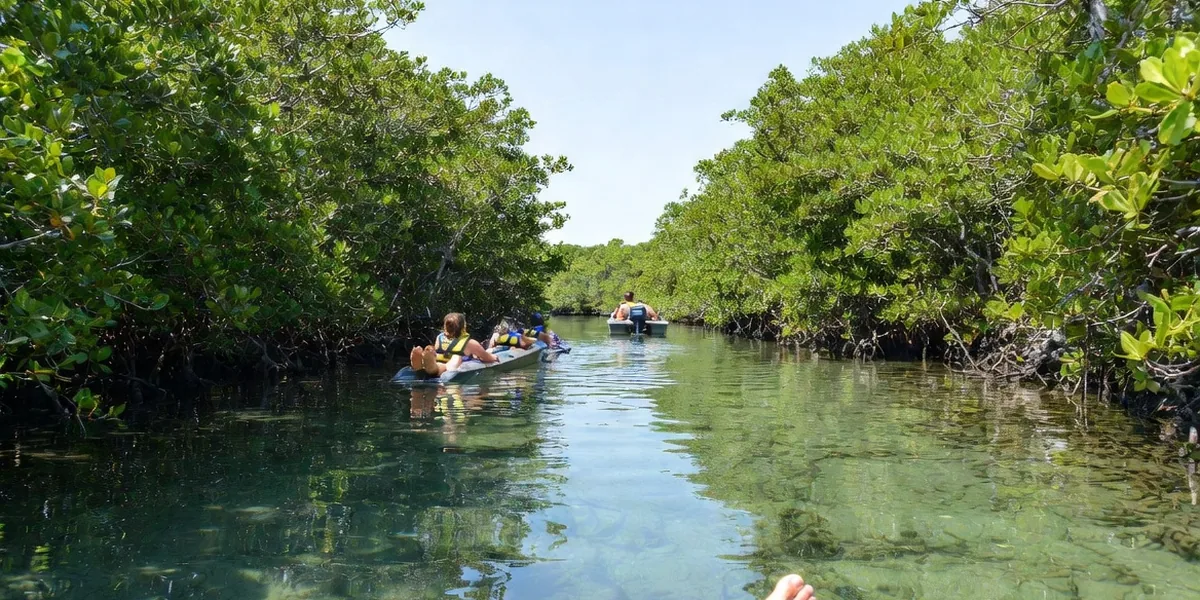
Sian Ka'an — "origin of the sky" in Yucatec Maya — is a UNESCO World Heritage biosphere covering 1.3 million acres south of Tulum: mangrove forest, seagrass lagoons, a barrier reef, Maya ruins swallowed by jungle, and one 200-person lobster-fishing village at the end of a punishing dirt road. It is the largest protected area on the Mexican Caribbean and the structural opposite of everything north of it. This page is the independent traveler's manual — what the reserve is, how to do it without a tour company where that's possible, and where a guide is genuinely non-negotiable. If you already know you want a packaged tour with pickup, skip straight to the Sian Ka'an tours comparison — that page ranks the bookable options format by format.
What's the best Sian Ka'an experience for a half-day?
The Muyil canal float — cross two lagoons by community-run boat, then drift a 400-meter Maya-built canal in a life jacket. Doable independently for roughly $50-70 USD all-in, four hours door to door from Tulum, no reservation required.
What the Reserve Actually Is
Three ecosystems stacked together explain everything you'll see. Inland: freshwater wetlands and mangrove channels fed by cenote-connected aquifers — this is the Muyil side. In the middle: two enormous shallow bays, Ascensión and Espíritu Santo, whose seagrass flats hold one of the healthiest permit and bonefish fisheries in the hemisphere — this is why fly fishers whisper about Punta Allen. Offshore: an intact stretch of the Mesoamerican Reef. The Maya engineered trade canals through the wetlands a thousand years ago; the canal you float today is their infrastructure, still running.
Management is the part visitors misunderstand. The interior isn't a free-roam park — access runs through community cooperatives from Muyil and Punta Allen, which is why "can I just kayak in myself" gets a no. The cooperatives are the conservation model: local families earn from low-volume tourism instead of from selling out to development. Working with them directly at the dock is both the cheapest way in and the point.
Experience One: The Muyil Float, Done Independently
The step-by-step, no tour company involved. Get to the Muyil archaeological site, 25 minutes south of Tulum on the 307 — colectivos toward Felipe Carrillo Puerto leave from Tulum centro constantly and cost around 50 MXN; tell the driver "Muyil ruinas." Pay the ruins entry (about 90 MXN), walk the small site — El Castillo here is a steep-sided pyramid that predates most of Tulum's — and follow the boardwalk through the jungle to the lagoon (separate reserve fee, roughly 50 MXN at the gate). At the dock, the cooperative sells the boat trip directly: lagoon crossing, the canal float, and the return, typically 600-1,000 MXN per person depending on group size and season. Boats leave when they fill, which midmorning in high season means minutes.
The float itself: the boatman cuts the engine at the canal mouth, you go in wearing a life jacket, and the current does the rest for twenty-odd unhurried minutes — crystal water, mangrove walls, ospreys overhead. Wear water shoes, bring nothing you can't get wet, and put valuables in the dry bag the boat carries.
Mr. Playas' move: Arrive at Muyil by 9 AM. You'll tour the ruins alone, catch the first boats, and float the canal before the tour vans from Tulum and Playa arrive around 11. Total cost lands near half the packaged price for an identical experience.
Hotel pickup, guide, lunch, and zero logistics — the bookable Muyil floats, Punta Allen boat days, and combo formats are compared head-to-head in the Sian Ka'an tours guide.
Experience Two: Punta Allen and the Road
The coastal road enters the reserve at the Boca Paila arch south of Tulum's hotel zone (pay the park fee at the gate) and runs 50 km to Punta Allen. In dry season it's two-plus hours of potholes each way in anything with clearance; after rain it becomes a 4WD-only mud test that has ended plenty of rental-car deposits. What the road buys you: empty Caribbean beaches the entire way down, the Boca Paila bridge where the lagoon meets the sea, and at the end, a sand-street village with lobster pangas, three or four restaurants, and generator electricity that quits at night.
From Punta Allen the cooperatives run boat trips into Ascensión Bay: dolphin and turtle spotting, a snorkel stop on the reef wall, the frigatebird colony, and a beach lunch — arranged on arrival at the village dock. Fly fishers book differently: the permit-bonefish-tarpon grand slam waters here support a handful of dedicated lodges, and that's a multi-day trip planned months ahead, not a day-trip add-on.
Mr. Playas' move: Self-drive only in dry season, only with real clearance, leaving Tulum by 7 AM. If any of those conditions fail, this is the one Sian Ka'an experience where paying for the tour transfer is simply the correct answer. Better yet: stay a night in the village — the reserve after the day boats leave is a different place.
Wildlife: What You'll Actually See
Managed expectations, from repeated visits: dolphins in Ascensión Bay on most boat days; sea turtles regularly; manatees rarely and mostly in the quieter channels; crocodiles in the lagoons — real ones, which is why swimming happens in designated spots and nowhere else. Birds are the guaranteed spectacle: 300-plus species, with frigatebirds massing over their island colony, roseate spoonbills working the flats, and flamingos passing through in season. Jaguars, tapirs, and spider monkeys live in the interior and you will almost certainly not see them; the reserve is their home, not their stage. Wet season (May-October) is peak birdlife; dry season is peak everything else.
The Rules and What to Bring
The reserve enforces biodegradable-only sunscreen — regular sunscreen chemicals damage the very water clarity you came for, and boatmen will ask you to rinse off. The workable system: skip sunscreen entirely for the float and cover up instead — a rash guard, hat, and sunglasses beat any lotion here. Bring cash (nothing in the reserve takes cards), water, bug repellent for the Muyil boardwalk (also biodegradable), water shoes, and a dry bag if you carry a camera. Leave drones at home without a SEMARNAT permit. And build slack into your schedule: cooperative boats run on fill-up-and-go time, not timetables.
When to Go
November through April is the reliable window: passable roads, calm bays, tolerable mosquitoes. December-February adds the best light for the canal's water clarity. May through October brings heat, afternoon storms, a deteriorating Punta Allen road — and the richest birdlife plus the emptiest boats. The float runs year-round; the road is the seasonal variable that should drive your plan.
Book a Sian Ka'an Tour from Tulum
Community-run Muyil floats and Punta Allen day trips. Booking through authorized operators supports the local cooperatives that manage the reserve.
DIY or Tour: The Honest Decision
Do it yourself if: it's the Muyil float, you're comfortable with colectivos, and saving $50-80 per person matters. Take the tour if: you want Punta Allen without gambling a rental car, you're combining Sian Ka'an with the Tulum ruins in one day, or the logistics of boats-leave-when-full sounds like stress instead of charm. Both routes end in the same water. The full format-by-format comparison — Muyil-only versus Punta Allen versus combo days, with real prices — lives in the tours guide.
Sian Ka'an pairs naturally with a Tulum base — beaches, cenotes, and the rest of the plan are in the complete Tulum guide.