Cancún Real Estate — A US Buyer's Guide
Real prices in real neighborhoods, the fideicomiso explained without the jargon, closing costs that are not what the brochure says, and the four neighborhoods worth buying in. No paid placement, no broker partnerships.
Cancún has the largest, deepest, and most professionalized real estate market on Mexico's Caribbean coast. It also has the most options that look like opportunities to a US buyer and turn out not to be — overbuilt 2018-era condos with structural problems, Hotel Zone units pitched as full-time residences when they are not, and a long-tail of tier-2 developers selling pre-construction with weak track records. This guide covers what actually works.
The market is split into roughly four buyer pools. Vacation-home buyers who want a Hotel Zone condo for personal use plus rental — this is the largest cohort and the most-marketed segment. Full-time expat residents who buy in Puerto Cancún, Cumbres, or Aqua and never set foot in the Hotel Zone except to take visiting family. Pure rental investors who buy beachfront for the Airbnb and resort-rental income and rarely visit. And retirees who often combine Mérida (city living, direct title) with a Cancún or Playa Mujeres beach property (fideicomiso). Each cohort needs different inventory; misalignment between cohort and product is the single largest source of buyer regret.
Where to Buy in Cancún
4 zonesPuerto Cancún
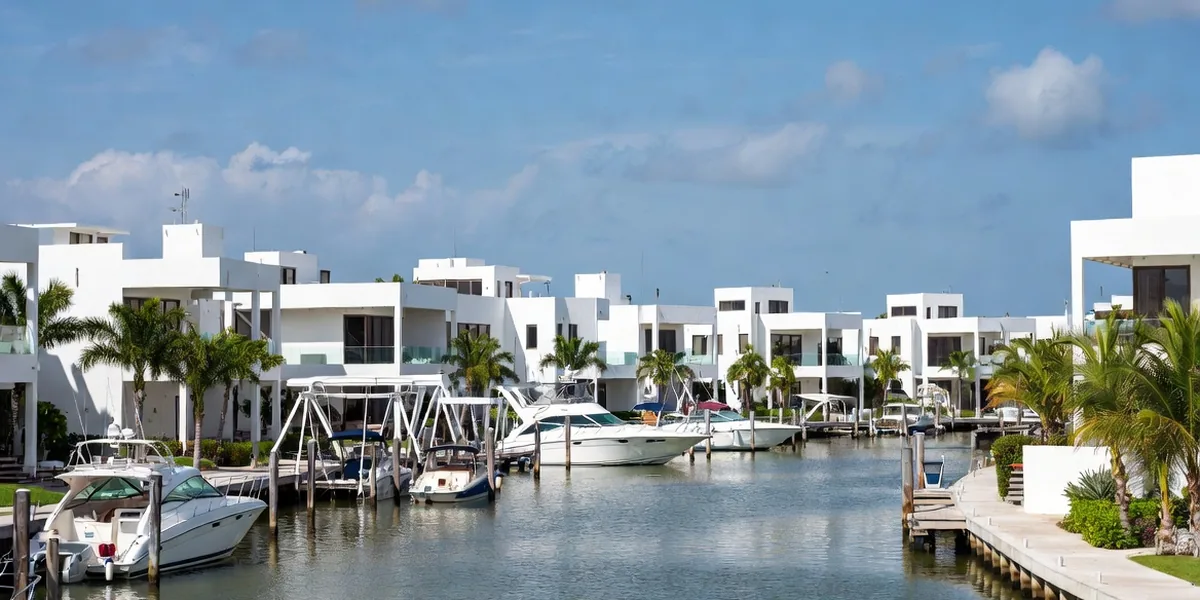
Most-recommendedGated, walkable, master-planned. Marina, Greg Norman-designed golf course, lakeside walking paths, and the highest-quality new construction in Cancún. The premium residential pick.
Hotel Zone (Zona Hotelera)
BeachfrontBeachfront condo strip — the pure resort/vacation-home market. High-rise buildings on the lagoon side or the Caribbean side. Strong rental demand. Highest carry costs (HOA, AC, maintenance).
Costa Mujeres / Playa Mujeres
EmergingNewer development zone 30 min north of the airport. All-inclusive resort buildouts, marina, less density than the Hotel Zone. The current expansion frontier.
Cumbres / Aqua / Residencial
Best valueEstablished residential neighborhoods west and south of downtown. Where most full-time Cancún expats actually live. Best value for a real residential life rather than a vacation rental.
Be cautious about pre-construction projects in 'emerging zones' that don't have established residential infrastructure yet — Cancún has had multiple stalled developments since 2023, especially in projects pitched as the next Puerto Cancún that haven't broken ground 18 months after deposit. Buy resale in established zones unless you have very high tolerance for execution risk. For full travel context on the city itself, see the Cancún travel guide.
How the Buying Process Actually Works
Mexican real estate transactions are different from US transactions in several material ways. The most important: every transaction must be processed by a notario público, a senior government-appointed attorney with quasi-judicial authority. The notario verifies title, calculates and collects taxes, prepares the deed (escritura), and registers the transaction with the public registry. Their fees (1.5–2.5% of price) are a meaningful component of closing costs. Pick the notario yourself — never let the seller's agent pick.
For a Cancún transaction with a foreign buyer, the typical sequence is:
1. Offer and contract. Letter of intent, then a formal purchase contract drafted by the notario (or seller's attorney) and reviewed by your attorney. Typical earnest money: 10% of price into escrow.
2. Bank fideicomiso permit. The Mexican bank that will hold the trust applies for the federal foreign relations permit (Permiso de la Secretaría de Relaciones Exteriores). This step takes 4–8 weeks and is the longest single delay in the process.
3. Title verification. Notario pulls full title chain from the public registry. Verifies no liens, no pending litigation, no ejido land issues. Typically 2–3 weeks.
4. Closing. All parties sign the escritura at the notario's office. Final funds wire. Property registers in the public registry within a few weeks of signing.
5. Bank fideicomiso registration. The fideicomiso documents are formally registered. You receive your fideicomiso documents from the bank. The bank invoices the annual maintenance fee.
Total timeline: 30–90 days from accepted offer for a typical resale; pre-construction has a different cadence (faster contract, slower delivery).
What It Actually Costs to Buy
All-in closing costs for a foreign buyer in Cancún run roughly 6–8% of the purchase price. On a $300,000 USD condo, that's $18,000–24,000.
Federal property acquisition tax (ISAI): ~2% of price.
Notario fees: 1.5–2.5%.
Fideicomiso bank setup: $2,500–4,000 one-time.
Public registry: 0.2–0.5%.
Title insurance (recommended): $1,000–3,000 with First American or Stewart Title.
Real estate attorney (recommended for purchases over $200K): $1,500–3,500.
Annual fideicomiso maintenance: $500–800 ongoing.
Property tax (predial): 0.05–0.15% of assessed value annually — dramatically below US property tax. On a $300,000 condo, that's typically $200–500/year.
Frequently Asked Questions
Yes — through a fideicomiso, a 50-year renewable bank trust. Cancún is in the constitutional restricted zone (within 50 km of any coastline), so direct foreign title is not allowed. The fideicomiso is the standard, legal, and well-tested structure that gives foreign buyers all functional rights of ownership. Setup runs $2,500–4,000 USD; annual maintenance is $500–800.
Below $100,000 USD is hard to find in any neighborhood that an expat would actually want to live in. The cheapest viable inventory is in Cumbres, Residencial Aqua, and the older sections of downtown — small 1-bedroom condos in the $80,000–110,000 range. Anything significantly cheaper than that is either in a problematic neighborhood, has serious title issues, or is a scam. Be very cautious of listings priced below the local market.
For pure rental income with limited personal use: yes. For full-time living: usually not. The Hotel Zone is engineered for tourism — the prices, the noise, the traffic, the lack of grocery stores, and the resort-density of evenings make it a difficult full-time residence. Most full-time Cancún expats live in Puerto Cancún, Cumbres, or one of the residential master-planned communities, not the Hotel Zone.
30–90 days from accepted offer to closing for a typical resale transaction with a fideicomiso. The fideicomiso bank-permit process adds 4–8 weeks because of the federal foreign relations approval. Pre-construction transactions have a different timeline: deposit and contract sign happen quickly, but the buyer doesn't take possession until the building is complete (which can be 1–4 years).
Zillow does not list Mexican properties — its database covers the US and Canada only. Searches for 'houses for sale in Cancún Zillow' typically return aggregator sites that scrape Mexican listings without official broker authorization. Use Vivanuncios, Inmuebles24, Mercado Libre Inmuebles, or work directly with a licensed AMPI (Mexican Realtor Association) broker for accurate Cancún listings.