Whale Watching in La Paz
By Mr. Playas · Updated 2026
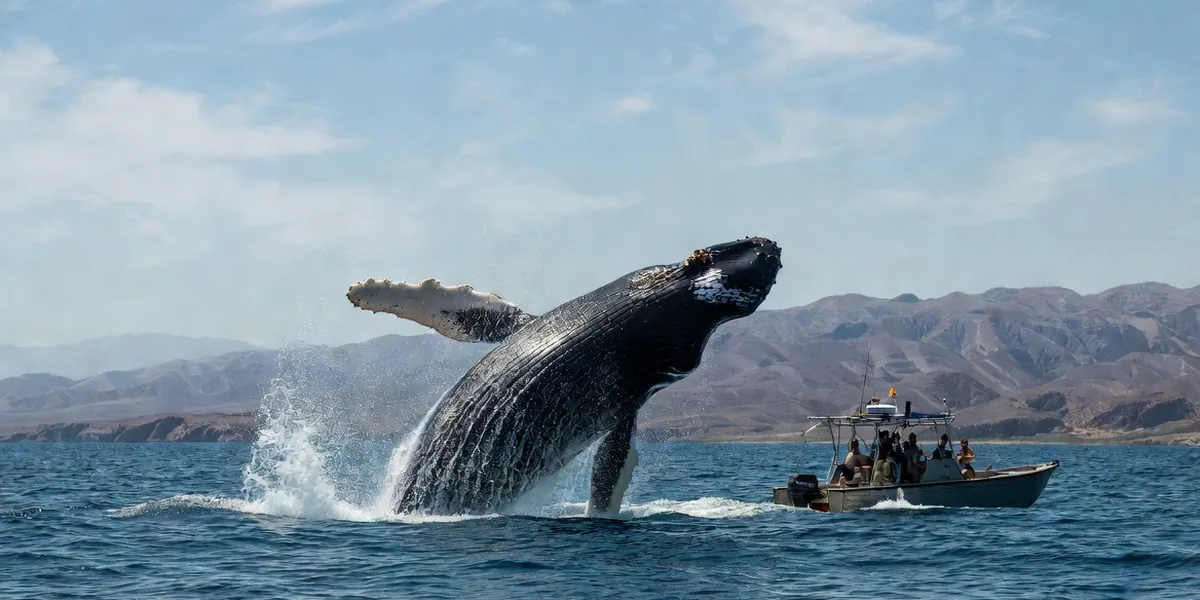
The Bahía de La Paz and the surrounding waters of the central Sea of Cortez host one of the most reliably accessible blue whale aggregations in the world from December through March. Blue whales — the largest animals ever to have existed, reaching 25–30 meters in length — feed in these waters on krill concentrations that build during the winter months. The guides who run these tours have been reading individual animals by their fluke markings for decades. Sighting rates in peak season approach certainty.
The Blue Whale Season
Blue whales begin arriving in the Bahía de La Paz in October and are present in numbers from December through March, with January and February as the most productive months. The feeding grounds are in the channel between the Baja peninsula and the offshore islands — close enough to La Paz that tours reach the whales within 30–60 minutes of departure from the malecon pier.
What the encounter looks like: the boat cuts the engine when a whale is spotted. Blue whales surface every 10–20 minutes to breathe — the exhalation column reaches 9–10 meters high and is visible from a kilometer away. The animals are accustomed to tour boats in these waters and do not flee. When one surfaces close to the boat, the scale is genuinely incomprehensible — the animal is longer than the boat, and the sound of its exhalation is something you feel as much as hear.
Other Species
Humpback whales are present from November through April and are more acrobatic than blue whales — breaching, tail-slapping, and pec-slapping in ways that blue whales almost never do. Fin whales (the second-largest animal on Earth) pass through the bay seasonally. Sperm whales and pilot whales are occasional sightings in the deeper channel water. Bryde's whales are year-round residents.
Dolphins — bottlenose, common, and Pacific white-sided — are present year-round and frequently bow-ride tour boats on the way to and from the whale grounds. A combined whale-and-dolphin sighting in a single tour is the norm rather than the exception in peak season.
Blue whales are the primary draw for most visitors and are the more remarkable encounter — the sheer scale is unlike anything else in the ocean. Humpbacks give a more photogenic experience: they breach, they slap, they do things. If you are choosing between December–January (more blue whales) and March (more humpback activity as the blue whales thin out), go for January. The blue whale encounter is singular. .
Tour Logistics
Tours depart from the La Paz malecon pier, typically at 7–8 AM to reach the whales before afternoon wind picks up on the bay. Duration: 3–4 hours on the water. Group sizes vary by operator — the better operations keep groups at 8–12 people per panga. Cost: $80–120 USD per person including equipment (binoculars, life vest), a naturalist guide, and water and snacks on some tours.
The regulations governing whale watching in the Bahía de La Paz require boats to maintain a minimum approach distance and prohibit entering the water while whales are present. These are observed — the guides enforce them and the marine park has rangers who monitor the area. Swimming with blue whales is not part of the La Paz experience and is not permitted.
Picking an Operator
The malecon has multiple tour operators offering whale watching. Quality markers: smaller pangas (less than 15 passengers), a naturalist guide with genuine species knowledge (not a generalist tour lead), and a boat that is properly maintained. The operators who have been running whale watching specifically — not as a side offering to a dive or kayak business — tend to have the most experienced captains and the best track record for finding animals.
Book through your hotel or directly with malecon operators — the rack rate at the pier is typically the same as online. For January and February specifically, book at least a few days ahead as the best departure times fill. Viator and GetYourGuide list several La Paz whale watching operators with verified reviews.
What to Bring
The bay can be cold on January and February mornings — bring a windproof layer even if the air temperature feels mild on shore. The boat ride creates wind chill that the malecon does not. Reef-safe sunscreen, polarized sunglasses (reduces glare for spotting the exhalation columns), and seasickness medication if you are prone to motion sickness on open water. A good zoom lens if you are a photographer — the whales surface unpredictably and at varying distances.
Frequently Asked Questions
It is one of the best in the world. The Bahía de La Paz aggregation is one of the most reliably accessible blue whale feeding grounds on the planet — the animals are present in numbers, the tours are well-run, and the guides have years of experience with individual animals. The only comparable Mexican experiences are in the Magdalena Bay grey whale nurseries on the Pacific side of Baja, which is a different species and a different type of encounter.
Yes, for children who are comfortable on small boats in open water. The tours are on pangas (open motorboats) — not large vessels with a cabin. The bay is generally calm in the morning but can develop chop by midday. Children who experience motion sickness on small boats should take medication beforehand.
In peak season (January–February), no-show days are extremely rare — the operators have years of data on where the animals are and the guides communicate with each other on the water. In October–November or late March, sighting rates drop and a full refund or reschedule policy with a reputable operator is the standard guarantee. Confirm the operator's guarantee before booking.
Occasionally from the malecon or the Pichilingue area — the exhalation columns of blue whales are visible from considerable distance. But shore sightings are chance encounters, not the experience. The tours get you within 50–200 meters of the animals in open water.
More on La Paz: