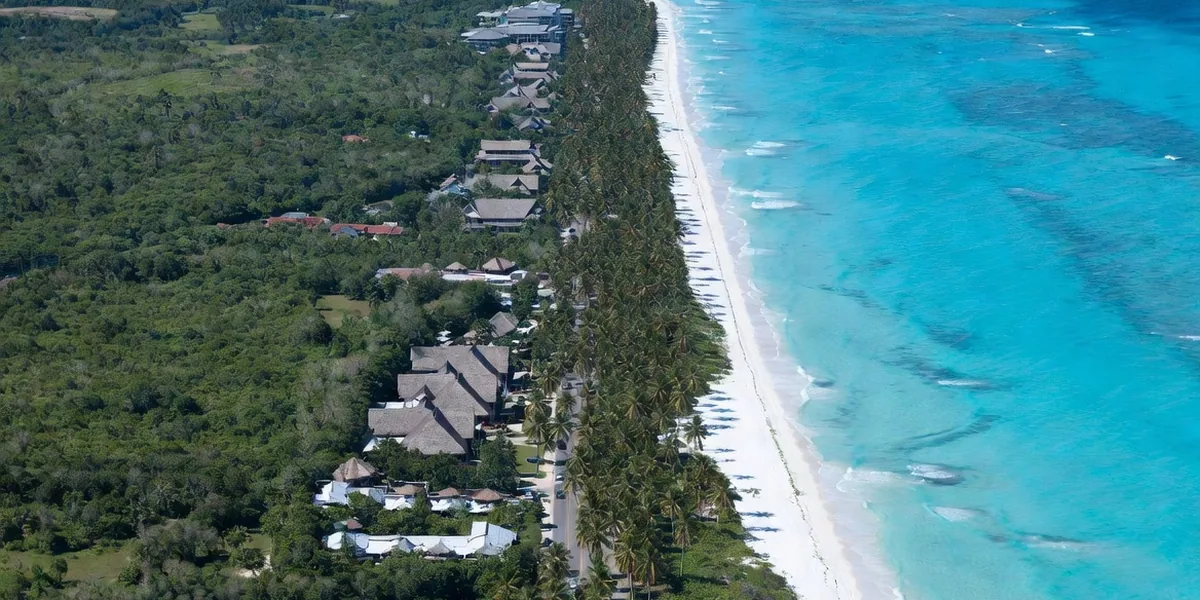
The short answer: stay in Aldea Zamá if it's your first trip and the budget is moderate ($80–180 USD/night), the pueblo if you're optimizing for price and food ($40–80 for a private room), and the hotel zone beach road only if waking up on the sand justifies $300+ per night to you. La Veleta is the pueblo's cheaper, quieter western sibling and where long-stayers end up.
Tulum's accommodation market has changed more in five years than most destinations change in twenty. The eco-hotel-on-the-beach fantasy still exists but now starts around $300/night. The new airport at Tulum (TQO) removed the two-hour Cancún transfer for many travelers. And the Jaguar National Park reorganization changed how beach access works for anyone not sleeping in the hotel zone — a detail most guides still haven't caught up with, covered below.
If you haven't been to Tulum yet, start with our complete Tulum guide.
The four zones, in one minute
- Hotel Zone (beach road) — $$$–$$$$. The beach at your door. Generators, mosquitos, and the highest prices in Quintana Roo outside the resort corridor.
- Tulum Pueblo (Centro) — $–$$. Where the town lives. Best food, best prices, 10–12 minutes by bike from the sand.
- Aldea Zamá — $$–$$$. The planned middle ground. Modern condos and boutique hotels between the pueblo and the beach.
- La Veleta — $–$$. West of the pueblo. Aparthotels, pools, coworking cafés, and the best monthly rates in Tulum.
Hotel Zone (Zona Hotelera) — $$$–$$$$
If you stay on the beach road, you are paying for three things: the sand at your door, the setting, and walking distance to the beach clubs and the hotel zone dining circuit. Prices start around $150/night for a basic room at the unfashionable end and run past $600 for the eco-bungalows with the photographers outside. December through March, add 30–50% to everything.
The tradeoffs are real: generator noise at night (parts of the strip still run off-grid), no A/C at some eco-positioned properties, mosquitos that treat citronella as a garnish, and a taxi or bike for every move off the strip. The best hotel zone stays justify all of it for a special occasion. The worst are camping at European festival prices. Read recent reviews specifically mentioning noise and power before booking anything under $250.
Tulum Pueblo — $–$$
The town where Tulum residents actually live. Hostel dorms from $15–25 USD/night. Private rooms in guesthouses from $40–80. Airbnbs with pools from $80–150. Everything 50–70% cheaper than the hotel zone, with the bus station, pharmacies, supermarkets, nightlife, and the best cooking in the area — the pueblo's restaurant scene now beats the beach road on quality per dollar, and it isn't close. The full breakdown is in our Tulum pueblo restaurant guide.
The one tradeoff: you're 10–12 minutes by bike from the beach, and since the park reorganization, "the beach" for pueblo guests usually means a beach club day pass (below). Mr. Playas stays in the pueblo and bikes every morning. The savings cover the bike, the day passes, and two extra cenote mornings.
Aldea Zamá — $$–$$$
A planned development between the pueblo and the hotel zone: modern condos, boutique hotels, private security, actual street lighting, and reliable power — which sounds unremarkable until you've spent a blackout night on the beach road. Airbnb inventory is deep ($80–180/night for a full apartment with pool), the restaurant scene is international and decent, and both the pueblo and the beach are five to ten minutes away by bike. For first-time visitors with a moderate budget, this is the correct answer more often than any other zone.
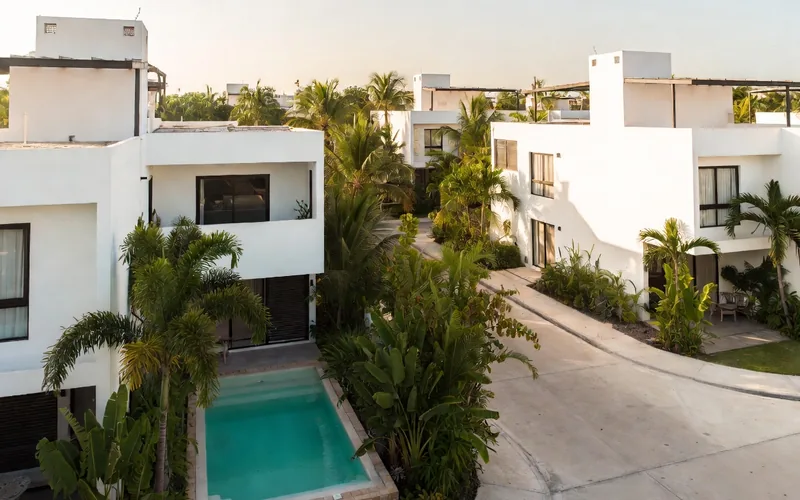
Aldea Zamá — reliable power, private security, and half the beach road's price.
La Veleta — $–$$
West of the pueblo center, La Veleta grew from dirt roads to Tulum's long-stay quarter in about four years. Aparthotels with pools from $50–100/night, monthly rates that undercut everything east of it, coworking cafés, and some of the pueblo's most interesting kitchens on its edges. The roads are still rough in the back sections and you'll want a bike or scooter, but if you're staying a week or more, La Veleta gives you the most Tulum per dollar of any zone.
The beach access question nobody explains
Since the Jaguar National Park (Parque del Jaguar) reorganization, the free-walk-on beach era at Tulum's north end is over. Public access near the ruins now runs through the park entrance with a fee, and the hotel zone beaches are functionally accessed through hotels and beach clubs. If you stay outside the hotel zone, your realistic beach options are: a beach club day pass ($30–60 USD consumption minimum, towels and beds included), a hotel with a beach club partnership (ask directly before booking), or the park entrance for the stretch below the ruins. Budget accordingly — a $60 pueblo room plus a $40 daily beach club can cost more than a $110 Aldea Zamá condo whose host has a club deal.
Practical numbers, all zones
- Pueblo hostel dorm: $15–25 USD/night
- Pueblo private room: $40–80 USD/night
- La Veleta aparthotel: $50–100 USD/night (monthly rates far lower)
- Aldea Zamá Airbnb (full apartment): $80–180 USD/night
- Hotel zone boutique: $150–400 USD/night
- Hotel zone eco-luxury: $400–700+ USD/night
- Add 30–50% across the board in December, January, and Easter week
Pueblo or La Veleta every time, unless someone else is paying for the hotel zone. The bike ride takes 12 minutes. The savings buy the beach club pass, two more cenote visits, a La Brasa dinner, and enough pueblo tacos to fuel the whole trip. More details in our Tulum guide.
FAQ
Is it better to stay in Tulum town or on the beach? For most visitors, neither extreme — Aldea Zamá splits the difference at 40–60% below beach road prices. The beach road is for trips where the sand at your door is the entire point. The pueblo is for trips where food and budget win.
How far is the pueblo from the beach? About 3 km — a 10–12 minute bike ride or a $5–8 USD taxi.
Is Aldea Zamá safe? It's one of the most controlled areas in Tulum: private security, lighting, residential traffic. Standard Quintana Roo precautions apply, but this is not where problems concentrate.
What about sargassum? The seaweed typically peaks May through October and varies week to week. If a spotless beach is the reason for the trip, book December through April — or check current sargassum maps before committing to summer dates.
How far in advance should I book? High season (Dec–Jan, Easter): 2–3 months. Shoulder (Nov, Feb–Apr): 4–6 weeks. Low season (May–Oct): 1–2 weeks is usually fine and last-minute deals exist.
To wrap up
Where you stay in Tulum decides which Tulum you get: the one in the photographs or the one with more layers and better tacos. Both are real. Pick the zone that matches what the trip is actually for, and let the beach access math — not the listing photos — make the final call.