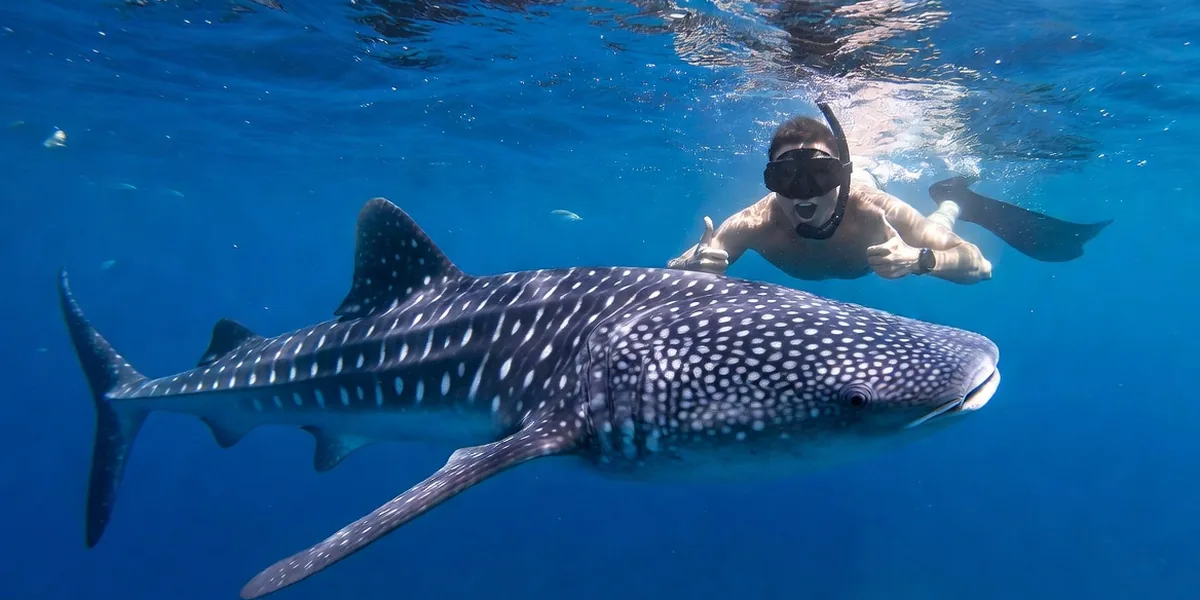
Swimming beside a whale shark from Cancún is the single best wildlife experience on the Mexican Caribbean, and it is only possible for four months a year. From mid-May to mid-September, the largest fish on the planet gathers by the hundreds in the open water north of Isla Mujeres to feed on plankton blooms, and licensed boats run out every morning to put snorkelers in the water beside them. This page covers what the tours actually cost in 2026, the difference between the boat categories, the rules once you are in the water, and how to avoid the operators doing it badly.
Which whale shark tour should I book from Cancún?
A shared boat with a written no-sighting policy for $125–175 USD per person is the right call for most people. Pay up for a semi-private boat ($180–250) if you want more time in the water per rotation. It is peak season right now — July and August boats sell out days ahead, so book early in your trip, not the night before.
The Four Ways to Do It
| Tour type | 2026 price | Boat size | Swim time | Best for |
|---|---|---|---|---|
| Shared boat (Cancún or Isla Mujeres) | $125–175 pp | 10–14 guests | 2–3 rotations | Most travelers |
| Semi-private boat | $180–250 pp | 6–10 guests | 3–4 rotations | Photographers, couples |
| Private charter | $650–900 total | Your group | Maximum | Families, groups of 4–8 |
| From Holbox | $110–160 pp | 8–12 guests | 2–3 rotations | Travelers already on Holbox |
The product is fundamentally the same across all four: same aggregation, same regulations, same sharks. What you are paying for at the higher tiers is fewer people ahead of you in the rotation queue. On a full 14-person shared boat, two swimmers go in at a time, which means you spend most of the trip waiting your turn on deck. On a semi-private boat, the math is simply better. If you are staying on Holbox, book there and skip the Cancún logistics entirely — the Holbox whale shark guide covers that side.
How the Day Actually Goes
Departures are early — pickup between 6:00 and 7:30 AM from the Hotel Zone, on the water by 8:00. The ride out to the aggregation is the part nobody warns you about: 45 to 90 minutes of open-water crossing that gets choppy by mid-morning. Take the seasickness pill at breakfast, not on the boat. It does nothing once you are already green.
At the aggregation, the captain positions ahead of a feeding shark, and pairs go in with a guide. You are not floating and observing — a cruising whale shark moves faster than it looks, and you will swim hard to hold position beside it for two to four minutes before it pulls away or the rotation ends. Fins matter. Between rotations, boats hold position and you watch dorsal fins and feeding mouths break the surface around you, which is nearly as good as being in the water. Most boats head back by noon with ceviche on the ride and a snorkel stop at the reef off Isla Mujeres if conditions allow.
The Rules in the Water
The aggregation sits inside a protected area and the rules are enforced: snorkel only, no scuba and no freediving down to the animals. Two swimmers plus one guide per shark. No touching — contact strips the mucus layer that protects their skin. Life jacket or full wetsuit mandatory. Biodegradable sunscreen only, and honestly, wear a rash guard and skip sunscreen entirely; you will be in the water with your face down and your back to the sun. Operators that brief all of this before the first rotation are the ones taking the rest of the job seriously too.
Ask two questions before booking. What happens if no sharks are found — and get the answer in writing. And how many swimmers go in at once — if the answer is anything other than two plus a guide, book elsewhere. Those two answers separate the professionals from the boats chasing volume.
Cancún vs Isla Mujeres Departures
The sharks do not care where your boat started. Isla Mujeres and Punta Sam departures reach the aggregation 20 to 40 minutes faster, which matters mainly for seasickness endurance. Cancún Hotel Zone departures win on logistics if that is where your hotel is — no 30-minute ferry ride before a 6:30 AM boat. Book based on where you sleep, not on marketing about "closer to the sharks."
Booking It
Peak season boats fill days in advance, and the good semi-private operators fill first. Book the whale shark day for early in your trip — if weather cancels, you have days left to rebook instead of an airport transfer. The cards above show live pricing and availability for this season; the full listing is below.
Compare Whale Shark Tours on Viator
Shared boats, semi-private trips, and private charters from Cancún and Isla Mujeres with verified availability for the 2026 season.
Frequently Asked Questions
When is whale shark season in Cancún and Isla Mujeres?
Mid-May through mid-September, with June, July, and August as the reliable core. The aggregation peaks in July and August when plankton blooms concentrate hundreds of whale sharks in the open water north of Isla Mujeres and Isla Contoy. Outside this window, tours do not run — anyone selling a whale shark swim in December is selling you something else.
How much does a whale shark tour from Cancún cost?
Shared boat tours run $125–175 USD per person and typically include breakfast, snorkel gear, life jacket, a light lunch or ceviche on the way back, and two swim rotations. Semi-private boats (10 or fewer guests) run $180–250. Full private charters for your own group cost $650–900 total. Hotel pickup is sometimes included, sometimes a $10–25 add-on — check before booking. Add 16% IVA if the listing does not state taxes included.
Do you actually swim with the whale sharks?
Yes — snorkel only, no scuba. Regulations allow two guests plus one guide in the water per shark at a time, so the boat runs rotations: you wait your turn, slip in beside a moving shark, swim hard alongside it for a few minutes, and climb back aboard. Most tours get each guest two to three rotations. Touching the animals is prohibited and a life jacket or wetsuit is mandatory in the water.
Is a whale shark tour from Cancún or from Isla Mujeres better?
Same sharks, same water. Boats from Isla Mujeres and Punta Sam reach the aggregation slightly faster; Cancún departures add 20–40 minutes of boat time each way. If you are staying in the Hotel Zone, a Cancún departure with pickup is simpler than ferrying to Isla Mujeres for a marginally shorter ride. If you are already staying on Isla Mujeres, book there.
Are sightings guaranteed?
No, and be suspicious of anyone who says otherwise. In peak season the hit rate is high — captains share locations by radio and the aggregation is large — but weather cancellations and blank days happen. Good operators offer a free second attempt or a partial refund if no sharks are found. Confirm that policy in writing before you book.
Is swimming with whale sharks in Mexico ethical?
The activity is regulated: licensed boats, capped swimmer numbers per shark, no touching, no flash photography, biodegradable sunscreen only. The honest concern is crowding — on peak July days, dozens of boats work the same aggregation. Choose operators that follow the two-swimmers rule instead of dumping the whole boat in at once, brief you properly before the first rotation, and hold a visible CONANP permit. That is where your money votes.