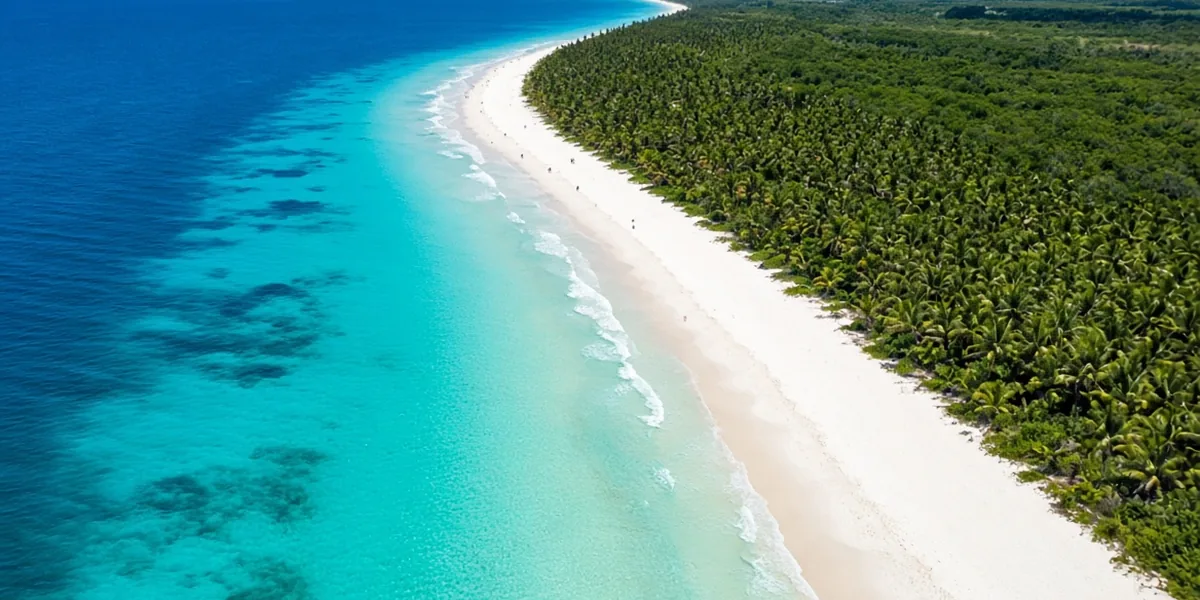
Mexico has roughly 11,000 kilometers of coastline across two oceans, and the honest truth is that a ranked list of "best beaches in Mexico" is really two lists that barely compete with each other. The Caribbean side sells water. The Pacific side sells everything else — scenery, food, surf, whales, and prices that are often half what you pay in Quintana Roo.
This ranking is built on four things that actually determine whether a beach day works: water clarity and temperature, whether you can safely swim, how bad the crowds and vendors get, and what it costs to physically get there. Instagram composition is not a criterion. Several extremely famous beaches rank lower here than you would expect, and a few nobody talks about rank higher.
The Short Answer
- Best overall: Playa Norte, Isla Mujeres
- Most dramatic: Balandra, La Paz
- Best snorkeling: Playa Palancar, Cozumel
- Best for families: Akumal Bay, Riviera Maya
- Best surf: Zicatela, Puerto Escondido
- Best value: Playa Bruja, Mazatlán
- Most underrated: Playa Los Cerritos, Todos Santos
- Skip unless it is convenient: Playa Delfines, Cancún
How This Ranking Works
Every beach here is scored the same way. Water quality means clarity, temperature, and whether it is actually pleasant to be in. Swimmability means shore break, rip currents, and drop-off — a beautiful beach you cannot enter is a viewpoint, not a beach. Access cost includes the ferry, the tour, the taxi, or the entrance fee, because "free public beach" often means a 40 USD round trip to reach it. And crowd pressure covers both volume of people and volume of vendors, which are separate problems.
One structural point that changes everything about planning a Mexican beach trip: every beach in Mexico is legally public. The federal maritime zone extends 20 meters inland from the high tide line and cannot be sold. Hotels routinely imply otherwise. They are allowed to stop you walking through their lobby; they are not allowed to own the sand.
The Caribbean Coast — Quintana Roo
1. Playa Norte, Isla Mujeres
The best swimming beach in Mexico, and it is not especially close. Playa Norte sits on the sheltered northern tip of Isla Mujeres, which means waist-deep turquoise water extending 50 meters out, no shore break at all, and a west-facing angle that gives you both sunrise over the point and sunset over the water. Because it faces away from the open Caribbean, it also dodges most sargassum in the bad months.
The catch is the ferry and the day-tripper wave. Boats from Cancún land around 10 AM and the beach fills fast. Stay overnight and you get the beach from 6 to 10 AM and again after 5 PM effectively to yourself. Full detail in the Isla Mujeres beaches guide, and the crossing itself is covered in the Isla Mujeres ferry guide.
2. Playa Palancar, Cozumel
Palancar is the argument for Cozumel. A long, quiet, west-facing crescent on the leeward side of the island with soft white sand, calm water, and the Palancar reef system sitting a short boat ride offshore. The snorkeling here is the best shore-adjacent snorkeling in the Mexican Caribbean, and the reef drops off into wall diving that is genuinely world-class.
Getting there means a rental car, scooter, or taxi down the west coast road — around 20 minutes from San Miguel. See the Palancar Reef guide and the full Cozumel beaches breakdown.
3. Akumal Bay, Riviera Maya
A protected horseshoe bay between Playa del Carmen and Tulum with a resident green sea turtle population feeding on the seagrass beds. Calm, shallow, and the most reliable place in Mexico to snorkel with wild turtles. Since the CONANP regulations tightened, access is zoned and guided in the turtle area, which has improved both the turtles' situation and the experience.
Go early — 8 AM is a different beach than 11 AM. The full rules, costs, and independent-versus-guided breakdown are in the Akumal guide.
4. El Cielo, Cozumel
Not a beach in the traditional sense — a shallow sandbar off Cozumel's southern tip where the water is chest-deep, glass-clear, and full of starfish. You reach it by boat only. It is included on most Cozumel catamaran trips and it is the single most photographed water in the Mexican Caribbean for good reason.
Do not touch or lift the starfish; removing them from the water kills them and operators have started enforcing this properly. Details in the El Cielo guide.
5. Playa Paraíso, Tulum
The most photogenic beach on the Tulum coast and still the best of the public-access options there. White sand, palms leaning at exactly the right angle, and the Tulum ruins visible up the shore. It gets busy and the beach clubs have crept in, but the sand and water hold up.
Tulum has a specific problem worth knowing before you commit: the hotel zone beaches are narrow, erosion has taken sand in places, and sargassum hits this coast hard from May through August. See the Tulum beaches guide for which stretches survived and which did not.
6. Punta Mosquito, Holbox
A sandbar spit on the eastern end of Holbox where the water is knee-deep for a very long walk and flamingos turn up in the shallows between May and September. Holbox as a whole is the Caribbean without the resort infrastructure — sand streets, golf carts, no cars.
It is also the base for whale shark season, which runs roughly mid-May through mid-September. See Punta Mosquito and the whale shark season guide.
7. Playa Delfines, Cancún
The famous one, at kilometer 18 of the Hotel Zone, with the CANCUN letters and the wide-open view. It is genuinely the most beautiful stretch of sand in Cancún and it is the only significant Hotel Zone beach with public parking and no hotel in front of it.
It is also a poor swimming beach. The shore break is heavy, the drop-off is abrupt, and red flags fly regularly. Treat Delfines as a viewpoint and a photo stop, then swim at Playa Langosta or Playa Tortugas instead. The full Hotel Zone beach-by-beach breakdown is in the Cancún beaches guide.
8. Bacalar's Lagoon Shoreline
Freshwater rather than ocean, but Bacalar earns its place. The Lagoon of Seven Colors runs 60 kilometers of stratified blues over a white limestone bottom, with living stromatolites along the shore. Warm, clear, no waves, no salt, no sargassum, ever.
Best experienced by boat or paddleboard rather than from a single beach. See the Bacalar guide and the boat tour comparison.
Book Beach Day Trips on the Mexican Caribbean
Isla Mujeres catamarans, Cozumel reef trips, Akumal turtle snorkels, and Holbox whale shark tours — compared with live 2026 pricing.
The Pacific Coast — Nayarit, Jalisco, and Oaxaca
9. Playa Los Muertos, Puerto Vallarta
The most functional city beach in Mexico. Los Muertos is a working beach in the Zona Romántica with a pier, restaurants directly on the sand, calm water most of the year, and genuine local life mixed with tourism rather than replacing it. You can walk to it from most of the good hotels and it is the anchor of the best neighborhood in Puerto Vallarta.
More in the Puerto Vallarta beaches guide.
10. Playa Las Gemelas and the Southern Bay, Puerto Vallarta
South of town the coast road runs past a series of small coves — Las Gemelas, Playa Palmares, Conchas Chinas — with rock formations, tide pools, and calmer, clearer water than the main bay. Las Gemelas is the pick: two small beaches split by a rock outcrop, public access via a staircase between condo buildings.
11. Playa Escondida, Marietas Islands
The Hidden Beach — a sand floor inside a collapsed volcanic crater, reachable only by swimming through a 25-meter rock tunnel. Genuinely unique and genuinely oversold. Daily access is permit-capped at 125 people across all operators, the island closes Mondays and Tuesdays, and the famous overhead shot requires a drone, which is banned.
Book it for the islands, the snorkeling, and the December-to-March whales rather than for the photo. Honest breakdown in the Marietas Islands day tour guide.
12. Playa Sayulita and Playa de los Muertos, Sayulita
Sayulita's main beach is a beginner surf break with a town directly behind it — busy, loud, and enjoyable. The better beach is Playa de los Muertos, a small cove ten minutes' walk south through the cemetery, with calmer water and considerably fewer people.
Sayulita is the most crowded it has ever been. If you want the Nayarit experience without the volume, look at San Pancho next door. See the beaches near Sayulita guide for the full set.
13. Yelapa
A village with no road access on the southern edge of Banderas Bay, reachable only by boat from Puerto Vallarta or Boca de Tomatlán. Beach, waterfall, and a genuinely different pace. Day-trippable, but better as an overnight.
See the Yelapa guide.
14. Zicatela, Puerto Escondido
The Mexican Pipeline. One of the heaviest beach breaks on the planet, and the reason Puerto Escondido exists on the surf map. Waves regularly break in the double-overhead range and the rip currents are severe.
Do not swim at Zicatela. This is not a cautious disclaimer; people die here every year. Watch it, eat and drink along it, surf it only if you genuinely belong there. Swim at Playa Carrizalillo or Puerto Angelito instead. Detail in the Puerto Escondido beaches guide and the Zicatela guide.
15. Playa Carrizalillo, Puerto Escondido
A small protected cove reached by 167 stairs down a cliff, with a gentle beginner surf break on one side and calm swimming on the other. Palapa restaurants on the sand. This is where you actually swim in Puerto Escondido, and it is one of the best small beaches in Mexico.
16. Mazunte and San Agustinillo, Oaxaca
Two adjoining villages on the Oaxaca coast with a slower, less developed feel than Puerto Escondido an hour up the road. Mazunte has Punta Cometa, the southernmost point of Oaxaca and the best sunset viewpoint on the Pacific coast. San Agustinillo has the calmer swimming.
See the Mazunte guide, San Agustinillo, and Punta Cometa.
17. Playa Bruja and Playa Cerritos, Mazatlán
The north end of Mazatlán, past the Zona Dorada, where the beaches get wide and the crowds thin. Playa Bruja has a beginner surf break and beach restaurants; Cerritos is longer and emptier. The whole Mazatlán proposition is that you get a real Mexican city, an excellent Centro Histórico, and beaches at roughly half the price of Quintana Roo.
More in the Mazatlán beaches guide.
18. Playa La Audiencia and Playa Miramar, Manzanillo
Manzanillo splits into two bays. La Audiencia is the sheltered cove with the calmest water and the best snorkeling; Miramar in Santiago Bay has the surf. Manzanillo gets very little foreign attention and prices reflect that.
See the Manzanillo beaches guide.
19. Bahía Chahué and Bahía Conejos, Huatulco
Huatulco is nine bays and 36 beaches inside a national park, which is why the water is as clean as it is. Chahué is the developed, swimmable one; Conejos and the boat-access bays like Cacaluta and San Agustín are the ones worth taking a boat trip for.
See the Huatulco guide.
20. Playa Zipolite
Mexico's only legally recognized nude beach, on the Oaxaca coast between Mazunte and Puerto Ángel. Long, wild, west-facing, with a strong undertow that has earned it a rough reputation. Clothing-optional at the western end.
The undertow is real. See the Zipolite guide.
Book Pacific Coast Beach Trips
Marietas Islands, Yelapa, Las Ánimas, and the southern Banderas Bay beaches — boat access compared with live 2026 pricing.
Baja California and the Sea of Cortez
21. Playa Balandra, La Paz
The most dramatic beach in Mexico. A protected bay of shallow, almost unnaturally turquoise water over white sand, ringed by desert hills, with the Mushroom Rock formation as its signature. The water is waist-deep for a very long way out, which makes it superb for families and mediocre for actual swimming.
Access is capped — a daily visitor limit, timed entry windows, and no food or drink vendors on site. Bring water and shade. Full logistics in the Balandra guide.
22. Isla Espíritu Santo, La Paz
A UNESCO island an hour offshore from La Paz with beaches like Ensenada Grande and Playa Bonanza that are close to empty, plus a resident sea lion colony you can snorkel with at Los Islotes. This is the single best marine day trip in Mexico.
Boat access only. See the Espíritu Santo guide and the sea lion snorkel guide.
23. Playa del Amor (Lover's Beach), Los Cabos
The beach at the base of El Arco where the Pacific and the Sea of Cortez meet, reachable only by water taxi or boat from Cabo San Lucas marina. The Sea of Cortez side is swimmable; the Pacific side, called Divorce Beach, absolutely is not — the shore break there is lethal and it is signed as such.
See Lover's Beach and El Arco.
24. Playa Los Cerritos, Todos Santos
An hour up the Pacific side from Cabo, Cerritos is a long, wide beginner-friendly surf beach with a headland at one end and very little development. This is what Cabo's beaches would be without the resorts. The most underrated beach in Baja.
See the Cerritos Beach guide and Todos Santos.
25. Cabo Pulmo
The only hard coral reef in the Sea of Cortez and one of the great marine recovery stories anywhere — a fully protected no-take park since 1995, with fish biomass that has increased several times over. Diving and snorkeling here is on a different level to the rest of Baja.
Basic infrastructure, no ATM, limited power. See the Cabo Pulmo guide.
San Carlos in Sonora has the Sea of Cortez water without any of the Baja pricing — Playa Los Algodones, Cerro Tetakawi, and some of the best diving in northern Mexico. San Carlos guide.
Sargassum: The Thing That Ruins Caribbean Beach Trips
This is the single most important planning variable on the Caribbean side and most guides bury it. Sargassum is a floating brown seaweed that has been arriving in the Mexican Caribbean in large volumes since 2011. It piles up on east-facing beaches, decomposes, and smells like sulfur. Photos taken in February look nothing like the same beach in July.
- Season: roughly April through September, peaking May through August
- Worst hit: Tulum, Playa del Carmen, Puerto Morelos, the east-facing Cancún Hotel Zone beaches, Mahahual
- Largely spared: Playa Norte and the west side of Isla Mujeres, Cozumel's west coast, Holbox, Bacalar (freshwater), Playa Mujeres
- Never affected: the entire Pacific coast and the Sea of Cortez
- Cleanest Caribbean window: December through March
If your dates fall in the sargassum window and you want turquoise water, the move is to base on a west-facing beach or switch coasts entirely rather than hoping. Resorts do rake their beaches daily, but raking removes the pile, not the water conditions.
Caribbean or Pacific: How to Actually Choose
- Choose the Caribbean if: you want warm, clear, calm turquoise water; you are snorkeling or diving reefs; you want cenotes and Mayan sites in the same trip; you are traveling with young children who need calm shallows
- Choose the Pacific if: you want to surf; you want whales between December and March; you care about food more than water color; you want to spend meaningfully less; you are traveling in the sargassum window
- Choose Baja and the Sea of Cortez if: you want desert-meets-ocean scenery, big marine wildlife, and the emptiest beaches of the three
For a direct head to head on the two biggest options, see Puerto Vallarta vs Cancún and Los Cabos vs Cancún.
Beach Safety: The Flag System
Mexico uses an international flag system on monitored beaches. Learn it before you get in the water, because a lot of the beaches on this list have no lifeguard at all.
- White or green: calm, safe conditions
- Yellow: moderate surf or currents, swim with caution
- Red: dangerous conditions, do not swim
- Black: beach closed, water entry prohibited
- Purple: marine hazard present — jellyfish, rays, or similar
Rip currents cause the large majority of drownings on Mexico's Pacific coast. If you are caught in one, swim parallel to shore rather than against it, and do not exhaust yourself fighting the pull. On beaches with heavy shore break — Delfines, Divorce Beach, Zicatela — the danger is being slammed into hard-packed sand, not being pulled out. Different problem, same answer: stay out.
What This List Deliberately Leaves Out
A few beaches that appear on almost every other ranking and do not appear here, with reasons:
- Playa Norte in Acapulco and most of Acapulco Bay — water quality in the enclosed bay is inconsistent and the destination has broader issues. The Acapulco guide covers where it does still work.
- Most of the Cancún Hotel Zone — the sand is excellent, but nearly all of it sits in front of resorts, sargassum hits it hard, and the swimmable sections are limited to the sheltered north-facing stretch.
- The Tulum hotel zone beaches — erosion and beach club enclosure have taken a real toll. Paraíso earns its spot; most of the rest do not anymore.
- Xpu-Ha and Maroma — both genuinely beautiful, both now largely enclosed by resorts and beach clubs with paid access, which is exactly what this list downweights.
Every destination on this list has a full guide with where to stay, what to book, and what to skip. Start with the hub for the coast you picked. See all Mexico beach destinations.
Frequently Asked Questions
For water quality and swimmability, Playa Norte on Isla Mujeres. It is shallow, calm, west-facing for sunsets, and the sand stays cool underfoot. For scale and drama, Balandra near La Paz. For a beach you can build a whole trip around, Playa Palancar on Cozumel. There is no single answer because Mexico has two very different coasts — the Caribbean is calm and turquoise, the Pacific is dramatic and often has surf.
The Caribbean side (Quintana Roo) has better water: warmer, clearer, calmer, and the turquoise color people picture. The Pacific side has better scenery, better food, fewer crowds, lower prices, and real surf. If you want to float and snorkel, go Caribbean. If you want to surf, watch whales, and eat well for less, go Pacific. Sargassum seaweed also affects the Caribbean roughly April through September and does not affect the Pacific at all.
Playa Norte (Isla Mujeres) for shallow water with no drop-off, Akumal Bay for calm turtle snorkeling, Playa Delfines is scenic but has strong shore break so it is a look-not-swim beach, and Balandra near La Paz is waist-deep for a long way out. On the Pacific, Playa Los Muertos in Puerto Vallarta and Bahía Chahué in Huatulco are the calmest family options.
November through April is the reliable window on both coasts: dry, warm, and low humidity. On the Caribbean side, add the sargassum factor — December through March is the cleanest water of the year. On the Pacific, May and June are excellent and cheaper, while September and October carry real hurricane risk. July and August are hot and humid everywhere and are peak domestic travel season.
Mazatlán, Puerto Escondido, and Bahía de Kino are the three cheapest genuine beach towns with real infrastructure. Expect roughly half the accommodation and food cost of Tulum or Los Cabos. Mazunte and San Agustinillo on the Oaxaca coast are also inexpensive but have limited services.
Most are, but conditions vary sharply. Caribbean beaches are generally calm with the exception of the Tulum and Cancún open-ocean stretches, which have shore break. Pacific beaches frequently have rip currents — Zicatela in Puerto Escondido and Playa Zipolite are genuinely dangerous for casual swimmers. Mexico uses an international flag system: green safe, yellow caution, red closed, black closed and dangerous. Take red and black flags literally, and never assume a lifeguard is present.
No. Every beach in Mexico is federal public property under the Zona Federal Marítimo Terrestre law, and access cannot legally be sold. What is sold is access through private property or the use of beach club furniture and services. If a hotel or club tells you a beach is private, they are wrong, though they can legally stop you crossing their land to reach it.
Sargassum is a floating brown seaweed that drifts into the Mexican Caribbean roughly April through September, peaking May through August. It affects the east-facing coast from Cancún down through Playa del Carmen and Tulum. West-facing beaches are largely spared, which is why Playa Norte on Isla Mujeres, the west side of Cozumel, and Holbox stay clean when the mainland does not. The Pacific coast is never affected.